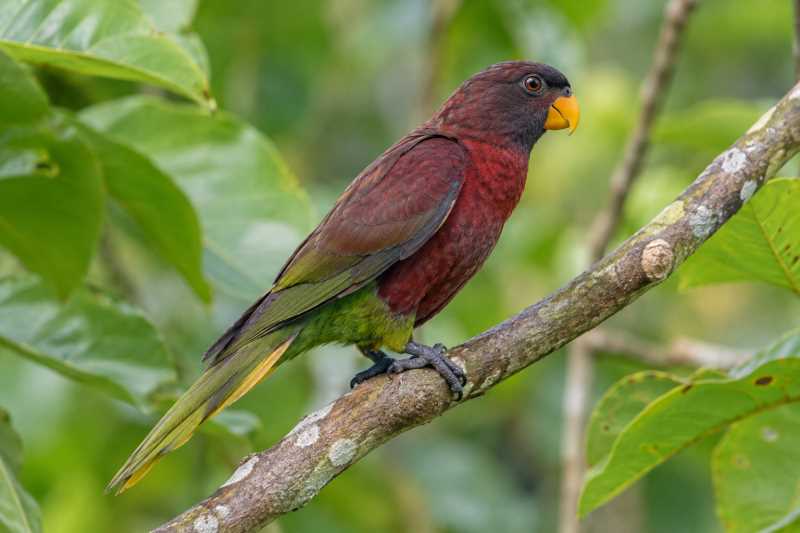
The Pohnpei Lorikeet (Trichoglossus rubiginosus) is an enchanting and vibrant species of parrot endemic to the lush island of Pohnpei in the Federated States of Micronesia. Known for its striking plumage and charismatic demeanor, this bird is a subject of fascination for ornithologists and bird enthusiasts alike. As a member of the Psittaculidae family, the Pohnpei Lorikeet exhibits the typical characteristics of the lory subgroup, including a specialized brush-tipped tongue adapted for feeding on nectar and pollen.
Habitat and Distribution
Pohnpei, a volcanic island shrouded in dense tropical rainforest, provides the perfect backdrop for this lorikeet. The island’s rich biodiversity and abundant flora offer ample resources for the lorikeet to thrive. This species is predominantly found in the canopy layer of the forest, where it can access its primary food sources—nectar, fruits, and seeds. The island’s isolation has allowed the Pohnpei Lorikeet to evolve without the pressures of predators commonly found in other regions, though it faces threats from human activities and introduced species.
Physical Characteristics
The Pohnpei Lorikeet is a medium-sized parrot, measuring approximately 24 cm in length. Its plumage is a vibrant kaleidoscope of colors, with a predominantly green body, a red chest, and blue markings on its head and wings. The vivid colors serve not only as a visual delight but also as a mechanism for camouflage among the bright tropical foliage. Its beak is characteristically robust and curved, adapted for its frugivorous diet.
Behavior and Diet
As diurnal birds, Pohnpei Lorikeets are most active during the day, often seen flitting through the treetops in search of food. Their diet mainly consists of nectar and pollen, which they extract using their specialized brush-like tongues. This diet is supplemented by fruits, seeds, and occasionally small insects. The lorikeet’s role in pollination is crucial, as it aids in the reproductive processes of many native plant species.
These birds are highly social and often seen in pairs or small flocks. Their vocalizations are a mix of high-pitched calls and melodious chirps, which serve as communication between members of the flock. Breeding pairs exhibit strong bonds, often engaging in mutual preening and feeding.
Conservation Status
Currently, the Pohnpei Lorikeet is classified as Near Threatened on the IUCN Red List. The primary threats to its survival include habitat destruction due to logging and agricultural expansion, as well as the introduction of non-native species that prey on eggs and young birds. Conservation efforts are focused on preserving the island’s natural habitats and mitigating the impact of human activities.
Cultural Significance
The Pohnpei Lorikeet holds cultural significance for the indigenous people of Pohnpei. This bird is often featured in local folklore and art, symbolizing beauty and the vibrant life of the island. Efforts to conserve the lorikeet are not only driven by ecological concerns but also by a desire to preserve the island’s cultural heritage.
Research and Conservation Efforts
Ongoing research aims to better understand the ecology and behavior of the Pohnpei Lorikeet, providing data essential for effective conservation strategies. Local and international conservation organizations are collaborating to protect the lorikeet’s habitat through sustainable land management practices and community education programs. These initiatives aim to raise awareness about the importance of preserving Pohnpei’s unique biodiversity.
Future Prospects
The future of the Pohnpei Lorikeet depends on continued conservation efforts and the global recognition of its ecological and cultural value. By fostering a deeper understanding of this remarkable species and its habitat, conservationists hope to ensure that future generations can continue to marvel at the vibrant beauty of the Pohnpei Lorikeet.
In conclusion, the Pohnpei Lorikeet is not just a visual marvel but a vital component of its ecosystem, playing a crucial role in pollination and maintaining the health of Pohnpei’s forests. The challenges it faces highlight the broader issues of habitat destruction and biodiversity loss, reminding us of the urgent need for sustainable conservation practices.
Related posts