The Spot-winged Falconet: A Remarkable Raptor of Southern Skies
The avian world is replete with fascinating species, each possessing unique characteristics that pique the interest of ornithologists and bird enthusiasts alike. Among these intriguing birds is the Spot-winged Falconet (Spiziapteryx circumcincta), a petite raptor that commands attention despite its diminutive size. This article explores the distinctive features, habitat, behavior, and conservation status of this remarkable bird of prey.
A Distinctive Profile
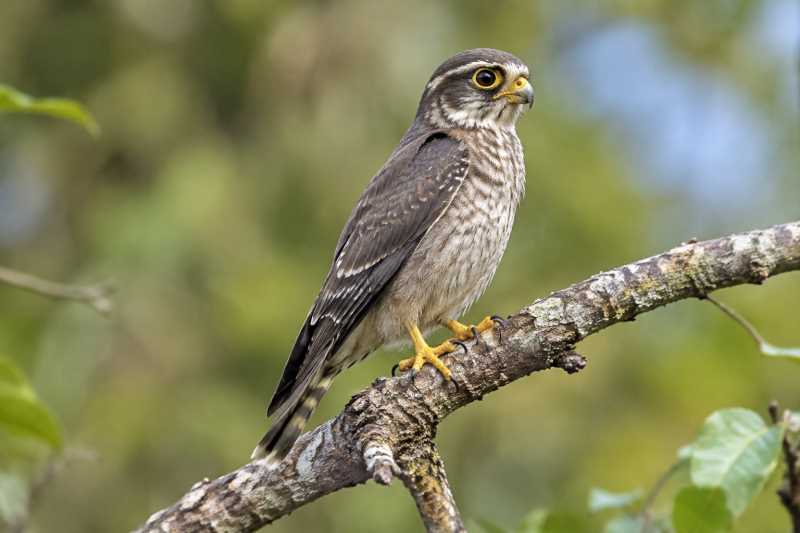
The Spot-winged Falconet is a small bird of prey belonging to the Falconidae family. It is notable for its striking plumage and compact size, measuring approximately 23 to 25 centimeters in length, with a wingspan of about 40 to 45 centimeters. The species exhibits sexual dimorphism, with females generally larger than males.
The falconet’s plumage is a mix of gray, white, and black, with its most distinctive feature being the conspicuous white spots on its wings, which give the bird its common name. The head is adorned with a black mask-like pattern around the eyes, contrasting sharply with its white throat and underparts. These features not only enhance its aesthetic appeal but also aid in camouflage among the dappled light and shadows of its habitat.
Geographic Range and Habitat
The Spot-winged Falconet is predominantly found in South America, with its range extending across parts of Argentina, Bolivia, Paraguay, and Uruguay. It inhabits a variety of environments, from open woodlands and savannas to scrublands and agricultural areas. The bird prefers regions where scattered trees and open spaces converge, providing ample hunting grounds and perching sites.
This bird’s adaptability to different habitats is a testament to its resilience. However, it shows a preference for areas where human disturbance is minimal, as excessive habitat modification can disrupt its hunting patterns and nesting sites.
Behavioral Traits
Despite its small size, the Spot-winged Falconet is a formidable predator. It primarily feeds on insects and small vertebrates, including lizards, small birds, and rodents. The falconet employs a perch-and-scan hunting strategy, where it perches on elevated vantage points to scan for prey before executing swift, precise attacks.
The bird is diurnal, with heightened activity during the early morning and late afternoon when its prey is most active. Socially, the Spot-winged Falconet is often seen alone or in pairs, especially during the breeding season. It communicates through a series of high-pitched calls, which serve various purposes, from marking territory to signaling potential threats.
Breeding and Nesting
The breeding season for the Spot-winged Falconet typically occurs between September and December, coinciding with the spring and early summer months in the Southern Hemisphere. During this period, pairs engage in elaborate courtship displays that include aerial acrobatics and vocalizations.
Nesting occurs in tree cavities or abandoned nests of other birds, where the female lays a clutch of two to four eggs. Both parents share incubation duties, which last approximately 28 to 30 days. Upon hatching, the chicks are altricial and rely heavily on parental care for food and protection until they fledge, usually around 30 to 35 days after hatching.
Conservation Status and Threats
The Spot-winged Falconet is currently classified as "Least Concern" by the International Union for Conservation of Nature (IUCN). However, like many species, it faces threats from habitat destruction, primarily due to agricultural expansion and urbanization. The decline in suitable nesting sites and prey availability poses significant challenges to its long-term survival.
Conservation efforts are essential to ensure the continued existence of this species. Protecting its natural habitat, establishing conservation areas, and promoting sustainable land-use practices can help mitigate the adverse effects of human activity.
Conclusion
The Spot-winged Falconet is a testament to the rich biodiversity and ecological complexity of the South American continent. Its unique characteristics and adaptability make it a subject of interest for researchers and bird watchers alike. By understanding and conserving this remarkable species, we contribute to the broader efforts of preserving global biodiversity and maintaining ecological balance.
As we continue to explore and appreciate the natural world, the Spot-winged Falconet serves as a reminder of the intricate connections that bind all living creatures. Through awareness and conservation, we can ensure that future generations have the opportunity to marvel at the beauty and grace of this and other remarkable species.
Related posts