The Necklaced Woodpecker: A Comprehensive Insight into Dryobates pernyii
The Necklaced Woodpecker, scientifically known as Dryobates pernyii, is a fascinating avian species that captivates bird enthusiasts and ornithologists alike with its distinct appearance and unique behaviors. This article delves into the various aspects of the Necklaced Woodpecker, exploring its habitat, physical characteristics, behaviors, and conservation status.
Habitat and Distribution
The Necklaced Woodpecker is native to the montane forests of East Asia, predominantly found in the regions of China and northern Vietnam. These birds thrive in subtropical or tropical moist montane forests, where they find ample food and suitable nesting sites. Their preference for higher altitudes, typically between 1,000 to 3,000 meters above sea level, provides them with a cooler climate and a rich ecosystem teeming with insects.
Despite their preference for montane environments, Necklaced Woodpeckers can sometimes be spotted in lower-altitude forests, especially during seasonal migrations or in search of food. The deforestation and habitat destruction in parts of their range pose significant challenges to their populations, though they are presently not listed as endangered.
Physical Characteristics
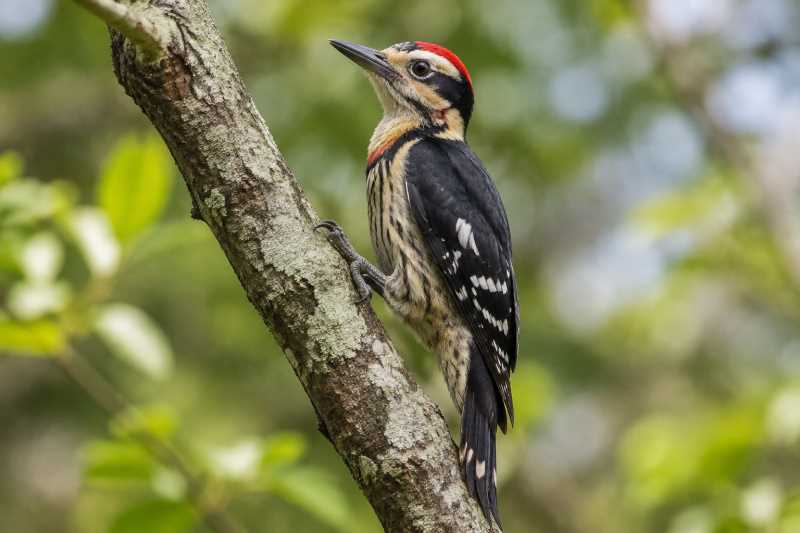
The Necklaced Woodpecker is a medium-sized bird, measuring approximately 20 to 22 centimeters in length. One of the most striking features of this species is its plumage. As the name suggests, the bird has a ‘necklace’ of black markings that stand out against its predominantly white underparts. These markings are complemented by the bird’s black-and-white barred back and wings, which provide excellent camouflage against the bark of trees.
The head of the Necklaced Woodpecker is adorned with a vibrant red crown, more pronounced in males than females, making it a key characteristic for sex differentiation. The bill is robust and chisel-like, perfectly adapted for drilling into wood in search of insects and larvae.
Behavior and Diet
Necklaced Woodpeckers are primarily insectivorous, with a diet consisting mainly of beetles, ants, and other wood-boring insects. They use their strong bills to peck at tree bark, creating characteristic holes that serve as a sign of their presence. Their long, sticky tongues help extract insects from deep within the wood.
In addition to insects, these woodpeckers are known to consume fruits and nuts, especially during the winter months when insect availability is reduced. Their foraging behavior is often observed in pairs or small family groups, and they are known to be territorial, defending their feeding and nesting sites from intruders.
Breeding and Nesting
Breeding season for the Necklaced Woodpecker typically occurs from April to June. During this time, males perform elaborate displays to attract females, including drumming on hollow wood and displaying their red crowns prominently. Once a pair forms, they work together to excavate a nesting cavity in a tree.
The female typically lays a clutch of 3 to 5 eggs, which are incubated by both parents. After about two weeks, the eggs hatch, and both parents share the responsibility of feeding and caring for the chicks. The young woodpeckers fledge after about three weeks but may remain with their parents for some time before venturing out on their own.
Conservation Status
Currently, the Necklaced Woodpecker is classified as Least Concern by the International Union for Conservation of Nature (IUCN). However, ongoing habitat destruction and fragmentation pose potential threats to their populations. Conservation efforts aimed at preserving montane forest habitats are crucial for the continued survival of this species.
Efforts to monitor population trends and protect critical habitats are essential in ensuring that the Necklaced Woodpecker continues to thrive. Birdwatchers and researchers play a vital role in these efforts, contributing valuable data and raising awareness about the challenges faced by these remarkable birds.
Conclusion
The Necklaced Woodpecker, with its striking appearance and unique behaviors, is a testament to the rich biodiversity found in East Asia’s montane forests. Understanding the ecology and habits of Dryobates pernyii is essential for its conservation and offers insights into the complex interplay between avian species and their environments. As we continue to study and protect these beautiful birds, we ensure that future generations will have the opportunity to appreciate their presence in the wild.
References
- BirdLife International. (2021). "Dryobates pernyii". IUCN Red List of Threatened Species.
- Winkler, H., Christie, D.A., & Nurney, D. (1995). "Woodpeckers: A Guide to the Woodpeckers of the World".
- Collar, N.J. (2005). "Family Picidae (Woodpeckers)" in "Handbook of the Birds of the World".
Related posts