The Remarkable Little Grey Woodpecker: An In-Depth Exploration
In the lush, verdant expanses of Africa’s tropical rainforests, a small, yet captivating bird makes its presence known through its rhythmic drumming on tree trunks. Meet the Little Grey Woodpecker (Dendropicos elachus), a lesser-known member of the Picidae family that captivates ornithologists and birdwatchers alike with its unique behaviors and adaptations.
Taxonomy and Identification
The Little Grey Woodpecker is a part of the genus Dendropicos, which comprises several species of woodpeckers endemic to Africa. First described in the early 20th century, Dendropicos elachus is often overshadowed by its larger and more vibrant relatives. However, its subtle beauty and ecological significance are noteworthy.
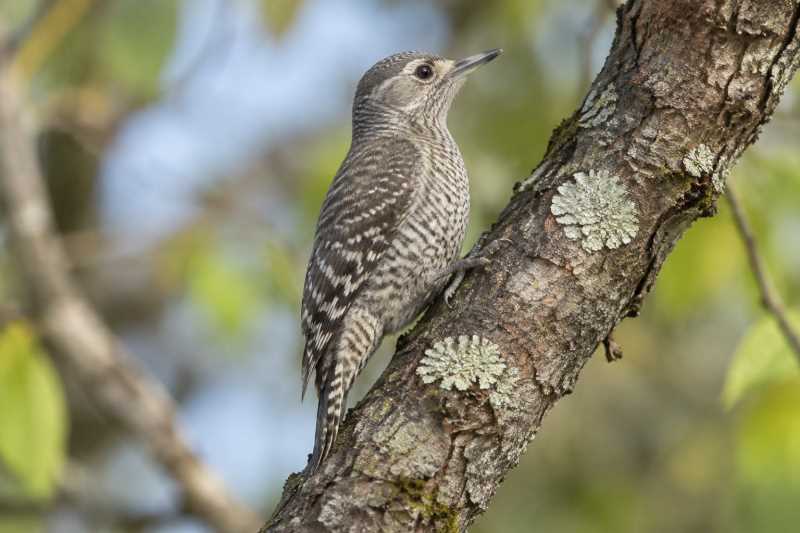
Measuring approximately 16 to 18 centimeters in length, the Little Grey Woodpecker is characterized by its predominantly grey plumage, with subtle olive or brownish tinges that help camouflage it against the bark of trees. Males can be distinguished by a small red patch on the nape, a feature absent in females. Its underparts are lighter, often exhibiting a slightly barred pattern that varies among individuals.
Habitat and Distribution
The Little Grey Woodpecker is primarily found in West and Central Africa, thriving in the humid tropical rainforests that stretch across this region. Countries like Nigeria, Cameroon, and the Democratic Republic of the Congo host significant populations. The bird’s habitat preference includes dense forests with a high canopy, although it can occasionally be spotted in secondary growth and forest edges.
Adapted to life in the forest, the Little Grey Woodpecker plays a crucial role in its ecosystem. By feeding on insects hidden beneath the bark of trees, it helps control pest populations and contributes to the health of the forest.
Behavior and Ecology
Woodpeckers are renowned for their drumming, and the Little Grey Woodpecker is no exception. This behavior, which involves rapid pecking on tree trunks, serves multiple purposes. Primarily, it is a foraging technique used to uncover insects and larvae hiding beneath the bark. Additionally, drumming acts as a communication tool, helping individuals establish territory and attract mates.
Apart from drumming, the Little Grey Woodpecker employs its long, sticky tongue to extract insects from crevices, showcasing a remarkable adaptation for survival in its arboreal habitat. Its zygodactyl feet—two toes facing forward and two backward—provide stability as it navigates the vertical surfaces of trees.
The diet of the Little Grey Woodpecker is primarily insectivorous, consisting of ants, beetles, and larvae. However, it occasionally supplements its diet with fruits and seeds, demonstrating opportunism in its feeding habits.
Reproduction and Lifespan
Breeding in the Little Grey Woodpecker typically occurs during the dry season when food resources are more accessible. Nesting takes place in tree cavities, which the birds excavate themselves. These cavities provide a safe environment for raising their young, protecting them from predators and harsh weather.
A typical clutch consists of 2 to 4 eggs, which both parents incubate. Once hatched, the chicks are altricial, meaning they are born blind and helpless, relying entirely on their parents for nourishment and protection. The fledging period lasts several weeks, during which the chicks develop the necessary skills for independence.
The lifespan of the Little Grey Woodpecker in the wild is not well-documented, but similar species in the Picidae family can live up to 10 years or more, depending on environmental conditions and predation pressures.
Conservation Status
As of the latest assessments, the Little Grey Woodpecker is classified as Least Concern by the International Union for Conservation of Nature (IUCN). However, like many forest-dwelling species, it faces potential threats from habitat destruction and fragmentation due to logging, agriculture, and urban expansion.
Efforts to conserve the Little Grey Woodpecker’s habitat are crucial for its continued survival. Protecting large swathes of forest not only benefits this woodpecker but also countless other species that share its ecosystem.
Conclusion
The Little Grey Woodpecker, though small and often overlooked, plays a vital role in maintaining the ecological balance of its forest home. Its adaptability, unique behaviors, and contributions to its environment highlight the importance of conserving biodiversity in Africa’s tropical rainforests. By understanding and protecting such species, we ensure the health and vitality of ecosystems that are essential to our planet’s future.
Related posts