New Guinea Flightless Rail: A Hidden Gem of Biodiversity
The New Guinea Flightless Rail, scientifically known as Megacrex inepta, is a fascinating and enigmatic bird species that inhabits the lush rainforests of New Guinea. This elusive bird is part of the Rallidae family, which is characterized by its typically small to medium-sized ground-dwelling birds. Despite being relatively obscure, the New Guinea Flightless Rail plays a significant role in the ecosystem and serves as an important reminder of the unique biodiversity that New Guinea holds.
Taxonomy and Evolutionary Background
The New Guinea Flightless Rail is a member of the genus Megacrex, a genus that includes only this single species. This bird is a remarkable example of island evolution, where species often evolve unique characteristics due to isolation and specific environmental pressures. The evolutionary journey of the New Guinea Flightless Rail is a testament to the adaptive capabilities of avian species in the face of isolation and limited resources. Its flightlessness is a trait that has evolved due to the absence of ground predators, allowing the bird to thrive without the need for flight.
Habitat and Distribution
New Guinea, the world’s second-largest island, offers a rich tapestry of ecosystems ranging from coastal mangroves to alpine forests. The New Guinea Flightless Rail, however, is primarily found in the dense, swampy lowland rainforests where it navigates the thick underbrush with ease. These habitats provide the perfect cover and abundant food resources that sustain this secretive bird.
The distribution of Megacrex inepta is largely restricted to New Guinea, and it is particularly prevalent in areas with dense vegetation and ample water sources. This specialized habitat preference makes it vulnerable to habitat destruction, particularly due to deforestation and land conversion for agriculture.
Physical Characteristics
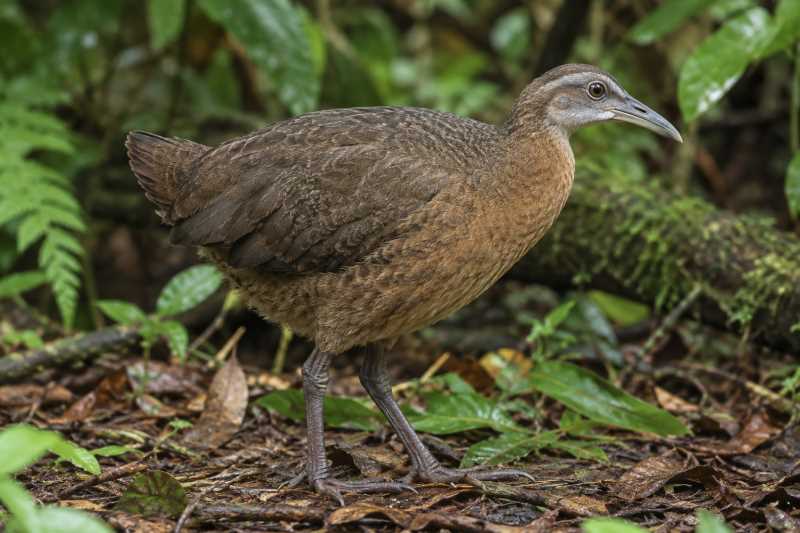
The New Guinea Flightless Rail is a medium-sized bird, typically measuring around 35-45 cm in length. Its plumage is predominantly dark brown with a slight iridescent sheen, which helps it blend seamlessly into the forest floor. The bird’s long legs are adapted for walking and running, and its toes are spread to navigate the soft, uneven terrain of its swampy habitat.
One of the most distinctive features of Megacrex inepta is its lack of flight capability. Unlike many other rail species that possess the ability to fly, albeit poorly, the New Guinea Flightless Rail has completely lost this ability over time, adapting instead to a terrestrial lifestyle.
Behavior and Diet
The behavior of the New Guinea Flightless Rail is as unique as its evolutionary path. This bird is known for its timid and elusive nature, often staying hidden within the dense understory of its habitat. It is primarily a solitary bird, though it may occasionally be seen in pairs or small family groups.
Diet-wise, the New Guinea Flightless Rail is omnivorous, feeding on a diverse array of invertebrates, small vertebrates, seeds, and fruits. Its feeding habits play a crucial role in the ecosystem, as it helps control insect populations and disperse seeds, contributing to forest regeneration.
Conservation Status and Threats
The New Guinea Flightless Rail is currently classified as Near Threatened by the International Union for Conservation of Nature (IUCN). The primary threats to its survival are habitat loss and degradation due to logging, agricultural expansion, and infrastructure development. Additionally, introduced predators such as cats and dogs pose a significant risk to the bird’s population.
Conservation efforts are crucial to ensure the survival of this unique species. Protecting its habitat through the establishment of reserves and promoting sustainable land-use practices are essential steps. Public education and awareness campaigns can also play a pivotal role in conserving the New Guinea Flightless Rail by highlighting its ecological importance and the threats it faces.
Conclusion
The New Guinea Flightless Rail, Megacrex inepta, is a remarkable testament to the biodiversity and evolutionary wonders that New Guinea has to offer. Its story is one of adaptation and survival, reflecting the delicate balance of ecosystems on isolated islands. As we continue to explore and understand the natural world, the conservation of such species becomes ever more critical. By safeguarding the New Guinea Flightless Rail and its habitat, we not only preserve a unique piece of avian diversity but also contribute to the broader effort of conserving the planet’s irreplaceable ecosystems.
In conclusion, the New Guinea Flightless Rail is more than just a bird; it is a symbol of the intricate and interconnected web of life that exists on our planet. Protecting it means protecting the legacy of biodiversity that New Guinea represents and ensuring that future generations can marvel at the wonders of nature in all its forms.
Related posts