The Blue Duck: A Unique Gem of New Zealand’s Avifauna
Among the myriad of bird species that grace New Zealand’s diverse landscapes, the Blue Duck, or Whio (Hymenolaimus malacorhynchos), stands out as one of the most unique and intriguing. This striking bird, endemic to New Zealand, is not only a symbol of the country’s rich natural heritage but also a testament to the ecological significance of riverine habitats.
A Distinctive Resident of Fast-Flowing Rivers
The Blue Duck is primarily found in the fast-flowing rivers and streams of New Zealand’s North and South Islands. Its habitat preference is indicative of its specialized adaptations. Unlike many other duck species that prefer still or slow-moving waters, the Blue Duck thrives in turbulent, clear waters with rocky substrates.
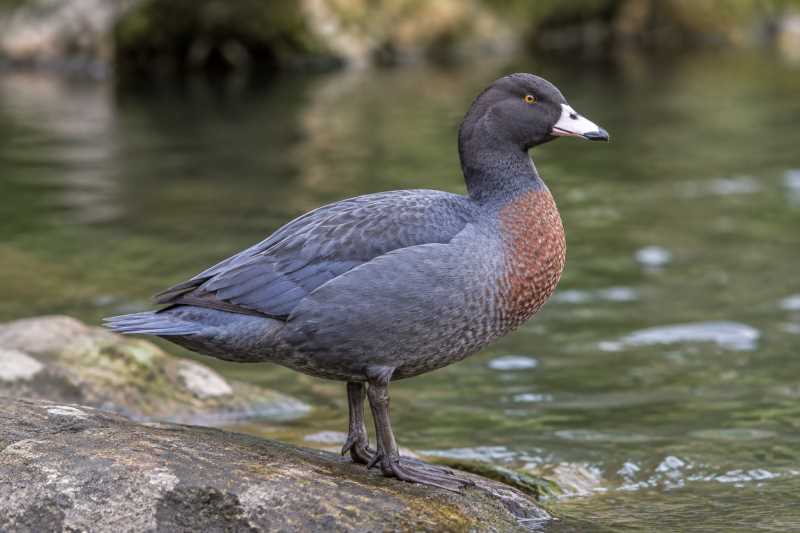
With slate-blue plumage accented by a striking white eye patch, the Blue Duck is instantly recognizable. Its unique appearance is complemented by a soft, pliable bill, specially adapted for foraging in its fast-flowing habitat. This bill allows the Blue Duck to feed on a diet primarily composed of aquatic invertebrates, which it skillfully extracts from under rocks and submerged logs.
Ecological Role and Behavioral Characteristics
The Blue Duck plays a vital ecological role in its riverine ecosystem. As a predator of aquatic invertebrates, it helps maintain the balance of species within its habitat. Moreover, its presence is an indicator of healthy, unpolluted water systems, making it a critical species for monitoring ecosystem health.
Behaviorally, the Blue Duck is known for its strong territorial instincts. Pairs often occupy and defend stretches of river year-round, with males displaying aggressive behavior to protect their territories. This territoriality is crucial for ensuring access to optimal feeding grounds and nesting sites.
Breeding occurs from August to November, with females laying an average of 4-6 eggs in nests built close to the water’s edge. The nests are typically well-concealed among rocks or dense vegetation, providing protection from predators. Both parents partake in rearing the young, which are precocial and can swim almost immediately after hatching.
Conservation Challenges and Efforts
Despite its fascinating ecology, the Blue Duck faces significant conservation challenges. Habitat destruction, primarily due to hydrological alterations, deforestation, and agricultural expansion, poses a severe threat to its survival. Moreover, the introduction of invasive species, such as stoats and rats, has exacerbated predation pressures on eggs and ducklings.
Conservation efforts have been underway to protect and restore Blue Duck populations. The New Zealand Department of Conservation (DOC) has implemented several strategies, including predator control programs and habitat restoration initiatives. These efforts have been supplemented by community-led conservation groups that actively participate in monitoring populations and enhancing public awareness.
Captive breeding programs have also been established to bolster wild populations. These programs aim to rear ducklings in a controlled environment before releasing them into protected areas. Such initiatives are crucial for ensuring genetic diversity and enhancing population resilience.
The Blue Duck as a Cultural Icon
Beyond its ecological significance, the Blue Duck holds cultural importance for the indigenous Māori people, who regard it as a taonga, or treasure. The bird’s Māori name, Whio, reflects the soft whistling call it makes, a sound that has become synonymous with the serene, untouched rivers of New Zealand.
The Blue Duck is also featured on the New Zealand ten-dollar note, symbolizing its status as a national icon. This representation underscores the importance of conserving the species as a vital part of New Zealand’s natural and cultural heritage.
Looking Forward: A Call to Action
Preserving the Blue Duck requires a concerted effort from both governmental and non-governmental entities. Continued research is essential to understand the species’ ecological needs and adapt conservation strategies accordingly. Public engagement and education are equally critical to foster a sense of stewardship among local communities.
As a flagship species, the Blue Duck draws attention to the broader environmental issues affecting New Zealand’s freshwater ecosystems. By protecting the Blue Duck, conservationists aim to secure a future not only for this unique bird but for the myriad of species that share its habitat.
In conclusion, the Blue Duck is more than just a bird; it is a symbol of resilience and a reminder of the delicate balance of nature. Ensuring its survival is a challenge that requires dedication, collaboration, and a deep respect for the natural world.
Related posts