Jackal Buzzard: The Majestic Raptor of Southern Africa
The Jackal Buzzard (Buteo rufofuscus) is a captivating bird of prey that graces the skies of southern Africa with its striking appearance and impressive presence. This raptor, belonging to the family Accipitridae, is renowned for its unique plumage, powerful flight, and significant ecological role. In this article, we delve into the fascinating world of the Jackal Buzzard, exploring its habitat, behavior, and conservation status.
Physical Characteristics
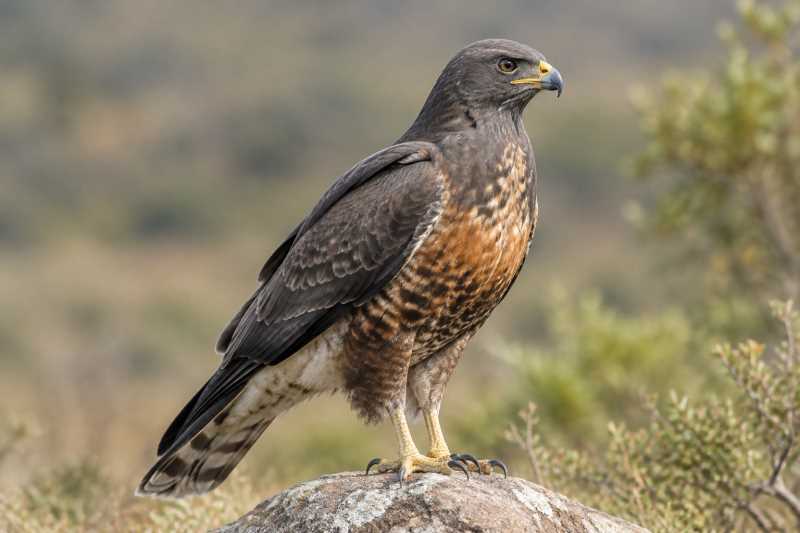
The Jackal Buzzard is a medium-sized raptor, with adults typically measuring between 45-55 cm in length and boasting a wingspan of approximately 120-140 cm. One of the most distinguishing features of this buzzard is its striking plumage. The adult birds exhibit a predominantly dark chocolate-brown body, with a contrasting white throat and chest, adorned with a reddish-brown band that adds to their striking appearance. The tail is short and square, often with a distinctive rusty-red hue, which is particularly noticeable in flight.
Juvenile Jackal Buzzards, on the other hand, are more muted in color, with a lighter brown plumage and less pronounced markings. It takes about two to three years for juveniles to attain the full adult plumage, during which they undergo several molting stages.
Habitat and Distribution
The Jackal Buzzard is endemic to southern Africa, with its range primarily encompassing South Africa, Lesotho, and parts of Namibia and Botswana. These birds are highly adaptable and can be found in a variety of habitats, including open grasslands, savannas, scrublands, and mountainous regions. They are often seen soaring over open landscapes, taking advantage of thermals to glide effortlessly across vast distances.
Unlike some raptor species that prefer dense forests, the Jackal Buzzard thrives in open areas where it can easily spot potential prey. Its adaptability to different environments has contributed to its relatively stable population across its range.
Diet and Hunting Behavior
The Jackal Buzzard is an opportunistic predator with a diverse diet. Its primary diet consists of small mammals, such as rodents and hares, which it hunts by perching on a vantage point or soaring high in the sky to spot its prey. Once a target is identified, the buzzard engages in a swift and powerful dive, using its sharp talons to capture the unsuspecting animal.
In addition to mammals, the Jackal Buzzard also preys on birds, reptiles, and insects, and it is not uncommon for it to scavenge carrion. This dietary flexibility allows it to adapt to varying food availability in different habitats.
Breeding and Lifecycle
Jackal Buzzards are monogamous birds, forming long-term pair bonds that often last for life. The breeding season typically occurs between July and December, depending on the region. During this time, pairs engage in elaborate courtship displays, which include acrobatic flight maneuvers and ritualized feeding behaviors.
The female lays between one and three eggs in a large nest constructed from sticks and lined with softer materials such as grass and leaves. These nests are usually situated on cliffs or in large trees, providing a safe vantage point from which to rear their young. Both parents share the responsibility of incubating the eggs, which hatch after approximately 40-45 days.
Once hatched, the chicks are cared for by both parents, and they fledge at around 50-60 days old. The young birds remain dependent on their parents for several months before becoming fully independent and capable of fending for themselves.
Conservation Status and Threats
The Jackal Buzzard is currently classified as "Least Concern" by the International Union for Conservation of Nature (IUCN), indicating that it is not considered to be at immediate risk of extinction. However, like many raptor species, it faces several threats that could impact its long-term survival.
Habitat loss due to agricultural expansion, urbanization, and infrastructure development poses a significant threat to the Jackal Buzzard’s natural habitat. Additionally, the use of pesticides and rodenticides can have detrimental effects on their health, as these chemicals can accumulate in the food chain.
Furthermore, human persecution, whether intentional or accidental, can also pose a threat. Some farmers may view Jackal Buzzards as a threat to livestock, leading to conflicts. Conservation efforts aimed at raising awareness and promoting coexistence between humans and these raptors are crucial for their future.
Conclusion
The Jackal Buzzard is an iconic raptor that plays a vital role in the ecosystems of southern Africa. Its adaptability, striking appearance, and ecological importance make it a fascinating subject of study and admiration. While its population remains stable, ongoing conservation efforts are essential to ensure that future generations can continue to enjoy the sight of these majestic birds soaring across the African skies.
By understanding and appreciating the unique characteristics and ecological contributions of the Jackal Buzzard, we can foster a greater appreciation for the natural world and work towards its preservation.
Related posts