The Enchanting Fiery-tailed Awlbill: A Jewel of the Aviary World
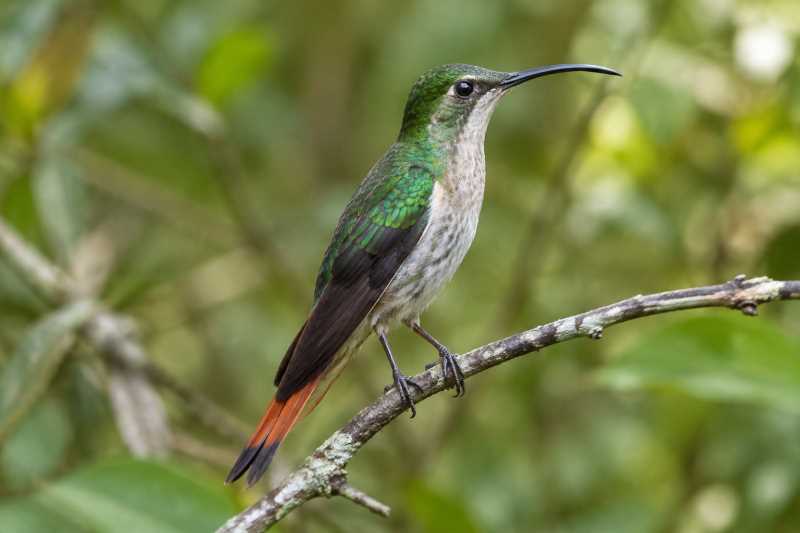
In the vibrant tapestry of hummingbird species, the Fiery-tailed Awlbill (Avocettula recurvirostris) stands out as a particularly captivating figure. This diminutive avian marvel, with its striking plumage and unique morphological characteristics, is a testament to nature’s artistry and evolutionary ingenuity.
Habitat and Distribution
The Fiery-tailed Awlbill inhabits the lush, tropical landscapes of South America, with its range extending across the diverse ecosystems of Brazil, Venezuela, Guyana, and Suriname. These birds are predominantly found in lowland rainforests, thriving in environments rich with floral abundance and dense vegetation. The species has adapted to a variety of forested habitats, including secondary forests and forest edges, where it can exploit the resources of both primary and disturbed areas.
Distinctive Features
The Fiery-tailed Awlbill is aptly named for its vibrant orange-red tail, which stands in stark contrast to its predominantly green and blue plumage. This striking tail is not just an ornamental feature but plays a role in its courtship displays and territorial interactions. The bird measures about 10 cm in length, making it a small but formidable presence in its natural habitat.
A noteworthy feature of the Fiery-tailed Awlbill is its bill, which is slightly upturned and awl-shaped. This unique adaptation allows the bird to access nectar from a variety of flowers, some of which may be inaccessible to other hummingbird species. The awlbill’s specialized bill is a prime example of evolutionary adaptation, as it enables the bird to exploit ecological niches with reduced competition.
Feeding and Behavior
As with many hummingbirds, the Fiery-tailed Awlbill’s diet is predominantly composed of nectar, which it obtains from a wide array of flowering plants. This diet is supplemented with small insects and spiders, providing essential proteins for growth and energy. The bird’s feeding strategy involves a combination of hovering and perching, with the former facilitated by its rapid wing beats that create a characteristic humming sound.
The Fiery-tailed Awlbill is known for its territorial behavior, particularly during the breeding season. Males are fiercely protective of their nectar-rich territories, engaging in aerial displays and vocalizations to deter intruders. These displays are not only a testament to their agility and stamina but also serve as a mechanism to attract potential mates.
Breeding and Lifecycle
Breeding for the Fiery-tailed Awlbill typically coincides with the flowering peaks of its habitat, ensuring an abundant supply of nectar for feeding. The female is responsible for building the nest, which is usually constructed from plant fibers, lichens, and spider silk, allowing it to blend seamlessly with the surrounding foliage.
After a brief courtship, the female lays two small eggs, which she incubates for about 14-16 days. Upon hatching, the chicks are altricial, requiring significant parental investment. The female alone tends to the young, feeding them a diet rich in regurgitated insects and nectar until they fledge approximately three weeks after hatching.
Conservation Status
Currently, the Fiery-tailed Awlbill is classified as a species of Least Concern by the International Union for Conservation of Nature (IUCN). However, its dependence on specific habitats makes it vulnerable to deforestation and habitat fragmentation. Conservation efforts aimed at preserving tropical forests are essential to ensuring the long-term survival of this species and many others that share its ecosystem.
The Ecological Significance of the Fiery-tailed Awlbill
Beyond its aesthetic appeal, the Fiery-tailed Awlbill plays a critical role in its ecosystem as a pollinator. Its interactions with various flowering plants facilitate cross-pollination, contributing to the genetic diversity and resilience of plant populations. This symbiotic relationship underscores the intricate interconnectedness of the natural world and highlights the importance of conserving avian species.
In conclusion, the Fiery-tailed Awlbill is a remarkable example of evolutionary specialization and ecological significance. Its vibrant appearance and dynamic behaviors captivate bird enthusiasts and researchers alike, serving as an ambassador for the biodiversity of tropical ecosystems. Protecting the habitats of the Fiery-tailed Awlbill and other hummingbirds is crucial for the preservation of global biodiversity and the intricate web of life it supports.
Related posts