The Enigmatic New Britain Dwarf Kingfisher: A Jewel of the Forest
The New Britain Dwarf Kingfisher (Ceyx sacerdotis) is a captivating avian species that has intrigued ornithologists and bird enthusiasts alike. As a member of the Alcedinidae family, this bird is not only a testament to the biodiversity of the Australasian region but also a symbol of the enigmatic beauty found within the forests of New Britain, an island in Papua New Guinea.
Habitat and Distribution
The New Britain Dwarf Kingfisher is endemic to the island of New Britain, part of the Bismarck Archipelago. This bird thrives in lowland forests and subtropical or tropical moist montane forests, demonstrating its adaptability to different forested environments. The lush and dense rainforests of New Britain provide an ideal habitat, offering ample food resources and nesting sites. Despite its limited geographical range, the New Britain Dwarf Kingfisher has carved out a niche for itself in these rich ecosystems.
Physical Characteristics
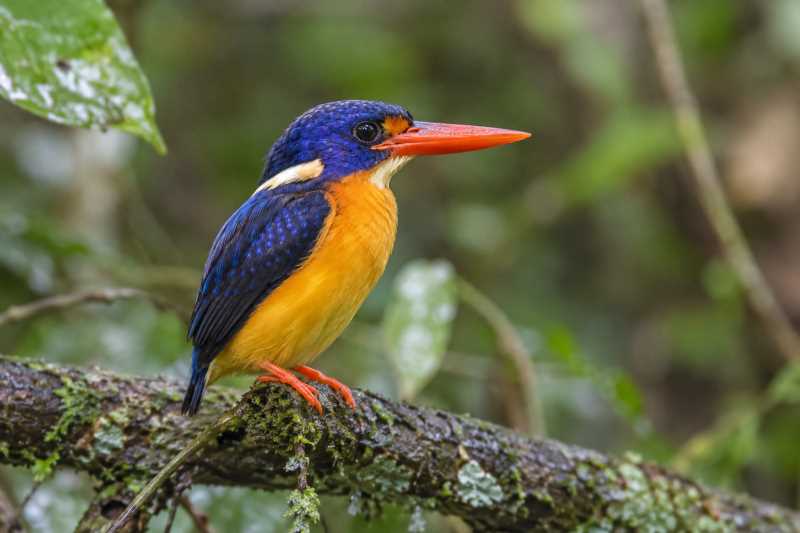
One of the most striking features of the New Britain Dwarf Kingfisher is its vibrant plumage. The bird displays a dazzling array of colors, predominantly featuring bright blues and oranges. This stunning coloration not only aids in camouflage within its forest habitat but also makes it a visual delight for observers. Measuring approximately 12-14 centimeters in length, the New Britain Dwarf Kingfisher is small yet robust, with a sturdy build that allows it to navigate the dense underbrush efficiently.
Behavior and Diet
The New Britain Dwarf Kingfisher is primarily insectivorous, feeding on a variety of insects and small invertebrates. Its hunting technique is both fascinating and precise, involving quick, darting movements to capture prey. The bird’s keen eyesight is instrumental in detecting the slightest of movements, while its sharp bill is perfectly adapted for grasping and consuming its catch.
In terms of behavior, these kingfishers are known for their solitary or paired existence, often exhibiting territoriality. Their call is a distinctive, high-pitched whistle, which serves as a communication tool among individuals, especially during the breeding season. The breeding behavior of the New Britain Dwarf Kingfisher remains somewhat elusive, largely due to the challenges of observing these birds in their dense forest habitat.
Conservation Status
The New Britain Dwarf Kingfisher is currently classified as Near Threatened on the International Union for Conservation of Nature (IUCN) Red List. This status is primarily due to habitat loss driven by logging and agricultural expansion, which pose significant threats to the bird’s natural environment. The conservation of its forest habitat is critical to ensuring the survival of this species.
Efforts to conserve the New Britain Dwarf Kingfisher involve habitat protection and the promotion of sustainable land-use practices. Conservation organizations are working alongside local communities to develop strategies that balance ecological preservation with economic needs. These initiatives are crucial for mitigating the impacts of habitat destruction and ensuring a future for this remarkable species.
Scientific Significance and Future Research
The New Britain Dwarf Kingfisher holds significant scientific interest due to its unique ecological niche and adaptation strategies. Continued research into its behavior, breeding patterns, and ecological interactions is essential for a comprehensive understanding of its role within the forest ecosystem of New Britain.
Future studies could focus on the impacts of environmental changes on its population dynamics and explore potential conservation techniques that could be employed. With the advancement of technology, such as the use of bioacoustics for monitoring and tracking, researchers have new tools at their disposal to study these elusive birds in greater detail.
Conclusion
The New Britain Dwarf Kingfisher is a testament to the extraordinary biodiversity found within the rainforests of Papua New Guinea. Its vibrant appearance and captivating behavior make it a subject of intrigue and admiration. However, the threats it faces highlight the broader challenges of biodiversity conservation in the face of human-induced environmental changes.
By raising awareness and supporting conservation efforts, we can contribute to the preservation of this spectacular species and its habitat. The New Britain Dwarf Kingfisher not only enriches the natural heritage of New Britain but also serves as a reminder of the intricate beauty and complexity of the world’s ecosystems.
Related posts