Sumba Hornbill: A Jewel of Indonesia’s Avian Diversity
Indonesia, an archipelago renowned for its rich biodiversity, is home to a multitude of unique and fascinating species. Among these, the Sumba Hornbill (Rhyticeros everetti) stands out as a remarkable bird, not only for its striking appearance but also for its important role in the ecosystem. Found exclusively on the island of Sumba, this hornbill is a testament to the rich avian diversity of the region.
Description and Characteristics
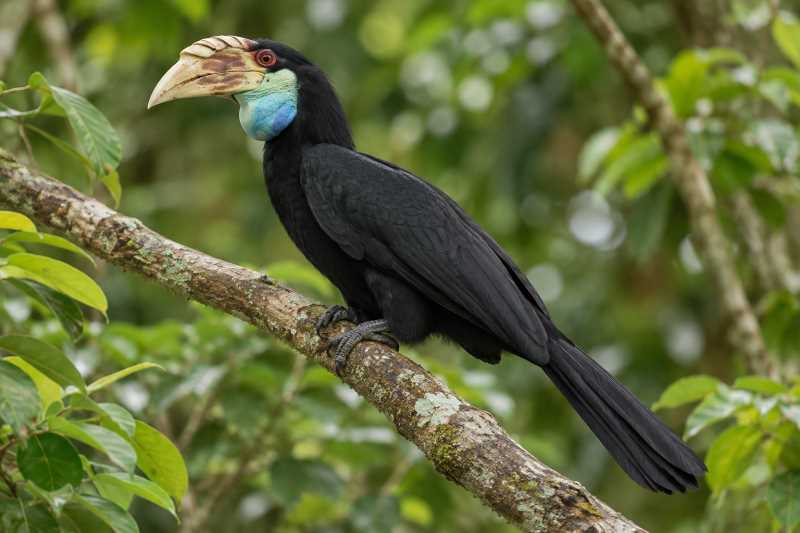
The Sumba Hornbill is a medium to large-sized bird, with males typically measuring around 70 centimeters and females slightly smaller. These birds are easily identifiable by their large, curved bills and casque, a hollow structure on top of the bill, which is more pronounced in males. The plumage is predominantly black, contrasted by a white tail and a striking yellow throat patch. The eyes are surrounded by a patch of bare skin, which is blue in females and white in males, adding to their distinctive appearance.
One of the most captivating features of the Sumba Hornbill is its bill. The bill is not merely for show; it plays a vital role in acquiring food and manipulating objects. The casque’s function is still a subject of study, but it is believed to be involved in sound amplification and mate attraction.
Habitat and Distribution
The Sumba Hornbill is endemic to Sumba Island, part of the Lesser Sunda Islands in Indonesia. It inhabits tropical dry forests, which are characterized by a distinct dry season that influences the availability of food and nesting sites. These hornbills are most often found in primary and secondary forests, where they can find the large trees necessary for nesting and roosting.
Due to its limited range, the Sumba Hornbill’s habitat is particularly vulnerable to deforestation and habitat degradation. Human activities such as logging, agriculture expansion, and infrastructure development pose significant threats to the forests of Sumba, placing the hornbill’s future at risk.
Behavior and Ecology
Sumba Hornbills are primarily frugivorous, with their diet consisting mainly of fruits, particularly figs, which are abundant in their habitat. However, they are also known to consume small animals, insects, and seeds. This varied diet plays a crucial role in seed dispersal, making the hornbill an important ecological component for maintaining forest diversity.
These birds are monogamous and exhibit interesting breeding behavior. The female hornbill will seal herself inside a tree cavity using a mixture of mud, droppings, and food debris, leaving only a small slit open. The male is responsible for providing food to the female and the chicks, passing it through the slit until they are ready to fledge. This unique nesting strategy offers protection from predators but also makes them highly dependent on large, mature trees.
Conservation Status and Challenges
The Sumba Hornbill is currently listed as Vulnerable on the IUCN Red List of Threatened Species. The primary threat to their survival is habitat loss due to deforestation. In recent years, extensive logging and land conversion for agriculture have led to significant reductions in suitable habitats.
Conservation efforts are underway to protect the remaining forests on Sumba. Initiatives include establishing protected areas, promoting sustainable land-use practices, and conducting research to better understand the ecology and needs of the hornbill. Additionally, raising awareness and involving local communities in conservation activities are crucial steps in ensuring the survival of this iconic species.
The Importance of Sumba Hornbill Conservation
The conservation of the Sumba Hornbill is not just about preserving a single species; it is also about maintaining the health and diversity of the entire ecosystem. As a keystone species, the Sumba Hornbill plays a vital role in seed dispersal and forest regeneration. Protecting this species helps safeguard the broader biodiversity of Sumba Island.
Moreover, the Sumba Hornbill holds cultural significance for the local communities, symbolizing the island’s unique natural heritage. By conserving this species, we also preserve a part of the cultural identity that is intrinsically linked to the natural environment.
Conclusion
The Sumba Hornbill is a remarkable example of Indonesia’s unique avian diversity. Its striking appearance, fascinating behaviors, and ecological significance make it a species worthy of admiration and protection. As threats to its habitat continue to grow, concerted conservation efforts are essential to ensure that future generations can witness the beauty and ecological contributions of the Sumba Hornbill. By working together, we can help secure a future for this extraordinary bird and the vibrant ecosystem it represents.
Related posts