
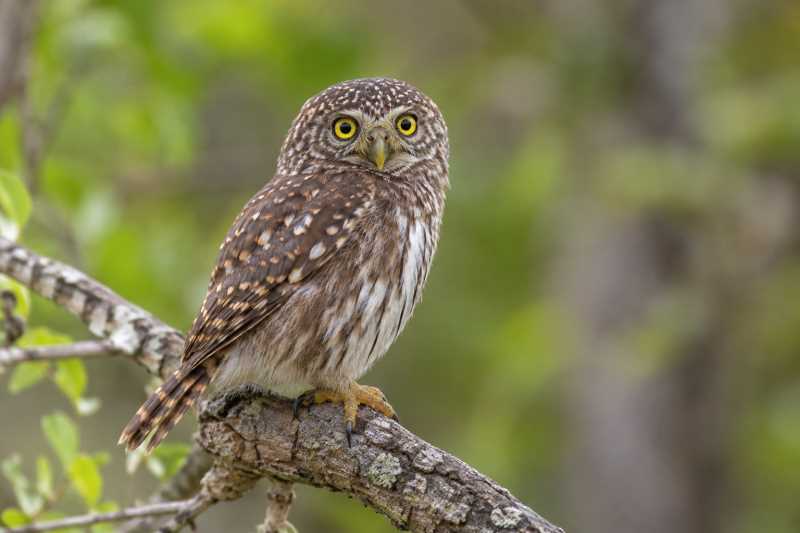
The Tamaulipas Pygmy Owl: A Rare Jewel of the Forests
The natural world is replete with wonders, many of which are hidden in the dense, verdant foliage of our planet’s forests. Among these marvels is the Tamaulipas Pygmy Owl (Glaucidium sanchezi), a diminutive and elusive bird that captivates ornithologists and bird enthusiasts alike. This charming species, known for its striking appearance and distinctive calls, inhabits the subtropical and tropical moist lowland forests of northeastern Mexico, primarily in the state of Tamaulipas.
Physical Characteristics
The Tamaulipas Pygmy Owl is a small bird, measuring approximately 14 to 16 centimeters in length, with a wingspan of about 38 centimeters. Despite its small stature, this owl boasts a powerful presence, with bright yellow eyes that seem to pierce through the foliage. Its plumage is predominantly brown, adorned with delicate white spots that provide excellent camouflage against the bark and branches of its arboreal habitat.
One of the most captivating features of the Tamaulipas Pygmy Owl is its facial disk, which is accentuated by a striking white eyebrow stripe. This feature not only adds to its visual appeal but also aids in sound localization, a crucial adaptation for hunting in dense forests.
Habitat and Range
The Tamaulipas Pygmy Owl is endemic to Mexico, with its range primarily restricted to the Sierra de Tamaulipas, a range of low mountains that provide the perfect habitat for this species. These forests offer a rich tapestry of biodiversity, supporting a variety of flora and fauna that sustain the owl’s diet.
This owl favors the dense, humid forests at elevations ranging from 500 to 1,500 meters. These habitats provide ample cover and abundant prey, such as insects, small mammals, and other birds. The variety of food sources in these forests allows the owl to maintain a balanced diet, critical for its survival in the wild.
Behavior and Diet
The Tamaulipas Pygmy Owl is primarily nocturnal, though it is not uncommon to see it active during the early morning or late afternoon. Its diet is diverse, consisting of insects, small birds, and occasionally small mammals. The owl’s hunting technique is both stealthy and efficient; it perches silently in the trees, waiting to ambush unsuspecting prey with its swift, silent flight.
This species is known for its distinctive call, a series of short, repetitive hoots that can be heard echoing through the forest. These calls serve multiple purposes, from marking territory to attracting mates. During the breeding season, which typically occurs in the spring, the male owl intensifies its vocalizations to court potential partners.
Conservation Status
The Tamaulipas Pygmy Owl is currently classified as Near Threatened by the International Union for Conservation of Nature (IUCN). The primary threat to this species is habitat loss due to deforestation and land conversion for agriculture. As human populations expand, the demand for land increases, leading to the fragmentation and degradation of the owl’s natural habitat.
Conservation efforts are crucial to preserving the Tamaulipas Pygmy Owl and its habitat. Initiatives that focus on habitat restoration and protection, as well as community education and engagement, are vital to ensuring the survival of this enchanting species.
Importance and Cultural Significance
Beyond its ecological role, the Tamaulipas Pygmy Owl holds cultural significance for local communities. It is often featured in folklore and traditional stories, symbolizing wisdom and mystery. The owl’s presence in these narratives underscores its importance to the cultural heritage of the region.
Conclusion
The Tamaulipas Pygmy Owl is a testament to the rich biodiversity that exists within the forests of northeastern Mexico. Its survival is intricately tied to the health of its habitat, highlighting the importance of conservation efforts in preserving not only this species but the myriad of life forms that share its environment. By understanding and protecting the Tamaulipas Pygmy Owl, we contribute to the broader goal of conserving our planet’s natural heritage.
In the face of growing environmental challenges, the story of the Tamaulipas Pygmy Owl serves as a reminder of the delicate balance that sustains our world and the urgent need to protect it for future generations.
Related posts


