The Elusive Doria’s Hawk: An Insight into Megatriorchis doriae
The avian world is rich with diversity, and among its many fascinating members is Doria’s Hawk, or Megatriorchis doriae. With its elusive nature and unique characteristics, this bird of prey has intrigued ornithologists and bird enthusiasts alike. In this article, we delve into the life of Doria’s Hawk, exploring its habitat, behavior, and conservation status.
Taxonomy and Description
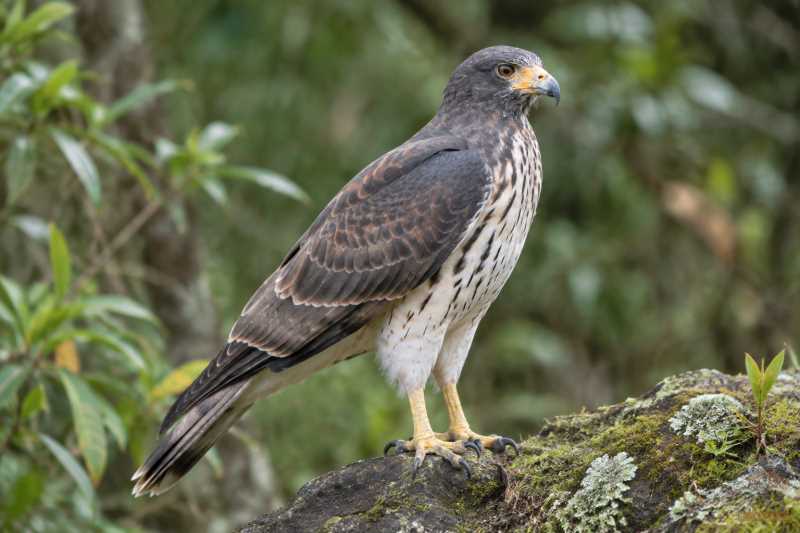
Doria’s Hawk belongs to the Accipitridae family, which includes eagles, hawks, and kites. It is the only species in the genus Megatriorchis, making it a unique raptor. Named after the Italian naturalist Giacomo Doria, this bird is characterized by its medium size, measuring approximately 45–50 cm in length. Notably, Doria’s Hawk exhibits sexual dimorphism, with females being larger than males.
The plumage of Doria’s Hawk is predominantly dark brown, with a lighter, streaked underside. Its wings are broad and rounded, and its tail is relatively long, assisting in agile flight through dense forest canopies. The eyes of this raptor are strikingly large and yellow, adapted for spotting prey in low light conditions.
Habitat and Distribution
Doria’s Hawk is endemic to New Guinea, inhabiting the dense, humid lowland and montane forests. Its range extends from sea level to altitudes of about 1,500 meters, although sightings at higher elevations are not uncommon. The bird prefers undisturbed forest habitats, making it particularly vulnerable to deforestation and habitat fragmentation.
New Guinea’s rich biodiversity provides an ideal environment for Doria’s Hawk. The island’s complex ecosystem supports a wide variety of prey species, which is crucial for the survival of this raptor. However, the bird’s preference for remote, inaccessible areas has historically limited direct observation, contributing to its enigmatic reputation.
Diet and Hunting Behavior
Doria’s Hawk is a carnivorous predator, primarily feeding on birds, small mammals, reptiles, and large insects. Its diet reflects the rich diversity of prey available in the New Guinea forests. The hawk is an adept hunter, employing a combination of stealth and speed to capture its prey.
Typically, Doria’s Hawk hunts from a perch, scanning the forest floor and understory for movement. Once a target is spotted, the hawk launches a swift attack, using its powerful talons to secure its catch. The bird’s broad wings and long tail facilitate agile maneuvers through the dense foliage, making it a formidable predator in its environment.
Breeding and Lifecycle
The breeding behavior of Doria’s Hawk remains poorly documented due to its elusive nature. Breeding pairs are believed to be monogamous, with both parents participating in raising their young. Nests are constructed high in the canopy, often in large trees, providing safety from ground predators.
Observations suggest that the breeding season coincides with periods of abundant prey availability, ensuring the survival of the offspring. The female typically lays one or two eggs, which are incubated for about 35 to 40 days. After hatching, the chicks are fed and cared for by both parents until they are ready to fledge.
Conservation Status and Threats
The International Union for Conservation of Nature (IUCN) currently lists Doria’s Hawk as "Near Threatened." The primary threat to its survival is habitat loss due to logging and agricultural expansion in New Guinea. As forests are cleared, the hawk’s habitat becomes increasingly fragmented, making it difficult for the bird to find suitable hunting and nesting sites.
Conservation efforts are crucial to ensuring the survival of Doria’s Hawk. Protecting large areas of continuous forest and implementing sustainable land-use practices are vital steps in preserving the bird’s habitat. Additionally, further research is needed to better understand the hawk’s ecology and behavior, which can inform conservation strategies.
Conclusion
Doria’s Hawk is a remarkable example of the unique biodiversity found in New Guinea. Its elusive nature and preference for dense forests make it both a challenging subject for study and a symbol of the need for forest conservation. By increasing our understanding of this enigmatic raptor and implementing effective conservation measures, we can help ensure that Doria’s Hawk continues to soar through the forests of New Guinea for generations to come.
References
- BirdLife International. (2021). Megatriorchis doriae. The IUCN Red List of Threatened Species 2021.
- Beehler, B. M., Pratt, T. K., & Zimmerman, D. A. (1986). Birds of New Guinea. Princeton University Press.
- Coates, B. J. (1985). The Birds of Papua New Guinea. Dove Publications.
Related posts