Introduction to the Black-crowned Pitta
The Black-crowned Pitta (Erythropitta ussheri) is an enigmatic bird species that captures the fascination of ornithologists and bird enthusiasts alike. This bird, belonging to the Pittidae family, is renowned for its vibrant plumage and elusive nature. Found predominantly in the dense lowland forests of Borneo, this species is a testament to the rich biodiversity of Southeast Asia.
Taxonomy and Nomenclature
The Black-crowned Pitta was first described in the late 19th century and is named after the British ornithologist, Herbert Taylor Ussher. The genus name ‘Erythropitta’ is derived from Greek, where ‘erythros’ means red, and ‘pitta’ refers to the bird family. This nomenclature aptly describes the striking red coloration that characterizes many pittas, including the Black-crowned Pitta.
Physical Characteristics
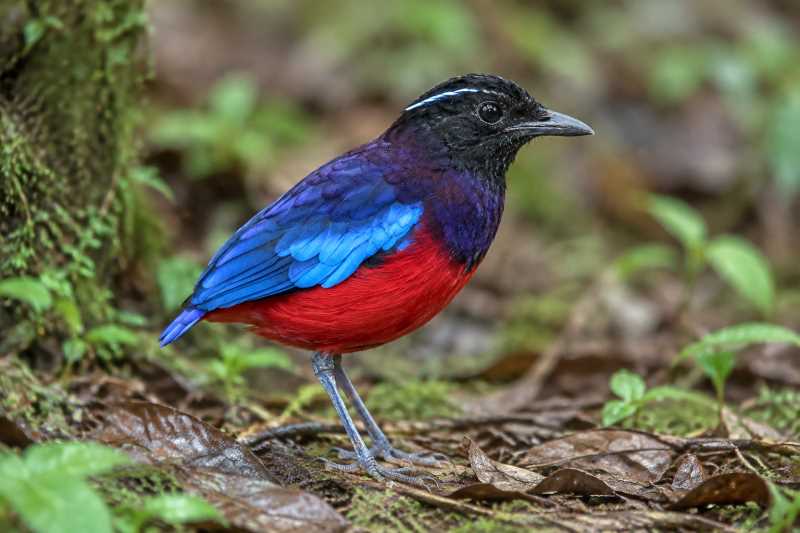
The Black-crowned Pitta is a medium-sized bird, measuring approximately 16 to 18 centimeters in length. Its most distinguishing feature is its black crown, which contrasts starkly with the bright crimson and deep blue plumage that covers the rest of its body. The bird’s underparts are primarily crimson, while the wings and back display shades of blue and green. The bird’s eyes are dark, and its legs are relatively long, aiding its terrestrial lifestyle.
Habitat and Distribution
This species is endemic to the island of Borneo, a region known for its lush rainforests and complex ecosystems. The Black-crowned Pitta thrives in the lowland forests, often at elevations up to 600 meters. These habitats provide ample cover and resources for the bird, which is known for its ground-dwelling habits. Unfortunately, habitat destruction due to logging and agricultural expansion poses significant threats to these birds.
Behavior and Ecology
Black-crowned Pittas are primarily ground feeders, foraging through leaf litter in search of insects, worms, and other small invertebrates. They are known for their solitary and elusive nature, making them a challenging subject for study. Despite this, they play a crucial role in the ecosystem as both predator and prey, maintaining the delicate balance of their forest habitats.
Breeding and Reproduction
Breeding behavior in Black-crowned Pittas is not extensively documented, but it is believed to occur during the rainy season when food is abundant. They construct their nests close to the ground, typically in dense undergrowth or inside tree cavities. These nests are cup-shaped and often built from leaves, roots, and other forest debris. The female usually lays between two to four eggs, which are incubated by both parents.
Conservation Status
The Black-crowned Pitta is currently listed as Near Threatened on the IUCN Red List. The primary threats to their survival are habitat loss and fragmentation, driven by deforestation and land conversion for agriculture. Conservation efforts are crucial to preserving the remaining forest habitats and ensuring the survival of this species.
Efforts in Conservation
Several conservation initiatives are underway to protect the Black-crowned Pitta and its habitat. These include establishing protected areas, promoting sustainable forestry practices, and conducting research to better understand the species’ ecology and behavior. Moreover, raising awareness about the importance of biodiversity in Borneo is essential for garnering support for conservation efforts.
Conclusion
The Black-crowned Pitta is a remarkable bird that symbolizes the rich avian diversity of Borneo. While it faces numerous challenges, ongoing conservation efforts provide hope for its continued survival. By protecting this species and its habitat, we not only preserve a unique component of our natural world but also contribute to the broader goal of maintaining global biodiversity.
Final Thoughts
In summary, the Black-crowned Pitta is more than just a bird; it is an integral part of the ecosystem, and its existence reflects the health of its environment. Protecting this bird means protecting the future of Borneo’s forests and the myriad of life forms they support.
Acknowledgments
Special thanks to the dedicated researchers and conservationists working tirelessly to study and protect the Black-crowned Pitta and its habitat.
References
- BirdLife International. (2023). Erythropitta ussheri. The IUCN Red List of Threatened Species.
- Lambert, F. R., & Woodcock, M. (1996). Pittas, Broadbills and Asities. Pica Press.
- Myers, S. (2009). Birds of Borneo: Brunei, Sabah, Sarawak, and Kalimantan. Princeton University Press.
Related posts