The Grey-green Fruit Dove: A Jewel of Polynesia
The Grey-green Fruit Dove, scientifically known as Ptilinopus purpuratus, is a captivating avian species that calls the lush landscapes of French Polynesia its home. This bird, while not widely recognized outside its native regions, plays a crucial role in the ecosystem and the cultural heritage of the islands. This article delves into the unique characteristics, habitat, and significance of the Grey-green Fruit Dove.
Physical Characteristics
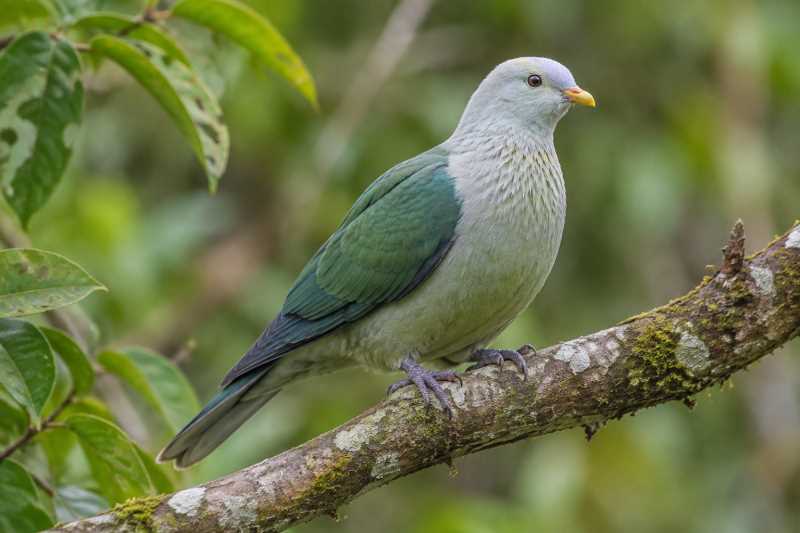
The Grey-green Fruit Dove is a medium-sized bird, notable for its vibrant and distinctive plumage. As its name suggests, the bird predominantly showcases a grey-green color, which serves as excellent camouflage among the foliage. Its plumage, however, is accentuated by a striking purplish crown and a subtly pinkish breast, creating a visual delight for birdwatchers and nature enthusiasts.
Typically, the Grey-green Fruit Dove measures around 24 to 26 centimeters in length, with a wingspan that complements its body size, allowing for agile maneuvering through dense forest canopies. The species showcases sexual dimorphism, although it is not pronounced; both males and females share similar color patterns, making them equally enchanting.
Habitat and Distribution
The Grey-green Fruit Dove is endemic to the islands of French Polynesia, particularly thriving in the subtropical or tropical moist lowland forests. These birds are adapted to live in the dense forest canopy, where they find ample food and protection from predators.
Their distribution is primarily concentrated on the Society Islands, including Tahiti and Moorea, where they are relatively common. Despite this, their habitat is increasingly under threat due to deforestation and habitat alteration, making their conservation a priority for local authorities and international wildlife organizations.
Diet and Feeding Behavior
The diet of the Grey-green Fruit Dove predominantly consists of fruits, which they expertly forage from the forest canopy. Their feeding behavior plays a pivotal ecological role, as they aid in seed dispersal, thus contributing to the regeneration of their habitat. The birds have a particular fondness for small berries and figs, which are abundant in their natural habitat.
These doves are often observed feeding in small groups, a behavior that not only enhances their foraging efficiency but also provides safety in numbers, as they remain vigilant for potential predators.
Breeding and Lifecycle
The breeding season for the Grey-green Fruit Dove typically aligns with periods of food abundance, ensuring that there is sufficient nutrition for the chicks. Nesting usually occurs in the dense foliage, where the female constructs a simple yet sturdy platform of twigs.
The clutch size is typically one to two eggs, with both parents participating in incubation duties. The incubation period lasts around two weeks, after which the chicks are hatched altricial, requiring significant parental care. Both parents are involved in feeding and protecting the young until they fledge.
Conservation Status
The Grey-green Fruit Dove is currently listed as Least Concern by the International Union for Conservation of Nature (IUCN). However, this status does not imply that the species is free from threats. Habitat loss due to deforestation and the introduction of invasive species pose significant challenges to their population stability.
Conservation efforts are underway, with local governments and wildlife organizations working to preserve the natural habitats of these birds. These efforts include habitat restoration projects and public awareness campaigns aimed at promoting the ecological importance of the Grey-green Fruit Dove.
Cultural Significance
Beyond their ecological role, the Grey-green Fruit Dove holds cultural significance for the indigenous peoples of French Polynesia. These birds are often featured in local folklore and are considered symbols of peace and tranquility.
Efforts to conserve the Grey-green Fruit Dove are intertwined with preserving the cultural heritage of the islands, as both are seen as vital components of the region’s identity. Through cultural festivals and educational programs, locals and tourists alike are encouraged to appreciate and protect this avian jewel.
Conclusion
The Grey-green Fruit Dove is a remarkable species that embodies the rich biodiversity and cultural heritage of French Polynesia. While their striking appearance and ecological role make them a subject of interest for ornithologists and conservationists, the challenges they face underscore the importance of continued conservation efforts.
By fostering a deeper understanding and appreciation of the Grey-green Fruit Dove, we can ensure that future generations will also have the opportunity to witness this avian wonder. Preserving their habitat, recognizing their cultural significance, and supporting conservation initiatives are essential steps in safeguarding the future of this beautiful species.
Related posts