
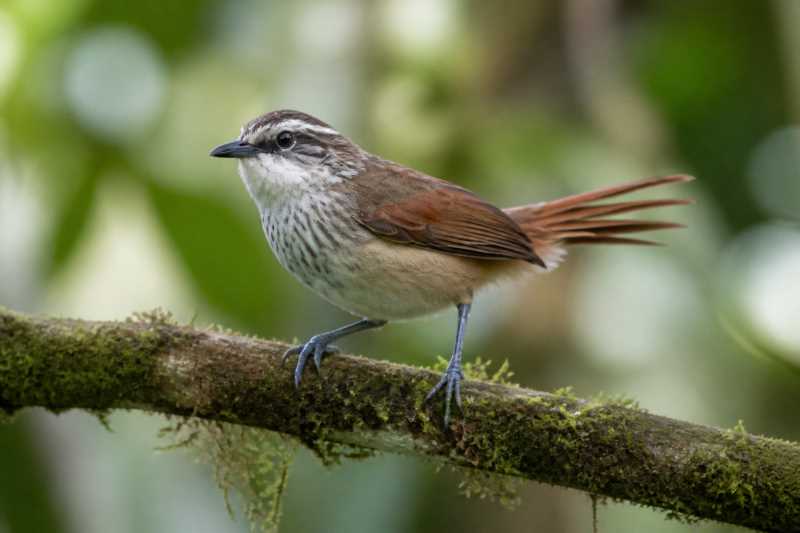
An In-Depth Look at the Necklaced Spinetail (Synallaxis stictothorax)
The world of avian biodiversity is both vast and profoundly intricate, offering a range of fascinating species. Among these, the Necklaced Spinetail (Synallaxis stictothorax) stands out, not only for its distinctive appearance but also for its intriguing behaviors and habitat preferences. This article delves into the characteristics, habitat, behavior, and conservation status of this remarkable bird species.
Characteristics and Identification
The Necklaced Spinetail, belonging to the family Furnariidae, is a small bird that is often recognized by its slender body and long tail. It measures approximately 15–17 cm in length and is characterized by its olive-brown plumage, with a distinctive ‘necklace’ pattern of dark streaks across its throat and chest, which gives the bird its common name. The head is typically a darker brown with a slightly rufous tint, while the underparts are paler, providing a subtle yet striking contrast.
The bird’s wings are relatively short and rounded, which is a common trait among spinetails, adapted for maneuvering through dense undergrowth where they forage. One of the hallmark features of the Necklaced Spinetail is its tail, which is often held up and flicked as the bird moves. The tail feathers are stiff and pointed, aiding in balance and agility as it navigates its habitat.
Habitat and Distribution
The Necklaced Spinetail is primarily found in the coastal regions of western South America, particularly in Peru and Ecuador. It prefers arid to semi-arid environments, often inhabiting scrublands, dry forests, and areas with dense underbrush. These birds are particularly fond of regions with thorny vegetation, which provides both food and protection from predators.
Their range is largely dictated by the availability of suitable habitat, as they are not long-distance flyers and tend to remain within familiar territories once established. This species’ adaptability to different types of scrubby environments is a testament to its evolutionary success in a challenging landscape.
Behavior and Diet
Necklaced Spinetails are known for their energetic and somewhat erratic movements as they forage for food. They primarily feed on insects and other small invertebrates, which they expertly glean from foliage and branches. Their foraging behavior is often characterized by quick, darting movements and a persistent flicking of their tails.
These birds are also known for their vocalizations, which consist of a series of sharp, repetitive notes. These calls are essential for communication, especially during the breeding season, when pairs establish and defend their territories.
Breeding involves the construction of intricate nests, often built in dense shrubs or low trees. The nests are typically made from twigs and lined with softer materials, providing a safe haven for the eggs and subsequent chicks. Both male and female spinetails participate in nest building and rearing of the young, showcasing a strong pair bond characteristic of the species.
Conservation Status
The conservation status of the Necklaced Spinetail is currently evaluated as "Least Concern" by the International Union for Conservation of Nature (IUCN). Despite its relatively stable population, the bird faces potential threats from habitat destruction and fragmentation due to agricultural expansion and urban development.
Conservation efforts for the Necklaced Spinetail are primarily focused on habitat preservation and management. Protecting areas of dry forest and scrubland is crucial for maintaining the ecological balance and ensuring the species’ continued survival. Additionally, raising awareness about the importance of these habitats can aid in garnering support for conservation initiatives.
Conclusion
The Necklaced Spinetail is a captivating example of avian adaptation, thriving in the challenging environments of western South America. Its distinctive appearance, behaviors, and ecological role make it an important species for understanding the dynamics of dry forest ecosystems. By continuing to study and protect the habitats of this and other similar species, we can ensure the preservation of biodiversity and the health of our planet’s ecosystems.
In summary, the Necklaced Spinetail is more than just a bird; it is a vital part of its ecosystem, and efforts to conserve its habitat will benefit numerous other species as well. As we continue to explore and appreciate the natural world, the Necklaced Spinetail serves as a reminder of the intricate beauty and complexity of life on Earth.
Related posts


