The Sunda Brush Cuckoo: A Comprehensive Overview
The Sunda Brush Cuckoo (Cacomantis sepulcralis) is an enchanting avian species, often shrouded in the mystery of its elusive nature and intriguing behaviors. This bird is part of the Cuculidae family, which includes other cuckoos known for their brood parasitism. Found primarily in Southeast Asia, the Sunda Brush Cuckoo is a vital component of its ecosystem, contributing to the rich biodiversity of its habitat.
Habitat and Distribution
The Sunda Brush Cuckoo is predominantly found in the tropical and subtropical forests of Southeast Asia, particularly in countries such as Indonesia, Malaysia, and Thailand. This species thrives in a range of forest environments, including lowland rainforests, montane forests, and sometimes even human-altered landscapes like plantations and gardens. The adaptability of the Sunda Brush Cuckoo to various habitats underscores its resilience and survival capabilities.
The bird’s range extends across the Sunda Shelf, a biogeographical region that includes the Malay Peninsula, Borneo, Java, and Sumatra. This region is known for its rich biodiversity, and the presence of the Sunda Brush Cuckoo adds to the ecological tapestry. Despite its wide distribution, the bird is often heard more than seen, as it tends to stay hidden within dense foliage.
Physical Characteristics
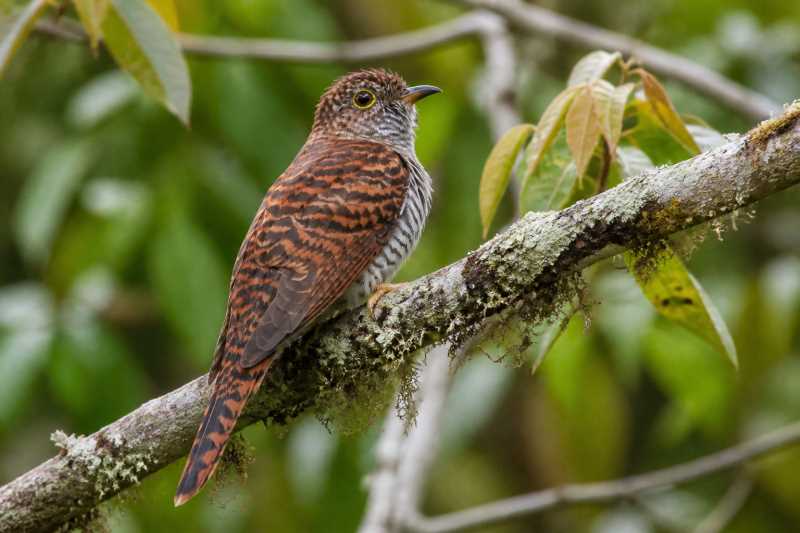
The Sunda Brush Cuckoo is a medium-sized bird, measuring around 22 to 24 centimeters in length. Its plumage is predominantly grayish-brown, providing excellent camouflage against the forest backdrop. The underparts are lighter, often displaying a subtle rufous or buff hue, particularly on the breast and belly. The bird’s wings are rounded, and its tail is relatively long, aiding in agile flight through the canopy.
One of the distinguishing features of the Sunda Brush Cuckoo is its eye-catching red eye-ring, which contrasts with its otherwise muted coloration. The beak is slightly curved and sturdy, well-suited for its diet primarily consisting of insects and caterpillars.
Behavior and Ecology
The Sunda Brush Cuckoo is known for its solitary and secretive behavior. Unlike many other birds, it does not form flocks, preferring instead to forage alone or in pairs. Its diet mainly consists of insects, which it skillfully hunts in the understory and mid-canopy levels of the forest. The bird’s foraging techniques involve a combination of quick flights and short, stealthy hops through the foliage.
One of the most fascinating aspects of the Sunda Brush Cuckoo’s behavior is its breeding strategy. Similar to other cuckoos, this species is a brood parasite, laying its eggs in the nests of other bird species. The host birds, often small passerines, unwittingly raise the cuckoo chick, which typically hatches earlier than the host’s own eggs. This parasitic strategy allows the Sunda Brush Cuckoo to allocate more energy to foraging and survival, rather than parental care.
The call of the Sunda Brush Cuckoo is another characteristic feature. Its vocalizations are often heard echoing through the forest, a series of melodious and repetitive notes that are distinct yet harmonious. These calls play a vital role in territory establishment and mate attraction.
Conservation Status
As of now, the Sunda Brush Cuckoo is not considered endangered. The IUCN Red List categorizes it as a species of Least Concern, due to its wide distribution and stable population numbers. However, ongoing deforestation and habitat fragmentation in Southeast Asia pose potential threats to its habitat. Conservation efforts aimed at preserving tropical forests are crucial for maintaining the ecological balance and ensuring the survival of the Sunda Brush Cuckoo and countless other species.
The Importance of the Sunda Brush Cuckoo in Ecosystems
The Sunda Brush Cuckoo plays a significant role in its ecosystem, particularly in controlling insect populations. By preying on various insects and caterpillars, it helps maintain a balanced food web within its habitat. Moreover, its parasitic breeding behavior, albeit seemingly detrimental to its host species, is part of a complex ecological interaction that has evolved over millennia.
The presence of the Sunda Brush Cuckoo is also an indicator of forest health. A thriving population of this bird suggests a well-functioning ecosystem with abundant insect life and suitable nesting opportunities provided by its host species.
Conclusion
The Sunda Brush Cuckoo is a remarkable bird that embodies the intricate beauty and complexity of Southeast Asian forests. Its unique behaviors, adaptability, and role in the ecosystem make it a subject of interest for ornithologists and bird enthusiasts alike. As we strive to protect our planet’s biodiversity, understanding and conserving species like the Sunda Brush Cuckoo will be vital in ensuring the health and resilience of ecosystems worldwide.
In summary, the Sunda Brush Cuckoo is not just a bird of the forest; it is a symbol of the interconnectedness of life, a reminder of the delicate balance that sustains our natural world.
Related posts