The Rufous-breasted Sabrewing: A Jewel of the Venezuelan Andes
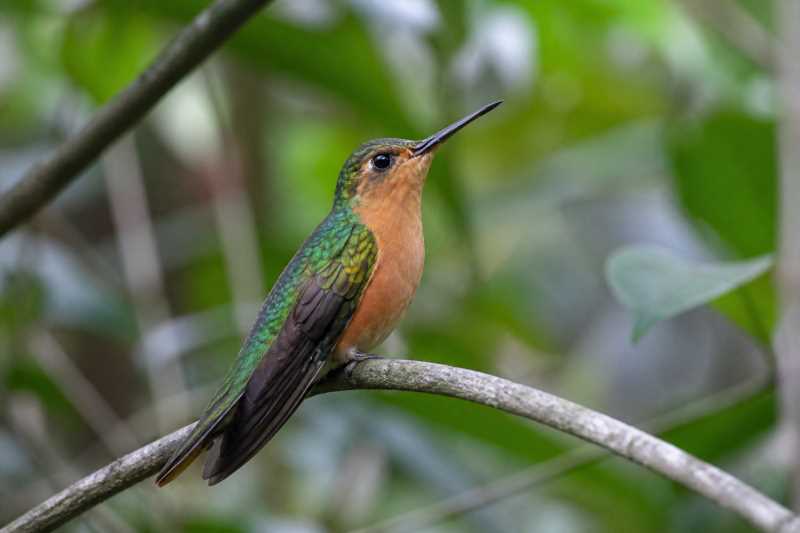
The graceful Rufous-breasted Sabrewing (Campylopterus hyperythrus) is a captivating hummingbird species, residing primarily in the lush cloud forests of the Venezuelan Andes. Known for its striking plumage and agile flight, this bird has intrigued ornithologists and bird enthusiasts alike. Although relatively lesser-known than some of its hummingbird cousins, the Rufous-breasted Sabrewing offers a fascinating insight into the biodiversity of its native region.
Taxonomy and Description
Belonging to the family Trochilidae, the Rufous-breasted Sabrewing is one of the many species within the genus Campylopterus. This bird is distinguished by its robust size compared to other hummingbirds, typically measuring around 12-13 cm in length. Its name derives from its unique coloration—a vibrant rufous (reddish-brown) breast that contrasts beautifully with its iridescent green upperparts.
The males and females of this species exhibit slight sexual dimorphism. Males generally possess a more vivid plumage and slightly longer tails compared to females. Both sexes, however, share the characteristic sabre-shaped wing feathers, an adaptation that enhances their maneuverability during flight.
Habitat and Distribution
The Rufous-breasted Sabrewing is endemic to Venezuela, with its habitat restricted to the country’s Andean cloud forests. These birds thrive at elevations ranging from 1,000 to 2,500 meters. The dense, humid environment is ideal, providing abundant floral resources essential to their diet.
Their preference for altitudinal zones with rich vegetation underscores the importance of preserving these habitats. The cloud forests are known for their high biodiversity, supporting a myriad of plant and animal species, many of which are endemic to the region.
Feeding and Behavior
As with most hummingbirds, the Rufous-breasted Sabrewing primarily feeds on nectar, which they extract using their long, specialized bills. They play a crucial role in pollination, contributing to the reproductive processes of various flowering plants. In addition to nectar, they consume small insects and spiders, which provide necessary proteins and nutrients.
These birds are solitary feeders, displaying territorial behavior, especially males who aggressively defend their feeding territories from intruders. Their agile flight and rapid wing beats are not only key to their feeding habits but also integral in courtship displays.
Reproduction and Lifespan
Breeding typically occurs during the wet season when food resources are abundant. The female Rufous-breasted Sabrewing is solely responsible for nest building, incubation, and rearing of the young. Nests are usually constructed on tree branches, using plant fibers, moss, and spider silk to create a secure environment for the eggs.
A typical clutch consists of two white eggs, which the female incubates for about 15-19 days. Once hatched, the chicks are dependent on their mother for food and protection until they fledge, approximately 20-26 days after hatching.
Conservation Status
Currently, the Rufous-breasted Sabrewing is classified as Least Concern by the International Union for Conservation of Nature (IUCN). However, habitat destruction poses a significant threat to their population. The expansion of agriculture and deforestation in the Andes continues to encroach upon their natural habitat.
Conservation efforts are imperative to ensure the survival of this species and the myriad of other organisms that share its habitat. Protecting the cloud forests and implementing sustainable land-use practices are critical steps in preserving the biodiversity of the Venezuelan Andes.
Conclusion
The Rufous-breasted Sabrewing is a testament to the vibrant life found within Venezuela’s cloud forests. Its striking appearance and ecological significance highlight the intricate balance of these ecosystems. By raising awareness and supporting conservation initiatives, we can contribute to the preservation of this remarkable species and its natural habitat for future generations to appreciate and enjoy.
Related posts