Pied Bare-faced Tamarin (Saguinus bicolor): A Comprehensive Guide
Introduction
The Pied Bare-faced Tamarin, scientifically known as Saguinus bicolor, is a unique and intriguing primate species that captivates both researchers and wildlife enthusiasts alike. This species is a member of the Callitrichidae family, which is well-known for its small-sized, New World monkeys. The Pied Bare-faced Tamarin, often referred to as the "Brazilian Pied Tamarin," is native to the Amazon rainforest and carries significant ecological importance. In this article, we delve into the various aspects of this fascinating species, including its physical characteristics, habitat, behavior, and conservation status.
Physical Description
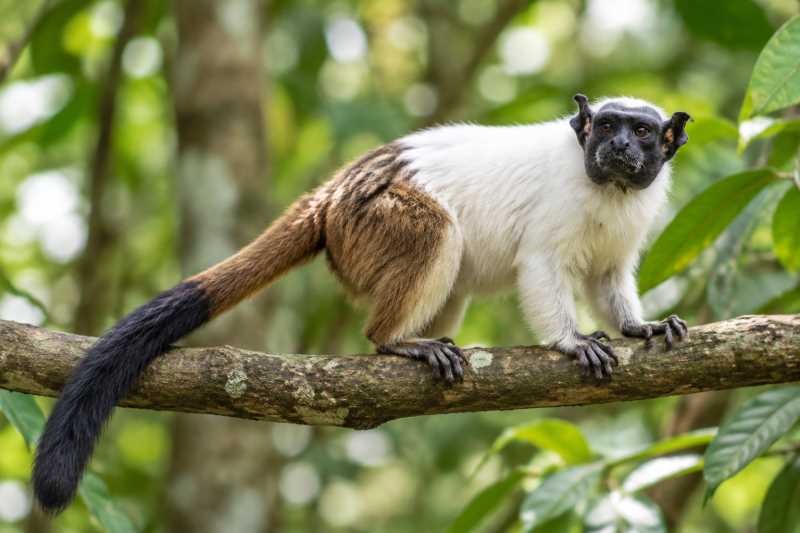
The Pied Bare-faced Tamarin is a small primate with a distinctive appearance. Adults typically measure between 20 and 28 centimeters in body length, with a tail that adds an additional 30 to 42 centimeters. They weigh between 400 to 550 grams. This species is notable for its unique coloration and lack of facial hair, which contributes to its name.
The face of the Pied Bare-faced Tamarin is hairless and predominantly pinkish-white, giving it a "bare-faced" look. Contrasting this bare face is the striking coloration of its fur, which consists of a pied pattern of black and white. The head and upper body are predominantly black, while the lower parts and limbs are usually white or cream-colored. This striking dichotomy in coloration aids in identification and adds to the tamarin’s appeal.
Range and Habitat
The Pied Bare-faced Tamarin is endemic to a small area in the Brazilian Amazon, specifically within the state of Amazonas. Its range is limited to the region around the city of Manaus, with its habitat encompassing both primary and secondary forests. This species is often found in terra firme forests, which are characterized by non-flooded, dense tropical rainforests.
Due to significant urban development and deforestation, the tamarin’s habitat is fragmented. The species is known to adapt to some degree of habitat disturbance, but its survival is closely tied to the preservation of its natural habitat.
Behavior and Diet
Pied Bare-faced Tamarins are diurnal and arboreal, spending most of their time in the trees. They are social animals, typically living in groups of two to fifteen individuals. These groups are usually composed of a dominant breeding pair and their offspring, with cooperative care of the young.
Their diet primarily consists of fruits, insects, and small vertebrates. The tamarins play a crucial role in seed dispersal, contributing to the health and regeneration of their forest ecosystem. They forage in the canopy and understory, using their sharp claws to peel bark and extract insects and other hidden food sources.
Identification Tips
Identifying the Pied Bare-faced Tamarin in the wild involves recognizing several key features:
- Facial Characteristics: Look for the distinct pinkish-white, bare face, which is a standout feature against the lush greens of the rainforest.
- Coloration: Note the contrasting black and white fur pattern. The black head and upper body against the white lower body are characteristic of the species.
- Size and Shape: Observe their small size and long tail, which they use for balance as they navigate the trees.
- Behavior: Look for their active movement in the tree canopy. They are agile climbers and can often be seen leaping between branches.
Conservation Status
The Pied Bare-faced Tamarin is currently classified as "Endangered" by the International Union for Conservation of Nature (IUCN). This status is due to several factors, including habitat loss, fragmentation, and urban expansion in the Manaus region. The expansion of agriculture and logging activities further exacerbates these threats.
Conservation efforts are underway to protect this species and its habitat. These include establishing protected areas, reforestation programs, and environmental education initiatives to raise awareness about the tamarin’s plight. Additionally, research and monitoring programs are essential to track population trends and ensure effective conservation strategies.
Frequently Asked Questions
- What is the primary threat to the Pied Bare-faced Tamarin?
The primary threat to the Pied Bare-faced Tamarin is habitat loss due to deforestation and urban expansion around Manaus, Brazil. As their natural habitat becomes increasingly fragmented, the survival of these tamarins is jeopardized.
- How do Pied Bare-faced Tamarins contribute to their ecosystem?
Pied Bare-faced Tamarins play a vital role in seed dispersal within their ecosystem. By consuming fruits and dispersing seeds through their feces, they aid in forest regeneration and maintain biodiversity.
- Are Pied Bare-faced Tamarins social animals?
Yes, Pied Bare-faced Tamarins are highly social and live in groups. These groups typically consist of a dominant breeding pair and their offspring, highlighting complex social structures and cooperative care of the young.
- Can Pied Bare-faced Tamarins adapt to habitat changes?
While Pied Bare-faced Tamarins can tolerate some degree of habitat disturbance, their long-term survival depends on the preservation of their natural environment. Conservation efforts are crucial to ensuring their continued existence.
- What efforts are being made to protect the Pied Bare-faced Tamarin?
Efforts to protect the Pied Bare-faced Tamarin include habitat preservation through the establishment of protected areas, reforestation projects, and environmental education programs to raise awareness about their conservation needs.
Related posts