Introduction
The Hatinh Langur (Trachypithecus hatinhensis) is a fascinating primate species native to the dense forests of Southeast Asia. Known for its striking appearance and elusive nature, this langur is often a subject of interest for primatologists and wildlife enthusiasts alike. As a member of the Cercopithecidae family, the Hatinh Langur plays a crucial role in its ecosystem, contributing to seed dispersal and forest regeneration. Despite its importance, the species faces significant threats from habitat destruction and poaching, making conservation efforts vital for its survival.
Physical Description
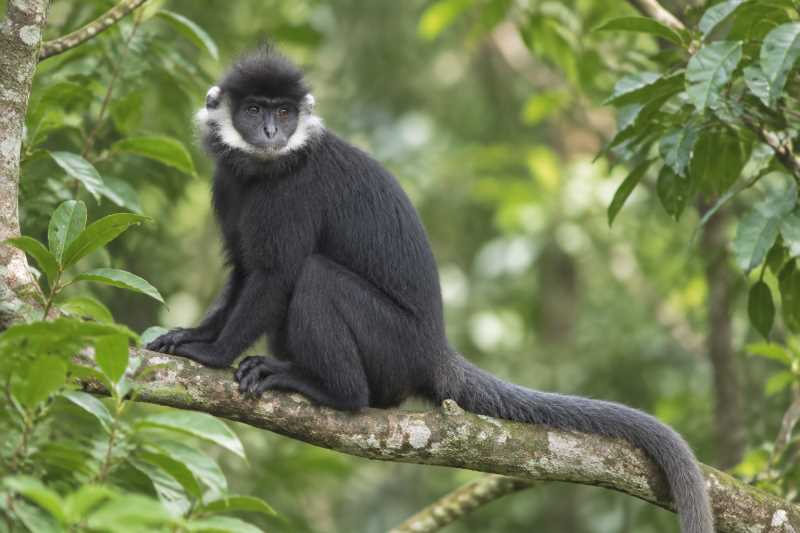
The Hatinh Langur is a medium-sized primate with a distinct appearance that aids in its identification. Adults typically measure between 48 to 65 centimeters in body length, with a tail extending an additional 70 to 95 centimeters. This langur is characterized by its glossy black fur, which covers most of its body, contrasting sharply with the white markings on its face. The white sideburns and bib-like patch on its chest are distinctive features that set it apart from other langur species. Its face is hairless, with a pinkish hue, and its large, expressive eyes betray its curious nature.
A notable aspect of the Hatinh Langur’s anatomy is its long, prehensile tail, which aids in balance and mobility through the dense canopy of its forest habitat. This tail, coupled with strong limbs, allows it to navigate the treetops with agility. The species exhibits sexual dimorphism, with males generally larger and more robust than females.
Range and Habitat
The natural range of the Hatinh Langur is relatively restricted, primarily found in the limestone forests of central Vietnam and parts of Laos. These regions, characterized by rugged karst landscapes and dense tropical forests, provide the ideal habitat for this arboreal species. The langurs are adept climbers, utilizing the steep cliffs and rocky outcrops as part of their habitat.
These primates are typically found at elevations ranging from 200 to 1,000 meters above sea level. They prefer areas with high tree density, which offer ample food sources and protection from predators. Unfortunately, their habitat is increasingly threatened by human activities, such as logging, agriculture, and infrastructure development.
Behavior and Diet
Hatinh Langurs are social animals, typically living in groups ranging from 2 to 15 individuals. These groups are usually comprised of one dominant male, several females, and their offspring. Group dynamics are complex, with a strong emphasis on social bonding and grooming. Communication within the group is facilitated through vocalizations, facial expressions, and body language.
The diet of the Hatinh Langur primarily consists of leaves, fruits, flowers, and seeds. As folivores, they have specialized stomachs to digest cellulose-rich plant material. This diet plays a crucial role in the ecosystem, as the langurs contribute to seed dispersal and forest regeneration. During the dry season, they may rely more heavily on fruits and seeds as other food resources become scarce.
Identification Tips (Field Recognition Cues)
Identifying the Hatinh Langur in the field involves recognizing several key characteristics:
- Coloration: Look for the glossy black fur with distinctive white sideburns and a bib-like patch on the chest.
- Tail: Note the long, prehensile tail, which is often used for balance in the trees.
- Facial Features: Observe the hairless, pinkish face and large, expressive eyes.
- Behavior: Watch for their agile movement through the canopy and social interactions within groups.
Conservation Status (with Threats and Protections)
The Hatinh Langur is currently classified as Endangered on the IUCN Red List. The primary threats to its survival include habitat loss due to deforestation, agricultural expansion, and infrastructure development. Additionally, poaching for the illegal wildlife trade poses a significant risk to the species.
Conservation efforts are underway to protect the Hatinh Langur, including the establishment of protected areas and wildlife reserves in Vietnam and Laos. These initiatives aim to safeguard critical habitats and curb illegal hunting. Public awareness campaigns and community-based conservation programs are also instrumental in promoting sustainable practices and reducing human-wildlife conflicts.
Frequently Asked Questions
What is the habitat of the Hatinh Langur?
The Hatinh Langur inhabits the limestone forests of central Vietnam and Laos, thriving in areas with dense tree cover and rugged karst landscapes.
Why is the Hatinh Langur endangered?
The Hatinh Langur is endangered due to habitat destruction from logging and agriculture, as well as poaching for the illegal wildlife trade.
How do Hatinh Langurs contribute to their ecosystem?
Hatinh Langurs play a key role in seed dispersal and forest regeneration, helping to maintain the health and biodiversity of their habitat.
What do Hatinh Langurs eat?
Their diet consists mainly of leaves, fruits, flowers, and seeds, with a preference for young, tender foliage.
How can we help protect the Hatinh Langur?
Supporting conservation efforts, promoting sustainable practices, and raising awareness about the threats facing the species can all contribute to their protection.
Related posts