The Galapagos Dove: A Unique Aviary Jewel of the Enchanted Isles
The Galapagos Archipelago, known for its unparalleled biodiversity, is home to many unique species. Among these, the Galapagos Dove (Zenaida galapagoensis) stands out as a testament to the archipelago’s unique evolutionary pathways. This bird, endemic to the islands, provides insight into the adaptive processes that define the Galapagos and contribute to its status as a natural laboratory of evolution.
Physical Characteristics and Behavior
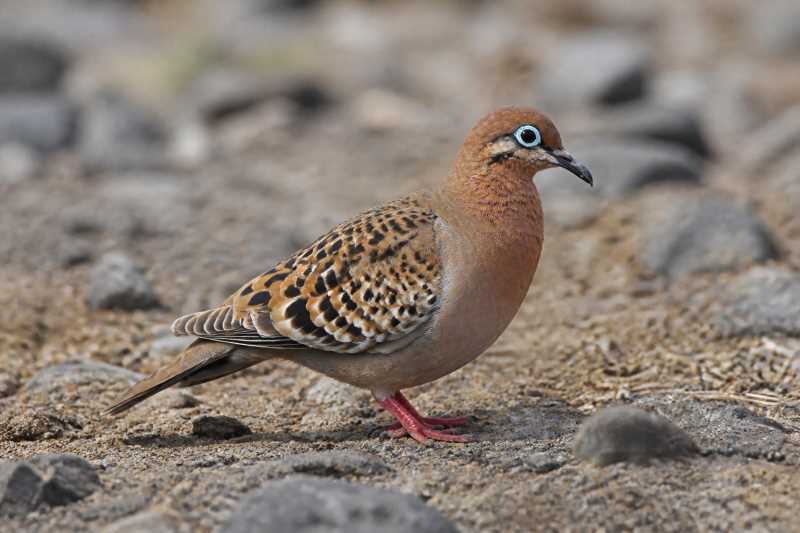
The Galapagos Dove is a medium-sized bird, measuring approximately 18 to 23 centimeters in length. Its plumage is a striking combination of earthy browns and soft grays, with a distinctive iridescent sheen on the nape and neck that reflects hues of purple and green under the island sun. This coloration provides effective camouflage among the rocky terrain and sparse vegetation of its habitat.
The dove’s eyes are one of its most captivating features, encircled by a striking blue ring that contrasts with its otherwise muted coloring. Its relatively short tail and rounded wings make it a capable flyer, though it often prefers the ground for foraging.
In terms of behavior, the Galapagos Dove is known for its ground-dwelling habits. It feeds primarily on seeds, fruits, and insects, which it finds by scratching the leaf litter on the forest floor. This feeding behavior is indicative of its adaptation to the island’s arid environment, where resources can be scarce.
Habitat and Range
The Galapagos Dove inhabits the arid zones of the larger islands in the archipelago, including Santa Cruz, Isabela, and Santiago. It thrives in dry, open areas with sparse vegetation, such as coastal scrublands and arid lowlands. These habitats provide the necessary resources for feeding and nesting, while also offering protection from predators.
Despite its adaptability, the Galapagos Dove is not found on all the islands within the archipelago. Its distribution is limited by the availability of suitable habitat and the presence of predators, both native and introduced.
Reproduction and Lifespan
The breeding season for the Galapagos Dove is influenced by the availability of food resources, which can vary with the island’s climate conditions. The doves typically nest on the ground, using natural cavities or creating simple depressions lined with twigs and leaves.
Clutch sizes are generally small, with females laying one or two eggs per breeding attempt. Both parents share the responsibility of incubating the eggs and feeding the chicks once they hatch. This shared parental investment is crucial for the survival of the young, given the demanding environmental conditions.
The lifespan of the Galapagos Dove in the wild is not well-documented, but it is believed to be similar to other dove species, which can live up to 10 years under favorable conditions.
Conservation Status and Challenges
The Galapagos Dove is currently classified as Near Threatened by the International Union for Conservation of Nature (IUCN). Its population is considered stable but faces potential threats from habitat loss and introduced species. The introduction of predators such as rats, cats, and dogs, along with habitat degradation due to human activities, poses significant risks to the dove’s survival.
Conservation efforts are underway to protect this unique species. The Galapagos National Park, along with various conservation organizations, is working to control invasive species and preserve the natural habitats of the archipelago. These efforts include habitat restoration, predator control programs, and public education initiatives aimed at raising awareness about the importance of conserving the Galapagos’ unique biodiversity.
Ecological Importance
The Galapagos Dove plays a crucial role in its ecosystem. As a seed disperser, it contributes to the maintenance of plant diversity and the regeneration of native vegetation. This ecological function is particularly important in the fragile environments of the Galapagos, where the balance between species is delicate.
Moreover, the dove serves as an indicator species for the health of its habitat. Changes in its population size and distribution can provide valuable insights into the impacts of environmental changes and human activities on the archipelago.
Conclusion
The Galapagos Dove is more than just a beautiful bird; it is a symbol of the unique evolutionary processes that occur in isolated environments like the Galapagos Islands. Preserving this species and its habitat is not only critical for maintaining biodiversity but also for ensuring that future generations can continue to learn from and be inspired by the natural wonders of the Galapagos.
By understanding and appreciating the Galapagos Dove, we take a step closer to conserving the intricate web of life that defines these enchanted isles. It is our responsibility to ensure that this and other unique species continue to thrive in their natural habitats, safeguarding the ecological integrity of the Galapagos for years to come.
Related posts