Understanding the Meadow Bunting: A Comprehensive Guide
The Meadow Bunting (Emberiza cioides) is a captivating species belonging to the family Emberizidae. This small passerine bird is particularly known for its vibrant plumage and melodious song, making it a favorite among birdwatchers and ornithologists. This comprehensive guide delves into the various facets of the Meadow Bunting, from its physical characteristics and habitat preferences to its behavior and conservation status.
Physical Characteristics
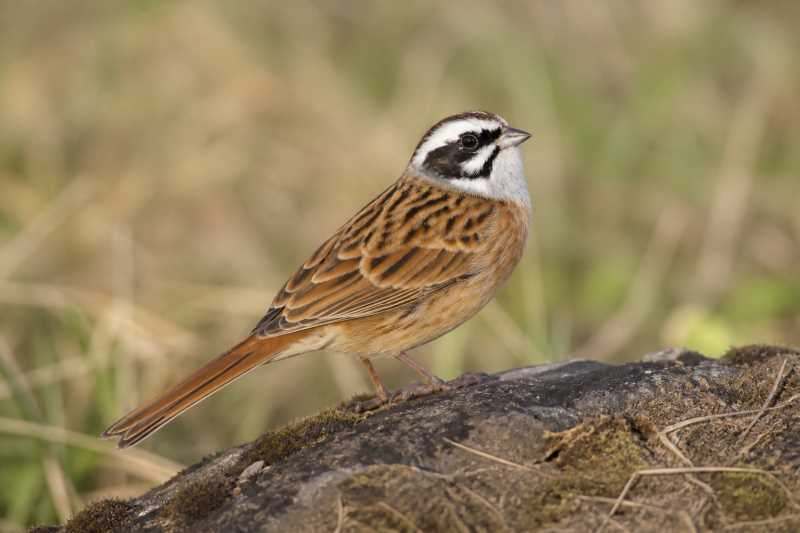
The Meadow Bunting is a medium-sized bird, measuring approximately 16 to 17.5 cm in length. It exhibits sexual dimorphism, with males and females displaying distinct plumages. Males are particularly striking, adorned with a rufous-brown back and wings, a contrasting black and white head pattern, and a bright chestnut breast. The females, while more subdued in coloration, are equally charming with their brownish streaked plumage that provides excellent camouflage in their natural habitat.
The bird’s bill is conical and robust, adapted for a diet primarily composed of seeds. Its legs and feet are a pale pinkish-brown, well-suited for perching and foraging on the ground. The wings are pointed, facilitating agile flight, while the tail is relatively long, often flicked expressively during territorial displays.
Habitat and Distribution
The Meadow Bunting is predominantly found in East Asia, with a distribution range extending across China, Japan, Korea, and parts of Russia. It inhabits open landscapes such as grasslands, meadows, and agricultural fields, often at low to mid-elevations. The species is adaptable, capable of thriving in human-modified environments such as orchards and farmlands, provided that there is adequate ground cover for nesting and foraging.
In Japan, the Meadow Bunting is particularly widespread, and its cheerful song is considered a herald of spring in rural areas. The species is generally sedentary, although some populations in northern regions may undertake short-distance migrations to milder areas during harsh winters.
Behavior and Diet
The Meadow Bunting is a diurnal bird, most active during the early morning and late afternoon. Its diet is primarily granivorous, consisting of a variety of seeds and grains, although it will also consume insects, particularly during the breeding season when protein demands are higher.
Socially, Meadow Buntings are often observed in small flocks outside the breeding season, foraging on the ground or perching on low shrubs. During the breeding season, however, males become highly territorial, establishing and vigorously defending their territories through song and display flights.
The song of the Meadow Bunting is a series of melodious whistles, often described as "chee-chee-chee" followed by a trill. This song serves multiple functions, including territory establishment and mate attraction. Males will often sing from exposed perches, advertising their presence to rivals and potential mates.
Breeding and Nesting
Breeding occurs from late spring to early summer, with peak activity observed in May and June. The Meadow Bunting is monogamous, with pairs forming stable bonds that may last several breeding seasons. Nesting sites are typically well-concealed on the ground or in low vegetation, providing protection from predators.
The female is primarily responsible for nest construction, using grasses, twigs, and leaves to create a cup-shaped nest lined with softer materials. Clutch size ranges from three to five eggs, which are pale blue with reddish-brown speckles. The female incubates the eggs for about 12-14 days, during which time the male may assist by bringing food to the nest.
Once hatched, the altricial chicks are cared for by both parents. They grow rapidly, fledging the nest approximately 10-14 days after hatching. The fledglings remain dependent on their parents for several weeks, learning essential survival skills such as foraging and predator avoidance.
Conservation Status
Currently, the Meadow Bunting is classified as a species of Least Concern by the International Union for Conservation of Nature (IUCN). Despite this, certain populations face threats from habitat loss due to agricultural expansion and urbanization. Pesticide use in farmlands also poses a risk, potentially reducing insect prey availability and causing direct harm to the birds.
Conservation efforts for Meadow Buntings primarily focus on habitat preservation and the promotion of bird-friendly agricultural practices. In regions where population declines are noted, targeted research and monitoring are essential to understand the factors driving these changes and to develop effective conservation strategies.
Conclusion
The Meadow Bunting is a remarkable bird, cherished not only for its aesthetic and acoustic appeal but also for its role in the ecosystems it inhabits. As with many avian species, maintaining healthy populations of Meadow Buntings requires a concerted effort to preserve their habitats and understand the ecological dynamics that support their survival. Bird enthusiasts and conservationists alike continue to advocate for measures that ensure this vibrant species remains a common sight and sound across its range.
By fostering a deeper appreciation and understanding of the Meadow Bunting, we contribute to the broader efforts of avian conservation, ensuring that future generations can enjoy the beauty and melody of these splendid birds.
Related posts