
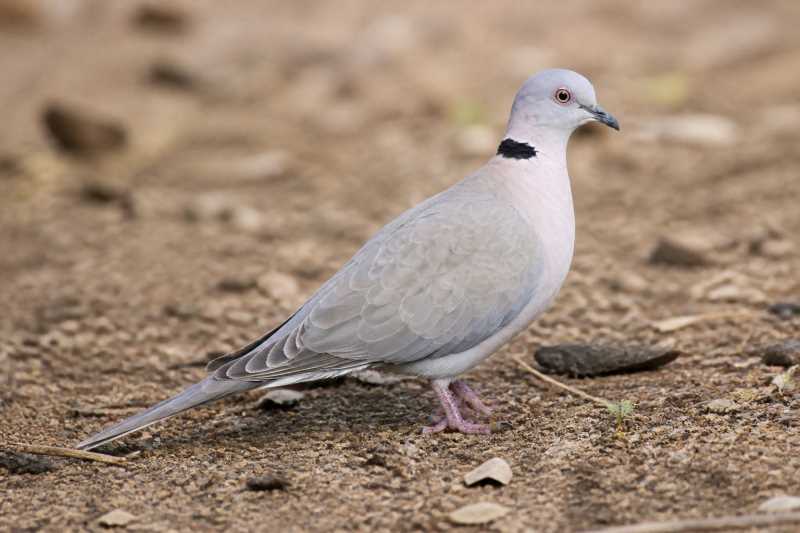
The Mourning Collared Dove: An Iconic Avian Presence in Africa
Birdwatchers and ornithologists alike find the Mourning Collared Dove, scientifically known as Streptopelia decipiens, a fascinating subject of study. This bird, native to sub-Saharan Africa, is not only a delight to observe due to its captivating behavior and soft, melodious calls but also serves as an essential component of its ecosystem.
Physical Characteristics
The Mourning Collared Dove is medium-sized, measuring approximately 28 to 30 centimeters in length, with a wingspan ranging from 45 to 50 centimeters. It is characterized by a light grayish-brown plumage that deepens into a pinkish hue on the underparts, providing a subtle but elegant appearance. The most distinctive feature aiding its identification is the black half-collar on the nape, which contrasts sharply with the white and pale gray of the surrounding feathers. This feature is not only key in distinguishing it from other doves but also contributes to its common name.
Habitat and Distribution
Streptopelia decipiens is widely distributed across sub-Saharan Africa, thriving in a variety of habitats. These include open woodlands, savannas, and urban areas where they often adapt to human presence. Their adaptability is a testament to their resilience, as they can be found from the Sahelian regions of West Africa through East Africa and down to southern parts of the continent.
The species favors environments where water is accessible, a crucial factor for their survival. They are often seen near rivers, lakes, and human settlements where they can find both water and food. The Mourning Collared Dove’s ability to thrive in diverse habitats, including semi-arid regions, highlights its adaptability and ecological versatility.
Behavior and Diet
The Mourning Collared Dove is primarily granivorous, feeding on a diet of seeds, grains, and occasionally small insects. They are ground foragers, often seen pecking at the earth in search of food. In urban areas, they have been known to frequent bird feeders, making them a familiar sight in gardens and parks.
Their behavior is generally gregarious, with the doves often seen in pairs or small flocks. The social nature of these birds is particularly evident during the breeding season, when males engage in elaborate courtship displays. These involve puffing up their plumage, cooing softly, and performing a distinctive bowing motion. Such displays are not only a spectacle but also play a critical role in mating and reproduction.
Breeding and Nesting
The breeding season of the Mourning Collared Dove varies geographically but generally coincides with periods of abundant food supply. They are monogamous birds, often forming long-term pair bonds. The nests are typically flimsy structures made of twigs and leaves, constructed in trees or shrubs, sometimes even on buildings in urban settings.
Female doves usually lay two eggs, which are incubated by both parents for about two weeks. The parental care exhibited by the Mourning Collared Dove is a testament to their dedication, as both partners share responsibilities for feeding and protecting the chicks. The squabs (young doves) fledge approximately two weeks after hatching, a relatively rapid development that reflects the pressures of survival in the wild.
Vocalizations
One of the most endearing features of the Mourning Collared Dove is its vocalization. Their calls, often described as a soft, mournful cooing, are a common soundscape in their habitats. The phrase “coo-COO-cuk” is a typical rendition of their call, resonating across the African landscapes they inhabit. This call not only serves as a means of communication between mates and rivals but also as a territorial signal.
Conservation Status
The Mourning Collared Dove is currently listed as Least Concern on the IUCN Red List, indicating a stable population trend. Their adaptability to human-altered landscapes and resilience against habitat changes have contributed significantly to their stable status. However, ongoing urbanization and habitat destruction pose potential threats that could impact their numbers if not managed carefully.
Conservation efforts focus on habitat protection and ensuring sustainable urban development practices. Bird enthusiasts and conservationists work together to monitor populations and protect crucial habitats, ensuring that these birds continue to thrive in their natural environments.
Conclusion
The Mourning Collared Dove is a remarkable bird that embodies the beauty and resilience of avian life in Africa. Its adaptability, social behavior, and melodious calls make it a cherished species among birdwatchers and an essential part of its ecosystem. Continued efforts in conservation and habitat preservation are vital to ensuring that future generations can enjoy the presence of this iconic dove.
As we observe the Mourning Collared Dove, whether in the wild or urban settings, we are reminded of the delicate balance of nature and the importance of preserving the biodiversity that enriches our world.
Related posts


