The Blue Korhaan: A Jewel of the South African Grasslands
The Blue Korhaan (Eupodotis caerulescens) is a remarkable bird that graces the open grasslands of South Africa. Known for its striking appearance and elusive nature, this species is a subject of interest for ornithologists and bird enthusiasts alike. With a conservation status that merits attention, understanding the Blue Korhaan is crucial for its continued survival in the wild.
Physical Characteristics
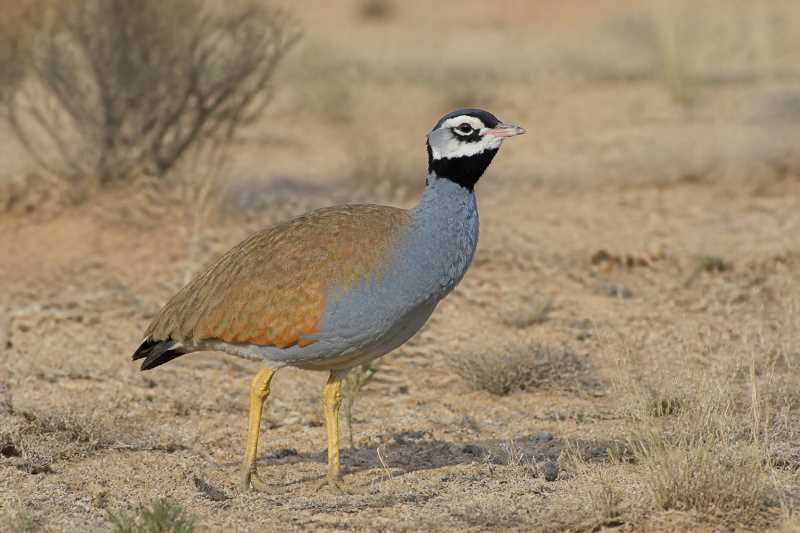
The Blue Korhaan is a medium-sized bird, measuring approximately 50 centimeters in length. It boasts a distinctive slate-grey plumage that gives it a bluish appearance, particularly when seen in the soft light of dawn or dusk. This subtle coloration provides excellent camouflage against the dry grasslands. The bird’s underparts are white, and it has a black crown and nape, which contrast strikingly with its overall grey body. Its legs are long and strong, adapted for walking and running rather than perching.
The Blue Korhaan’s wings are finely adapted for short bursts of flight. While it is not a migratory bird, it is capable of rapid, low-level flight when disturbed. The wings are also used in elaborate courtship displays, which are a hallmark of this species.
Habitat and Distribution
The Blue Korhaan is endemic to South Africa, predominantly found in the highveld grasslands. It favors open, flat areas with short grass, which provide both cover and a rich source of insects and small invertebrates that make up its diet. The bird is particularly common in the Free State province but is also found in parts of the Eastern Cape, North West, and Gauteng provinces.
This bird’s preference for undisturbed grasslands has made it vulnerable to habitat loss due to agricultural expansion and urbanization. As natural grasslands are converted to farmland or urban areas, the Blue Korhaan’s habitat shrinks, making conservation efforts increasingly important.
Behavior and Diet
The Blue Korhaan is primarily terrestrial, spending most of its time on the ground. It is a diurnal bird, most active during the early morning and late afternoon. During these times, it forages for food, which consists mainly of insects, small reptiles, and occasionally seeds and plant matter.
Socially, the Blue Korhaan is solitary or found in pairs, though small family groups may form outside the breeding season. The bird is known for its distinctive, booming call, which can be heard over long distances. This call is used for communication between mates and as a territorial display to ward off rivals.
Breeding and Reproduction
The breeding season for the Blue Korhaan occurs from September to February, coinciding with the southern hemisphere’s spring and summer. During this time, the male engages in a dramatic display to attract a mate. This includes a combination of aerial acrobatics and vocal calls.
The nest is a simple scrape on the ground, often hidden in tall grass. The female lays one to two eggs, which she incubates for about 24 days. The chicks are precocial, meaning they are relatively mature and mobile shortly after hatching. They remain with the mother for several months until they are fully independent.
Conservation Status
The Blue Korhaan is currently classified as "Near Threatened" on the IUCN Red List. The main threats to its survival are habitat loss and degradation. As grasslands are increasingly used for agriculture and development, the Blue Korhaan’s natural habitat is diminishing. Additionally, climate change poses a long-term threat by altering the ecosystems where these birds thrive.
Conservation efforts are focused on habitat preservation and restoration. Protected areas and nature reserves play a crucial role in providing safe havens for the Blue Korhaan. Additionally, raising awareness among local communities about the importance of grassland conservation can help mitigate some of the human-induced threats.
Importance to Ecosystem
The Blue Korhaan plays a significant role in its ecosystem. As an insectivore, it helps control insect populations, which can be beneficial to agriculture by reducing pest numbers. Its presence is also an indicator of the health of the grassland ecosystem, as it thrives in undisturbed natural habitats.
Conclusion
The Blue Korhaan is a fascinating species that highlights the rich biodiversity of South Africa’s grasslands. Its unique adaptations, striking appearance, and important ecological role make it a species worth conserving. By understanding and protecting the Blue Korhaan and its habitat, we can ensure that future generations will continue to enjoy the presence of this majestic bird in the wild.
Efforts to preserve grasslands and raise awareness about the Blue Korhaan’s plight are crucial. Through concerted conservation actions, it is possible to safeguard the future of this remarkable bird and the delicate ecosystems it inhabits.
Related posts