Introduction
The Bronze-tailed Comet (Polyonymus caroli) is a small hummingbird endemic to Peru. It is the only species in the genus Polyonymus and occurs mainly on the western slopes and dry intermontane valleys of the Andes. Its bronzy-green plumage, rosy-purple throat and deeply forked tail make it one of the more distinctive hummingbirds of the Peruvian highlands.
Physical Description
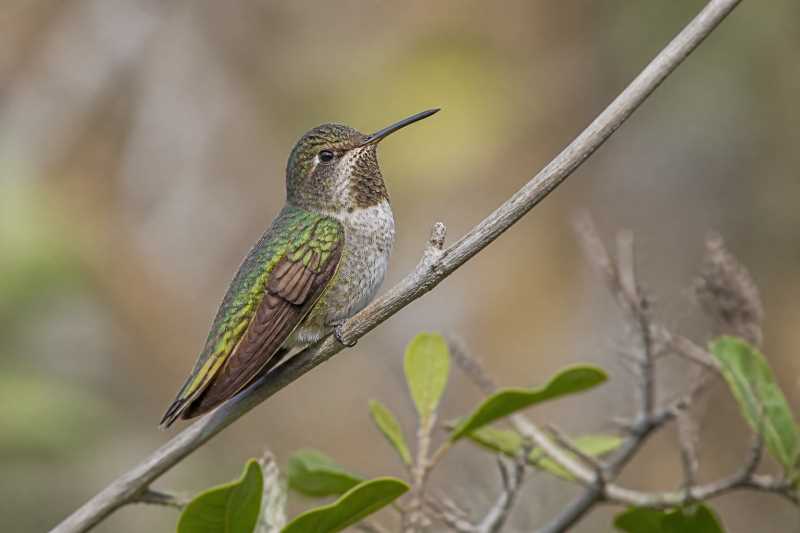
The Bronze-tailed Comet measures approximately 11–13 cm in length. Both sexes have dark bronzy-green upperparts, paler underparts and a conspicuous white spot behind the eye. The bill is slender and slightly curved, reflecting its adaptation to nectar feeding.
The adult male has a large rosy-purple to rosy-violet gorget on the throat. Its tail is relatively long and deeply forked, with bronzy-green central feathers and contrasting bluish or purplish outer feathers that can appear bronze towards the tips.
The female is generally smaller and duller than the male. Her gorget is smaller and more orange-toned, while the tail is shorter and less deeply forked. Young birds are usually less brightly coloured, with a shorter tail and less developed throat markings. Immature males may show a mixture of juvenile and adult plumage.
Range and Habitat
The Bronze-tailed Comet is endemic to Peru. Its range extends through parts of the western Andes and adjacent intermontane valleys, including areas from northern and central Peru southwards into the Andean regions.
It is associated primarily with dry and semi-arid montane scrub, steep canyon slopes, dry woodland and small patches of montane forest. Cacti, agaves and other flowering plants are important components of its habitat. It is generally recorded between about 2,100 and 3,400 metres above sea level, although local records may fall outside this broad range.
The species is considered resident rather than a long-distance migrant. Local movements may occur as birds respond to flowering conditions, but a regular altitudinal migration has not been firmly established.
Where to See This Species
Bosque de Zárate, Lima, Peru
This protected dry montane woodland and cloud-forest area is one of the recognised sites for the Bronze-tailed Comet. The species is reported from the higher sections of the reserve, where dry scrub, flowering plants and remnant woodland provide suitable habitat. The main birding route involves a substantial uphill walk, and July to December is considered a useful period because of increased flowering activity.
Nearby accommodation: San Bartolomé is the nearest practical gateway settlement, with basic guest houses and small-scale accommodation available in the wider central Lima mountain valleys.
Nor Yauyos-Cochas Landscape Reserve, Lima and Junín, Peru
The reserve contains dry Andean valleys, rocky slopes and montane shrubland that support the Bronze-tailed Comet. The species has been included in bird surveys from the protected area and is most likely to be encountered in flowering scrub at middle and higher elevations.
Nearby accommodation: Huancaya and other villages within the reserve provide simple guest houses, lodges and community-based accommodation, although facilities are limited in some areas.
Calipuy National Reserve, La Libertad, Peru
The Bronze-tailed Comet has been documented within Calipuy National Reserve, including high-Andean scrub habitat. The reserve’s dry slopes and montane vegetation provide suitable conditions for this Peruvian endemic, although sightings may require patient searching and local guidance.
Nearby accommodation: Santiago de Chuco is the most practical nearby town for basic hotels, guest houses and other simple accommodation before travelling to the reserve.
Behaviour and Diet
The Bronze-tailed Comet is an active, agile hummingbird that usually forages alone. Like many hummingbirds, it may defend productive flowers or small feeding areas from other hummingbirds, particularly where nectar is concentrated.
Its diet consists mainly of nectar from tubular or otherwise accessible flowers, including flowers of agaves, cacti and other montane plants. It also takes small insects and spiders, which provide additional protein and other nutrients. Insects may be especially important when feeding young or when floral resources are limited.
Breeding information remains limited. The female is expected to undertake most or all nest construction and parental care, as is typical of hummingbirds, but detailed information on the species’ nesting sites, clutch size and breeding season is not well documented.
Identification Tips
Look for a small hummingbird with the following combination of features:
- Dark bronzy-green plumage rather than bright emerald-green upperparts.
- A clear white spot behind the eye.
- A rosy-purple throat in adult males.
- A long, deeply forked tail that may flash bluish, purplish and bronze tones in flight.
- A preference for dry montane scrub, steep valley sides and flowering cactus or agave habitat.
Females are less colourful and have a shorter, less deeply forked tail. The combination of the white postocular spot, bronzy-green body, rosy throat in males and strongly forked tail is particularly useful for separating the species from other Peruvian hummingbirds.
Conservation Status
The Bronze-tailed Comet is classified as Least Concern on the IUCN Red List. It is endemic to Peru but has a relatively broad distribution across suitable Andean habitats.
The principal potential threats are the loss and degradation of dry montane scrub and woodland through agricultural expansion, grazing, fuelwood collection, burning and infrastructure development. Changes in flowering patterns and habitat suitability associated with climate change may also affect local populations. Protecting dry Andean valleys, maintaining native flowering plants and managing protected areas are important conservation measures.
Frequently Asked Questions
Where is the Bronze-tailed Comet found?
The species is endemic to Peru, where it occurs mainly on the western slopes and in dry intermontane valleys of the Andes.
What habitat does the Bronze-tailed Comet prefer?
It favours dry or semi-arid montane scrub, steep canyon slopes, dry woodland and small patches of montane forest, often where cacti or agaves provide nectar-rich flowers.
How can the Bronze-tailed Comet be identified?
Adult males are recognised by their bronzy-green plumage, white spot behind the eye, rosy-purple throat and long, deeply forked tail. Females are duller, with a smaller orange-toned throat patch and a shorter tail.
Is the Bronze-tailed Comet endemic to Peru?
Yes. Its known natural range is restricted to Peru, making it a Peruvian endemic.
What does the Bronze-tailed Comet eat?
It feeds mainly on nectar from flowering plants, especially in dry montane habitats, and supplements its diet with small insects and spiders.
Is the Bronze-tailed Comet threatened?
It is currently assessed as Least Concern, but habitat loss and degradation remain important local concerns, particularly in dry Andean valleys and montane scrublands.
References
- BirdLife International
- IUCN Red List of Threatened Species
- Servicio Nacional de Áreas Naturales Protegidas por el Estado
Related posts