The White-crested Coquette: Nature’s Avian Jewel
The White-crested Coquette (Lophornis adorabilis) is a captivating member of the hummingbird family, Trochilidae, renowned for its diminutive size and striking plumage. This article explores the distinctive features, habitat, behaviors, and conservation status of this exquisite bird, providing an in-depth look at one of nature’s most delicate creations.
Distinctive Features
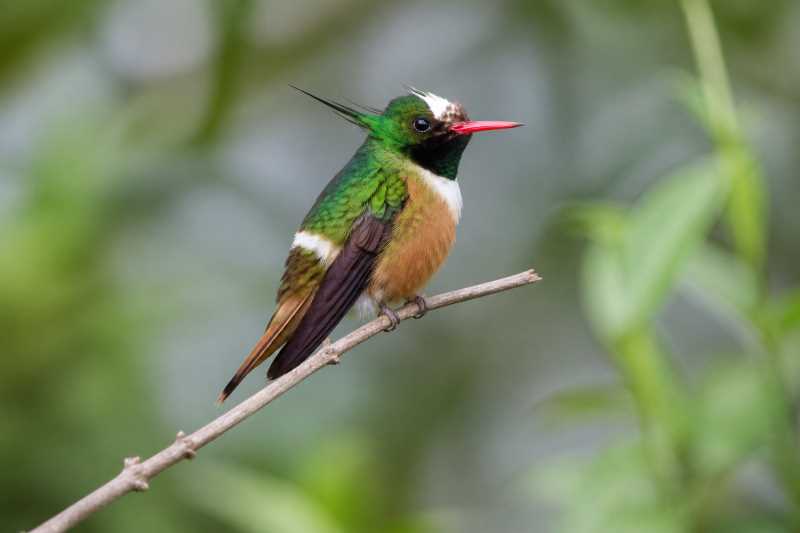
The White-crested Coquette is a small hummingbird, measuring approximately 7-8 cm in length and weighing a mere 2-3 grams. Its most distinguishing feature is the prominent white crest on its head, a characteristic that gives the bird its name. Males exhibit a brilliant blend of iridescent green plumage on their backs and an orange-rufous gorget, which is a stark contrast to their otherwise pristine white underparts. Females, while less colorful, are equally charming with their more subdued green and white coloring, lacking the ornate crest found in males.
Their unique appearance is not just for show; it plays a crucial role in their mating rituals. Males often perform elaborate aerial displays to attract females, showcasing their iridescent plumage to its best advantage under sunlight.
Habitat
The White-crested Coquette is native to the humid and subtropical forests of Central America, predominantly found in Costa Rica and Panama. These birds thrive in forest edges, gardens, and clearings, where flowering plants are abundant. The availability of nectar-rich flowers is critical to their survival, as nectar constitutes a significant portion of their diet.
The coquette’s preference for such habitats makes them particularly vulnerable to deforestation and habitat fragmentation. As human activities encroach upon these environments, the birds are increasingly driven into smaller, isolated patches of suitable habitat.
Diet and Feeding Behavior
Like other hummingbirds, the White-crested Coquette primarily feeds on nectar, which provides them with the high energy needed for their rapid wing beats. They possess the unique ability to hover in place, allowing them to feed from flowers while in flight. This is facilitated by their rapid wing movement, which can reach up to 80 beats per second.
In addition to nectar, these birds also consume small insects and spiders, which provide essential proteins and nutrients necessary for their health. They are known to be opportunistic feeders, taking advantage of the most readily available food sources in their environment.
Breeding and Reproduction
The breeding season for the White-crested Coquette occurs during the dry months, typically from November to March. During this time, males engage in energetic courtship displays, characterized by rapid aerial maneuvers and repeated dives. These performances are intended to showcase their vibrant plumage and attract potential mates.
Once a pair has formed, the female assumes the sole responsibility of nest building and chick rearing. She constructs a small, cup-shaped nest using plant fibers, lichen, and spider silk, often situated on a tree branch. The clutch usually consists of two tiny, white eggs, which the female incubates for about two weeks. After hatching, the chicks are fed regurgitated food until they fledge, approximately 20-25 days later.
Conservation Status
The White-crested Coquette is currently listed as Near Threatened by the International Union for Conservation of Nature (IUCN). The primary threat to their survival is habitat loss due to deforestation for agriculture, logging, and human settlement expansion. Climate change also poses a significant threat by altering the availability of their food sources and suitable habitats.
Conservation efforts are underway to protect the remaining habitats of the White-crested Coquette. These include the establishment of protected areas and reserves, as well as initiatives to promote sustainable land-use practices that minimize habitat destruction.
Conclusion
The White-crested Coquette is a testament to nature’s ability to create intricate and breathtaking organisms. Its dazzling appearance, coupled with its dynamic behaviors, makes it a fascinating subject for bird enthusiasts and researchers alike. However, the ongoing threats to its habitat underscore the importance of conservation efforts to ensure that future generations can continue to admire this avian jewel.
Preserving the natural habitats of the White-crested Coquette and other similarly threatened species is not only vital for their survival but also for maintaining the biodiversity of our planet. By fostering greater awareness and taking proactive conservation measures, we can help protect these remarkable creatures and the ecosystems they inhabit.
Related posts