
Introduction
The Small Sangihe Cuscus (Strigocuscus sangirensis) is a fascinating marsupial species endemic to the Sangihe Islands of Indonesia. This elusive and lesser-known creature belongs to the family Phalangeridae, which includes other cuscuses and possums. As a nocturnal arboreal animal, the Small Sangihe Cuscus has adapted to its tropical environment in unique ways. This article explores the various aspects of its life, including physical description, habitat, behavior, and conservation status, offering a comprehensive understanding of this remarkable species.
Physical Description
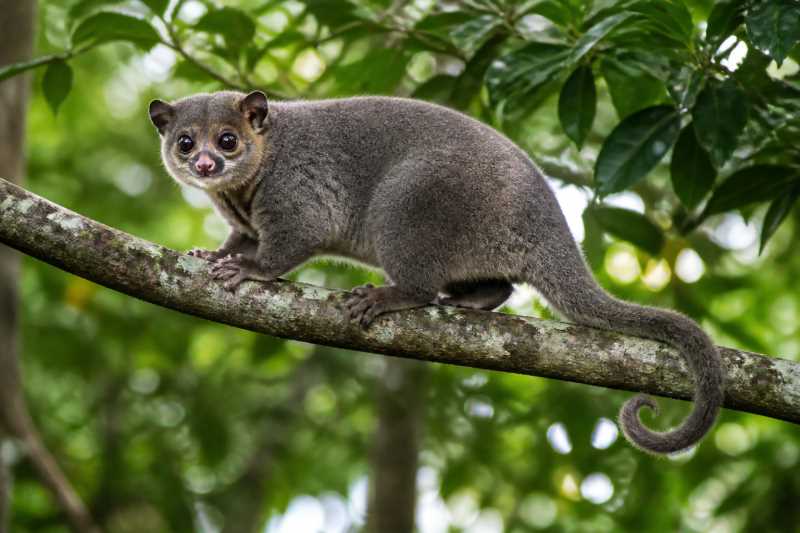
The Small Sangihe Cuscus is a medium-sized marsupial with a body length ranging from 30 to 38 centimeters and a tail length of approximately 25 to 35 centimeters. It weighs between 1 to 2 kilograms. The cuscus has a dense, woolly fur that provides insulation against the humid and sometimes chilly forest night. Its fur is primarily grayish-brown, with lighter underparts, although variations in coloration can occur among individuals.
A distinctive feature of the Small Sangihe Cuscus is its large, forward-facing eyes, adapted for nocturnal vision. These eyes are surrounded by dark rings that enhance its ability to navigate in low-light conditions. Its ears are small and rounded, often hidden by the fur. The cuscus has a prehensile tail, which aids in balance and grasping branches as it moves through the forest canopy.
The cuscus also possesses strong limbs with opposable thumbs and sharp claws, enabling it to climb with agility and precision. Its hind limbs are particularly powerful, allowing for effective leaping between branches.
Range and Habitat
The Small Sangihe Cuscus is endemic to the Sangihe Islands, located in the Celebes Sea, north of Sulawesi in Indonesia. These islands are part of the Greater Sunda Islands and are characterized by their volcanic origin, creating a rich and diverse habitat for a variety of species.
The cuscus predominantly inhabits primary and secondary lowland rainforests, where it can find ample food and shelter. It prefers areas with dense canopy cover, which offer protection from predators and environmental elements. Unfortunately, due to deforestation and human encroachment, the cuscus’s habitat has been significantly reduced, contributing to its current conservation status.
Behavior and Diet
The Small Sangihe Cuscus is a solitary and nocturnal animal. It spends most of its waking hours foraging for food in the forest canopy. Its diet primarily consists of leaves, fruits, and flowers, making it a folivore and frugivore. The cuscus plays a vital role in seed dispersal, contributing to the health and regeneration of its forest habitat.
During the day, the cuscus sleeps in the safety of tree hollows or dense foliage, where it remains well-hidden from predators. It is known for its slow and deliberate movements, which help it avoid detection by potential threats. Despite its solitary nature, the cuscus communicates with others through a series of vocalizations and scent markings, which establish territory and mating availability.
Breeding occurs year-round, with females giving birth to a single offspring after a gestation period of approximately 13 days. The young cuscus is carried in the mother’s pouch until it is mature enough to explore the outside world.
Identification Tips (Field Recognition Cues)
Identifying the Small Sangihe Cuscus in the wild can be challenging due to its elusive nature and nocturnal habits. However, there are several key features to look for when trying to spot this species:
- Size and Shape: Look for a small to medium-sized mammal with a robust body, short limbs, and a prehensile tail.
- Coloration: Note the grayish-brown fur with lighter underparts, although individual coloration can vary.
- Eyes and Ears: Large, expressive eyes with dark rings and small, rounded ears are distinctive features.
- Behavior: Observe its slow, deliberate movements and preference for staying hidden during the day.
- Habitat: Focus on areas with dense canopy cover in primary or secondary lowland rainforests.
Conservation Status (with Threats and Protections)
The Small Sangihe Cuscus is currently classified as Critically Endangered on the IUCN Red List. The primary threats to its survival include habitat loss due to deforestation, agricultural expansion, and human settlement. The limited range of the Sangihe Islands adds to the species’ vulnerability, as any environmental changes can have a significant impact on its population.
Conservation efforts are underway to protect the remaining habitats and promote sustainable land-use practices. Establishing protected areas and working with local communities to raise awareness about the cuscus’s ecological importance are critical steps in ensuring its survival.
Additionally, research initiatives aimed at understanding the cuscus’s ecology and behavior are essential for developing effective conservation strategies. International cooperation and funding are also crucial to support these initiatives and ensure a future for the Small Sangihe Cuscus.
Frequently Asked Questions
What is the Small Sangihe Cuscus’s primary diet?
The Small Sangihe Cuscus primarily feeds on leaves, fruits, and flowers, making it a folivore and frugivore. This diet allows it to play an important role in seed dispersal within its forest ecosystem.
How does the Small Sangihe Cuscus communicate?
The cuscus communicates through vocalizations and scent markings, which are used to establish territory and indicate mating availability. These methods of communication are vital for its solitary lifestyle.
What are the main threats to the Small Sangihe Cuscus?
The main threats to the Small Sangihe Cuscus include habitat loss due to deforestation, agricultural expansion, and human encroachment. These factors contribute to its Critically Endangered status.
How can we help conserve the Small Sangihe Cuscus?
Conservation efforts include establishing protected areas, promoting sustainable land-use practices, and raising awareness among local communities about the species’ ecological importance. Supporting research initiatives and international cooperation are also crucial.
Where can the Small Sangihe Cuscus be found?
The Small Sangihe Cuscus is endemic to the Sangihe Islands in Indonesia, where it inhabits primary and secondary lowland rainforests with dense canopy cover.
Related posts


