The Crested Honey Buzzard: A Unique Raptor of the Skies
The Crested Honey Buzzard (Pernis ptilorhynchus) stands as an intriguing species within the raptor community, captivating ornithologists and bird enthusiasts alike. This remarkable bird is known for its distinctive physical characteristics, unique feeding habits, and widespread distribution, which contribute to its fascinating ecological niche.
Physical Description
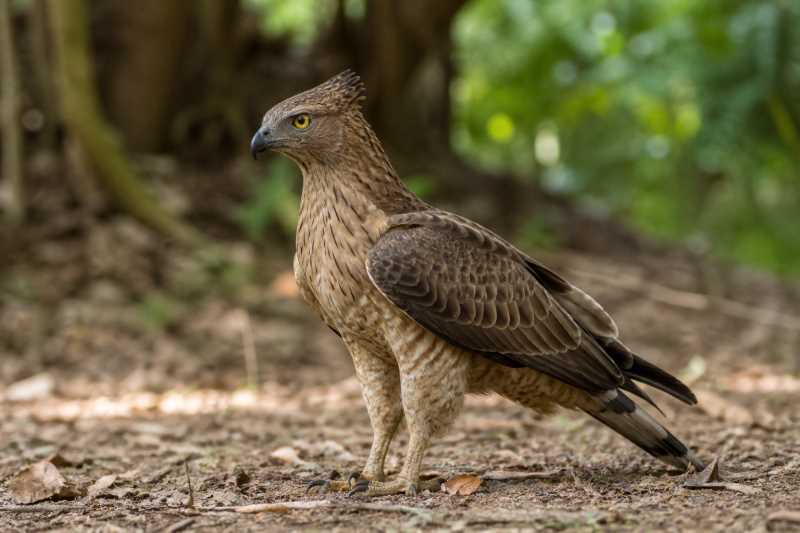
The Crested Honey Buzzard, also known as the Oriental Honey Buzzard, showcases a blend of elegance and adaptability. Adult birds typically measure between 57 to 60 centimeters in length, with a wingspan ranging from 140 to 150 centimeters. Their plumage varies widely, but most exhibit a combination of brown, grey, and cream colors, providing excellent camouflage within their forested habitats. A notable feature is the subtle crest on their heads, lending them their common name.
Sexual dimorphism in this species is slight but noticeable. Males often have a more pronounced crest and more distinct markings compared to females. Juvenile birds are typically darker with streaked underparts, gradually acquiring the adult plumage as they mature.
Habitat and Distribution
The Crested Honey Buzzard boasts an extensive range across Asia, from the Indian subcontinent through Southeast Asia, extending to the eastern reaches of Japan. It inhabits a variety of ecosystems, including dense forests, wooded savannas, and even urban areas, demonstrating significant ecological flexibility. This adaptability is crucial for a migratory species, as it allows the buzzard to exploit different environments throughout the year.
During the breeding season, these birds are often found in temperate and subtropical forests. However, outside of this period, they can be observed in more diverse habitats as they migrate to warmer regions. Their migration patterns are largely influenced by the availability of their primary food source, making them highly dependent on specific environmental conditions.
Feeding Habits and Diet
The Crested Honey Buzzard’s diet is predominantly composed of the larvae and nests of social bees and wasps. This unique dietary preference sets them apart from most other raptors. Their ability to feed on such a specialized diet is facilitated by several evolutionary adaptations. For instance, they possess thick feathers that protect them from stings, and their skin is relatively thick, providing additional protection.
Moreover, their sense of smell is unusually well-developed for birds of prey, allowing them to locate concealed nests of bees and wasps. This adaptation is particularly beneficial when the birds are foraging in dense forests where visual cues alone may not suffice.
In addition to insects, the Crested Honey Buzzard occasionally consumes other food items, such as small mammals, birds, and reptiles, although these are secondary to its primary diet.
Breeding and Reproduction
Breeding typically occurs once a year, with the timing varying depending on geographic location. In northern parts of its range, breeding season usually coincides with the spring months. During this period, males engage in elaborate aerial displays to attract mates, showcasing their agility and strength.
Nests are constructed in tall trees using a mix of sticks and leaves, providing a secure environment for raising young. Females lay one to two eggs per clutch, which they incubate for approximately 35 to 40 days. After hatching, both parents participate in feeding and nurturing the chicks until they are ready to fledge, which generally occurs after 40 to 45 days.
Conservation Status
Currently, the Crested Honey Buzzard is classified as a species of Least Concern by the International Union for Conservation of Nature (IUCN). This status is attributed to its wide distribution and relatively stable population numbers. However, like many other wildlife species, it faces threats from habitat destruction, deforestation, and the use of pesticides, which can impact its food sources.
Conservation efforts are crucial to maintaining the species’ population levels and ensuring that their habitats are preserved. Initiatives aimed at protecting forests and reducing pesticide use can significantly benefit the Crested Honey Buzzard and other forest-dependent species.
Cultural Significance and Observation
In many parts of Asia, the Crested Honey Buzzard holds cultural significance and is often featured in local folklore and traditional art. Its presence is considered a good omen in certain regions, symbolizing strength and resilience.
For bird watchers and researchers, observing the Crested Honey Buzzard offers a rewarding experience. Their migratory patterns provide an opportunity to witness these birds in various environments, while their unique feeding habits and interactions with other species present insightful research opportunities.
Conclusion
The Crested Honey Buzzard is a fascinating raptor that continues to intrigue scientists and bird enthusiasts with its remarkable adaptations and widespread presence across Asia. Its specialized diet and flexible habitat preferences highlight the intricate balance of ecosystems and the importance of conserving these environments. As we advance our understanding of this species, we contribute to the broader efforts in preserving biodiversity and ensuring that future generations can appreciate the wonders of the natural world.
Related posts