The White-bearded Manakin: A Display of Avian Splendor
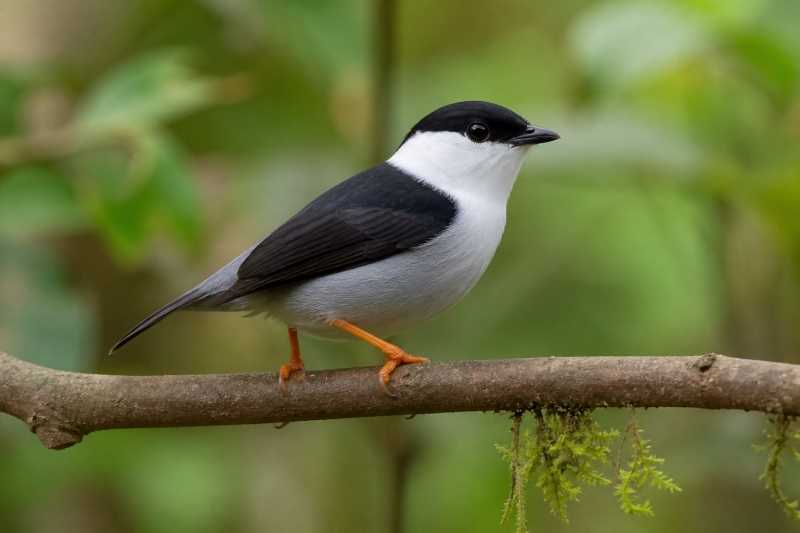
The White-bearded Manakin (Manacus manacus) is a beguiling bird species that captivates ornithologists and bird enthusiasts alike with its vivid displays and intriguing behaviors. Found predominantly in the tropical forests of Central and South America, the White-bearded Manakin is a prime example of the diversity and charm of avian life.
Physical Characteristics
The White-bearded Manakin is a small bird, measuring approximately 10–12 cm in length. Its most distinctive feature is the striking white "beard" or throat patch that stands out against its otherwise dark plumage. The feathers are predominantly black along the top, with a contrasting olive-green or yellowish hue on the underparts. Males and females exhibit sexual dimorphism, where the males are more vividly colored and possess the iconic white beard, while females are more subdued with olive-green plumage for better camouflage.
Habitat and Distribution
The White-bearded Manakin inhabits the dense understories of tropical and subtropical forests, ranging from Panama and Trinidad through the Amazon Basin to Bolivia. These birds prefer lowland and foothill forests but can also be found in disturbed habitats such as secondary growth forests and plantations. Their adaptability to various environments has aided in maintaining stable populations across their range.
Behavior and Diet
One of the most fascinating aspects of the White-bearded Manakin is its unique courtship behavior. The males are known for their elaborate displays, which take place at communal leks. These leks are areas where males gather to perform synchronized dances and displays to attract females. The performances involve a series of acrobatic flights, wing snaps, and vocalizations, all aimed at showcasing the male’s vitality and fitness. The snapping sound, produced by the rapid movement of the wings, is a distinctive feature of their courtship ritual.
The diet of the White-bearded Manakin primarily consists of fruit, supplemented by insects and other small invertebrates. The availability of fruit plays a crucial role in their habitat selection, as these birds rely heavily on fruiting trees for sustenance. Their role as seed dispersers is vital for forest regeneration, making them an integral component of their ecosystem.
Reproduction
The breeding season for the White-bearded Manakin varies geographically but generally aligns with periods of abundant fruit availability. Females are solely responsible for nest building, incubation, and chick rearing. They construct small, cup-shaped nests in the dense understory, where they lay one to two eggs. The eggs hatch after about 18–20 days, and the chicks fledge approximately 13–15 days later. Despite the lack of paternal involvement, the synchronized courtship displays suggest that female choice plays a significant role in selecting genetically superior mates.
Conservation Status and Challenges
The White-bearded Manakin is currently listed as a species of Least Concern by the International Union for Conservation of Nature (IUCN). However, like many forest-dwelling species, it faces challenges from habitat destruction and fragmentation due to logging, agriculture, and urban development. Conservation efforts aimed at preserving tropical forests are essential for maintaining healthy populations of this and other forest-dependent species.
Additionally, climate change poses a long-term threat by potentially altering the availability of fruiting plants and affecting the delicate balance of these ecosystems. Continued research and monitoring of White-bearded Manakin populations will be crucial in understanding and mitigating these impacts.
Conclusion
The White-bearded Manakin is a testament to the wonders of avian life and the intricate behaviors that have evolved in response to environmental pressures. Its striking appearance and captivating courtship displays make it a focal point for those interested in the complexities of bird behavior and ecology. Ensuring the conservation of its habitat will not only protect this remarkable species but also preserve the rich biodiversity that tropical forests support.
By understanding and appreciating the role of the White-bearded Manakin in its ecosystem, we can work towards a future where both this species and its habitat thrive, showcasing the splendor of nature’s adaptations.
Related posts