Introduction
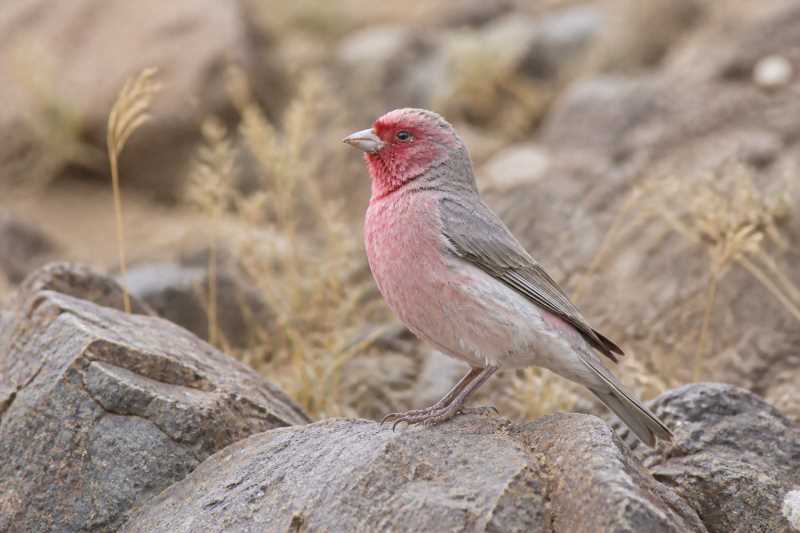
Nestled among the rugged terrains and expansive skies of Central Asia, the Pale Rosefinch (Carpodacus stoliczkae) is a testament to nature’s artistry in avian form. Known for its subtle beauty and resilience in harsh environments, this bird species offers a fascinating glimpse into the adaptability and diversity of life.
Taxonomy and Nomenclature
The Pale Rosefinch belongs to the family Fringillidae, which encompasses a wide range of seed-eating birds known for their finch-like appearance and behavior. Described scientifically as Carpodacus stoliczkae, this species honors the renowned geologist and explorer Ferdinand Stoliczka, whose contributions to the understanding of Himalayan biodiversity have been invaluable.
Physical Description
Characterized by its delicate hues, the Pale Rosefinch is a medium-sized bird, with males typically showcasing a more vibrant plumage than females. Males are adorned with a pale pinkish hue on the head, breast, and rump, contrasted with a brownish back and wings. Females, though less vivid, possess a beauty of their own, with a more subdued palette of browns and grays, which aids in camouflage. Both sexes exhibit a conical bill, well-suited for seed consumption, and a tail that is relatively short and notched.
Habitat and Distribution
The geographical range of the Pale Rosefinch spans across the high-altitude regions of Central Asia, primarily in countries such as China, India, Nepal, and Pakistan. These birds favor alpine meadows, rocky outcrops, and shrublands, thriving at elevations between 3,000 to 5,500 meters. Such environments, characterized by sparse vegetation and extreme temperatures, are home to a specialized group of flora and fauna, with the Pale Rosefinch being one of its most notable avian residents.
Behavior and Ecology
Pale Rosefinches are primarily granivorous, feeding on a diet of seeds, buds, and occasionally small insects. Their foraging behavior is often a communal affair, with groups congregating in areas where food is abundant. This flocking behavior not only facilitates efficient feeding but also provides safety in numbers against predators.
Breeding typically occurs in the warmer months, from June to August, when food availability peaks. Nests are built in crevices or low shrubs, constructed from twigs, grasses, and lined with feathers, providing a secure environment for the young. Females lay a clutch of three to five eggs, which are incubated for about two weeks.
Conservation Status
Currently, the Pale Rosefinch is listed as a species of Least Concern by the International Union for Conservation of Nature (IUCN). However, like many alpine species, it faces threats from climate change and habitat disturbance. The retreat of glaciers and changes in vegetation patterns due to warming temperatures pose significant challenges to their habitat. Additionally, human activities such as agriculture and tourism can lead to habitat fragmentation.
Research and Observation
Ongoing research efforts are crucial to understanding the long-term impacts of environmental changes on the Pale Rosefinch and its habitat. Ornithologists and conservationists are employing a variety of methods, including field surveys, satellite tracking, and genetic studies, to monitor population trends and migration patterns. Citizen science initiatives also play a role, with birdwatchers contributing valuable data through platforms such as eBird.
Conclusion
The Pale Rosefinch is more than just a bird of subtle beauty; it is an indicator of the health of high-altitude ecosystems. Protecting this species involves preserving its habitat and mitigating the impacts of climate change. Through collaborative conservation efforts and increased awareness, we can ensure that the Pale Rosefinch continues to grace the skies of Central Asia for generations to come.
Further Reading
For those interested in learning more about the Pale Rosefinch and other avian species of Central Asia, resources such as the "Handbook of the Birds of the World" and various ornithological journals provide in-depth information and insights.
Related posts