
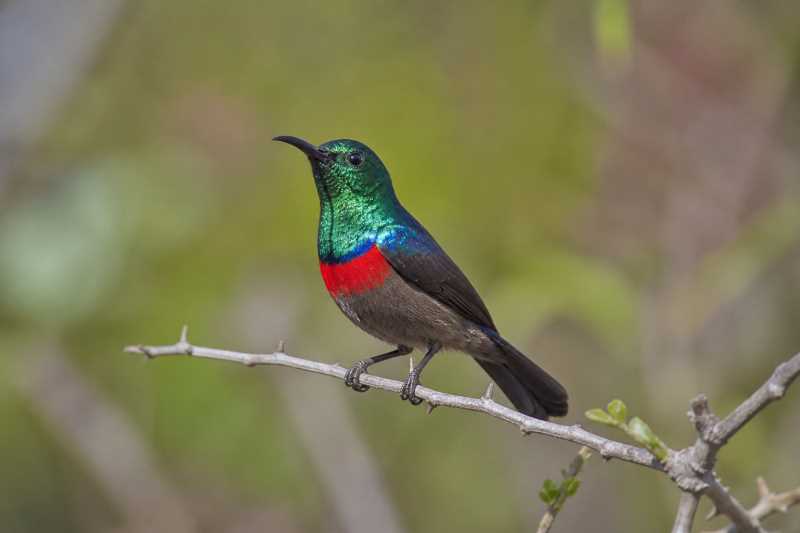
The Western Miombo Sunbird: A Jewel Among Birds
The Western Miombo Sunbird (Cinnyris gertrudis) is a captivating avian species that has piqued the interest of ornithologists and bird enthusiasts alike. Known for its iridescent plumage and unique habitat preferences, this sunbird is a vibrant representation of the biodiversity found within the African Miombo woodlands.
Taxonomy and Nomenclature
The Western Miombo Sunbird belongs to the family Nectariniidae, which comprises small passerine birds commonly referred to as sunbirds. The genus Cinnyris is characterized by its brilliant coloration, often with metallic sheens that reflect sunlight in a dazzling display. The species name, gertrudis, is a nod to its discoverer or perhaps a notable figure associated with its identification.
Physical Characteristics
A defining feature of the Western Miombo Sunbird is its striking plumage. Males typically boast a glossy metallic green upper body, with a bright red breast and a contrasting black belly. Females, while less flamboyant, exhibit a more subdued olive-green hue with paler underparts, providing them with effective camouflage among the foliage. Both sexes possess a slender, curved bill adapted for nectar feeding, a primary dietary component.
Habitat and Distribution
The Western Miombo Sunbird is endemic to the Miombo woodlands, a distinctive ecoregion that spans several countries in southern Africa, including Zambia, Angola, and the Democratic Republic of the Congo. These woodlands are characterized by their dominance of Brachystegia trees, which create a unique ecosystem supporting diverse flora and fauna. The sunbird’s presence in these regions serves as an indicator of the ecological health of the Miombo woodlands.
Behavior and Ecology
Sunbirds are primarily nectarivorous, and the Western Miombo Sunbird is no exception. It plays a crucial role in pollination, visiting a variety of flowering plants, including those within the genera Aloe and Leonotis. This mutualistic relationship underscores the importance of sunbirds in maintaining ecological balance and plant diversity within their habitats.
In addition to nectar, the Western Miombo Sunbird supplements its diet with small insects and spiders, providing essential proteins, particularly during breeding seasons. Its feeding behavior is characterized by swift, agile movements as it hovers near flowers or perches on thin branches, displaying remarkable dexterity.
Reproduction and Lifespan
The breeding season of the Western Miombo Sunbird is typically aligned with the flowering period of its preferred food plants, ensuring ample nectar availability for raising young. Nesting occurs in carefully constructed cup-shaped nests, often woven from plant fibers and camouflaged with leaves and bark. The female takes the lead in nest-building and incubating the eggs, while the male assists by defending the territory and occasionally feeding the female.
Clutch sizes generally range from one to three eggs, which are incubated for approximately two weeks. After hatching, the chicks grow rapidly, fledging within three weeks under the attentive care of both parents. The lifespan of the Western Miombo Sunbird in the wild is not thoroughly documented, but similar species show a life expectancy of five to eight years.
Conservation Status
As of the latest assessments, the Western Miombo Sunbird is not currently listed as threatened or endangered. However, its habitat, the Miombo woodlands, faces pressures from deforestation, agriculture, and climate change, which could potentially impact its population. Conservation efforts focusing on habitat preservation and sustainable land management are vital for ensuring the survival of this and other species within the Miombo ecosystem.
Conclusion
The Western Miombo Sunbird is a testament to the rich biodiversity of the African Miombo woodlands. Its vibrant plumage, ecological role, and unique habitat make it a species worthy of study and conservation. As we continue to explore and understand the complexities of these ecosystems, the Western Miombo Sunbird stands as a vivid reminder of the intricate interdependencies that sustain our natural world.
References
- BirdLife International. "Cinnyris gertrudis: Western Miombo Sunbird." IUCN Red List of Threatened Species.
- Fry, C. H., et al. "The Birds of Africa." Academic Press, 2000.
- Zimmerman, D. A., et al. "Birds of Kenya and Northern Tanzania." Princeton University Press, 1996.
Related posts


