
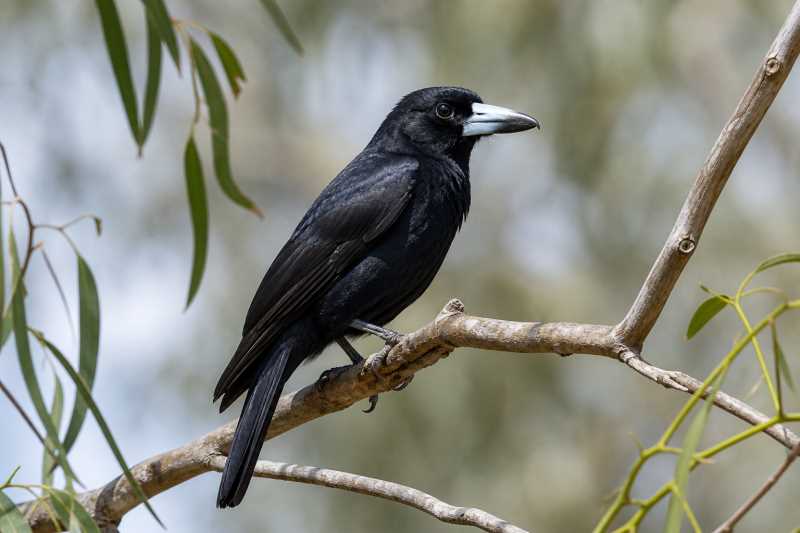
The Enigmatic Black Butcherbird: An Avian Marvel of the Australasian Region
The natural world is replete with fascinating creatures that capture our attention with their unique behaviors and striking appearances. Among these, the Black Butcherbird (Melloria quoyi) stands out as an enigmatic avian species, primarily found in the lush tropical and subtropical regions of northern Australia, New Guinea, and the surrounding islands. This article delves into the intriguing characteristics and ecological significance of the Black Butcherbird, offering insights into its behavior, habitat, and conservation status.
Taxonomy and Description
The Black Butcherbird belongs to the family Artamidae, which includes butcherbirds, magpies, and currawongs. It is scientifically known as Melloria quoyi, named in honor of the French zoologist Jean René Constant Quoy. This bird is notable for its glossy black plumage, which lends it an air of mystery and elegance. Adult Black Butcherbirds typically measure between 35 to 40 centimeters in length, with a wingspan reaching up to 60 centimeters.
Their most distinctive feature is the robust, hooked bill, which is characteristic of butcherbirds and gives them their name. This bill is an essential tool for their predatory lifestyle, enabling them to efficiently capture and consume prey. The legs and feet of the Black Butcherbird are strong, supporting their ability to hunt and forage in diverse environments.
Habitat and Distribution
The Black Butcherbird inhabits a variety of environments, ranging from dense rainforests to mangroves and open woodlands. Its adaptability to different habitats is a testament to its evolutionary success. This bird is most commonly found in northern Australia, particularly in Queensland, as well as in New Guinea and nearby islands. Its presence across these regions underscores its adaptability to tropical and subtropical climates.
Despite their wide range, Black Butcherbirds are often more easily heard than seen. Their loud, melodious calls resonate through the forest canopy, serving as a primary means of communication and territory establishment. These vocalizations are complex and varied, reflecting the bird’s sophisticated social structure.
Behavior and Diet
Black Butcherbirds are opportunistic feeders, with a diet that includes insects, small vertebrates, and occasionally fruits and berries. Their predatory nature is evident in their hunting techniques, which involve stealthy stalking and sudden pounces on unsuspecting prey. They are known to impale their catches on sharp objects such as thorns or barbed wire, a behavior that facilitates consumption and storage.
This impaling behavior is not merely a feeding strategy but also a means of establishing territory and dominance. By leaving visible remnants of their prey, Black Butcherbirds signal their presence and prowess to potential rivals. This territoriality is crucial for maintaining their breeding grounds and ensuring access to resources.
Reproduction and Lifespan
The breeding season for Black Butcherbirds varies depending on their location, but generally occurs during the warmer months when food is abundant. Males engage in elaborate courtship displays, showcasing their vocal abilities and vibrant plumage to attract mates. Once a pair forms, they collaborate in building a nest, typically a sturdy structure made from twigs and leaves, positioned high in the trees.
Clutch sizes usually range from two to four eggs, which both parents incubate. The cooperative nature of Black Butcherbird parenting is essential for the survival of their offspring, as both adults contribute to feeding and protecting the young. The fledglings remain under parental care for several weeks until they are capable of independent foraging.
In the wild, Black Butcherbirds can live for up to 15 years, although this lifespan can be affected by environmental pressures and habitat changes.
Conservation Status and Challenges
Currently, the Black Butcherbird is not considered to be under significant threat, classified as ‘Least Concern’ by the International Union for Conservation of Nature (IUCN). However, like many species, they face challenges from habitat destruction and climate change, which could impact their populations in the future.
Deforestation and land conversion for agriculture pose significant risks to their habitats, particularly in regions where human encroachment is prevalent. Conservation efforts focused on protecting natural habitats and fostering sustainable land use practices are essential to safeguard the future of the Black Butcherbird.
Conclusion
The Black Butcherbird is a remarkable bird that embodies the resilience and adaptability of avian species in the face of ecological challenges. Its striking appearance, complex vocalizations, and predatory prowess make it a fascinating subject for ornithologists and bird enthusiasts alike. By understanding and appreciating the ecological role of the Black Butcherbird, we can contribute to its conservation and ensure that this enigmatic species continues to thrive in its natural habitats.
Related posts


