
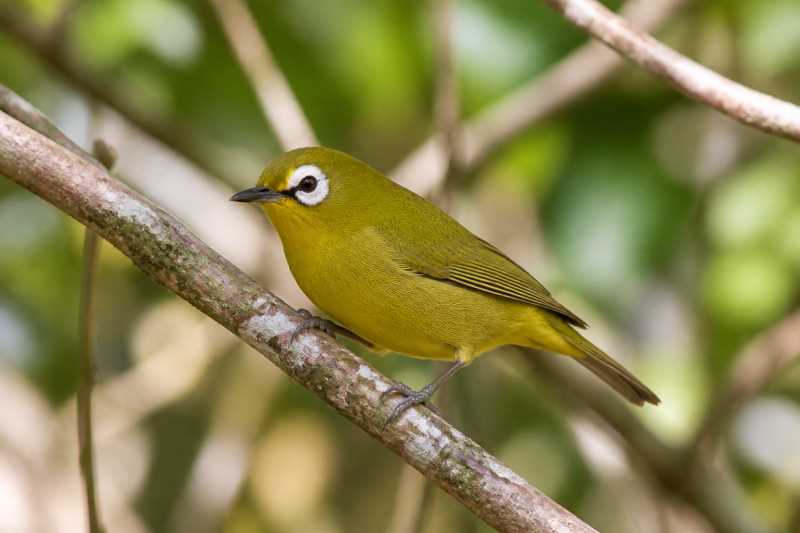
Broad-ringed White-eye (Zosterops eurycricotus): A Comprehensive Overview
The Broad-ringed White-eye, known scientifically as Zosterops eurycricotus, is a captivating bird species that has intrigued ornithologists and bird enthusiasts alike. It belongs to the family Zosteropidae, which is renowned for its charming and lively members often referred to as "white-eyes" due to the characteristic white ring around their eyes. This article aims to provide a comprehensive overview of the Broad-ringed White-eye, exploring its taxonomy, habitat, behavior, conservation status, and significance in the broader ecological context.
Taxonomy and Classification
The Broad-ringed White-eye is part of the genus Zosterops, which comprises a diverse group of small passerine birds. This genus is characterized by its members’ distinctive white eye-rings and vibrant plumage. Zosterops eurycricotus was first described in the early 20th century, and its classification has been subject to various revisions as new phylogenetic studies have emerged. Despite these changes, the Broad-ringed White-eye remains a distinct species within the Zosterops clade, closely related to other white-eyes found in Southeast Asia and the Pacific regions.
The species name, ‘eurycricotus,’ is derived from Greek, with ‘eury’ meaning broad and ‘cricotus’ referring to the ring, highlighting one of its most distinctive features—the broad white eye-ring. This feature not only aids in identification but also has implications for its behavior and ecological interactions, which will be discussed in subsequent sections.
Physical Description
The Broad-ringed White-eye is a small bird, measuring approximately 10-12 cm in length, with a wingspan ranging from 15-18 cm. Its plumage is predominantly olive-green, providing excellent camouflage in its natural habitat. The underparts are paler, often with a yellow tinge that becomes more pronounced during the breeding season. The bird’s defining characteristic, the broad white eye-ring, is more prominent in males, serving as a sexual dimorphism trait that plays a role in mating rituals.
The bill is slender and slightly curved, adapted for feeding on a variety of food sources, including insects, fruits, and nectar. The legs are short but strong, allowing for agile movement through dense foliage. The Broad-ringed White-eye’s vocalizations are a series of high-pitched, melodic calls that facilitate communication within flocks, particularly during foraging and territorial displays.
Habitat and Distribution
The natural habitat of the Broad-ringed White-eye encompasses subtropical and tropical moist lowland forests, as well as secondary growth and edge habitats. This bird is predominantly found in the Southeast Asian region, with populations recorded in countries such as Indonesia, Malaysia, and the Philippines. Its presence in these regions underscores its adaptability to various forest types, although it shows a preference for areas with abundant understory and canopy cover.
Seasonal movements are observed in some populations, often driven by changes in food availability and climatic conditions. The Broad-ringed White-eye’s ability to thrive in both primary and secondary habitats speaks to its ecological versatility, although it remains sensitive to habitat fragmentation and degradation.
Behavior and Ecology
The Broad-ringed White-eye is a social bird, often observed in small flocks that can include other species of white-eyes. This flocking behavior provides several advantages, including enhanced foraging efficiency and protection against predators. In mixed-species flocks, the Broad-ringed White-eye plays a pivotal role in maintaining group cohesion through its vocalizations and active movements.
Foraging primarily occurs in the lower to mid-canopy levels, where the bird employs a combination of gleaning and hovering techniques to capture insects and harvest nectar. Its diet is varied, consisting of small insects, spiders, fruits, and nectar from flowering plants. This dietary diversity not only supports the bird’s nutritional needs but also contributes to pollination and seed dispersal, underscoring its ecological importance.
During the breeding season, which typically coincides with the onset of the rainy season, the Broad-ringed White-eye constructs cup-shaped nests from grasses and plant fibers. These nests are strategically placed in dense foliage to conceal them from predators. Clutch sizes range from two to four eggs, with both parents sharing incubation and feeding duties. The chicks develop rapidly, fledging within two to three weeks post-hatching.
Conservation Status
The conservation status of the Broad-ringed White-eye is currently listed as Least Concern by the International Union for Conservation of Nature (IUCN). However, this classification does not imply that the species faces no threats. Habitat loss due to deforestation and land conversion for agriculture and urban development poses significant risks to its populations. Additionally, climate change impacts, such as altered rainfall patterns and increased frequency of extreme weather events, could affect its habitat and food resources.
Conservation efforts for the Broad-ringed White-eye are focused on habitat preservation and restoration. Protected areas and community-based initiatives play a crucial role in safeguarding its habitats. Continued research and monitoring are essential to understanding population trends and the effectiveness of conservation strategies, ensuring the long-term survival of this species.
Significance and Conclusion
The Broad-ringed White-eye is more than just an exquisite bird; it is an integral component of its ecosystem. Through its foraging activities, it facilitates pollination and seed dispersal, contributing to forest regeneration and biodiversity maintenance. Its presence in various habitats highlights the interconnectedness of forest ecosystems and the importance of preserving these environments.
In conclusion, the Broad-ringed White-eye serves as a reminder of the rich avian diversity found in the Southeast Asian region. Its adaptability and ecological roles underscore the need for comprehensive conservation strategies that address the challenges of habitat loss and environmental change. By fostering awareness and appreciation for such species, we can contribute to the protection of our planet’s natural heritage.
References
- Collar, N. J., & Robson, C. (2007). Family Zosteropidae (White-eyes). In J. del Hoyo, A. Elliott, & D. A. Christie (Eds.), Handbook of the Birds of the World (Vol. 12). Lynx Edicions.
- IUCN Red List of Threatened Species. (2023). Zosterops eurycricotus. Retrieved from IUCN Red List
- Moyle, R. G., Filardi, C. E., Smith, C. E., & Diamond, J. (2009). Explosive Pleistocene diversification and hemispheric expansion of a "great speciator". Proceedings of the National Academy of Sciences, 106(6), 1863-1868.
Meta Title
Broad-ringed White-eye: Characteristics and Conservation
Meta Description
Explore the Broad-ringed White-eye, its habitat, behavior, and conservation. Discover its ecological significance in Southeast Asia’s diverse landscapes.
Related posts


