The Enigmatic Siberian House Martin: A Comprehensive Overview
The Siberian House Martin (Delichon lagopodum) is a small passerine bird belonging to the family Hirundinidae, commonly known as swallows and martins. This avian species, with its distinctive characteristics and migratory patterns, has captured the interest of ornithologists and bird enthusiasts alike. Delve into the fascinating world of the Siberian House Martin, exploring its habitat, behavior, and conservation status.
Taxonomy and Description
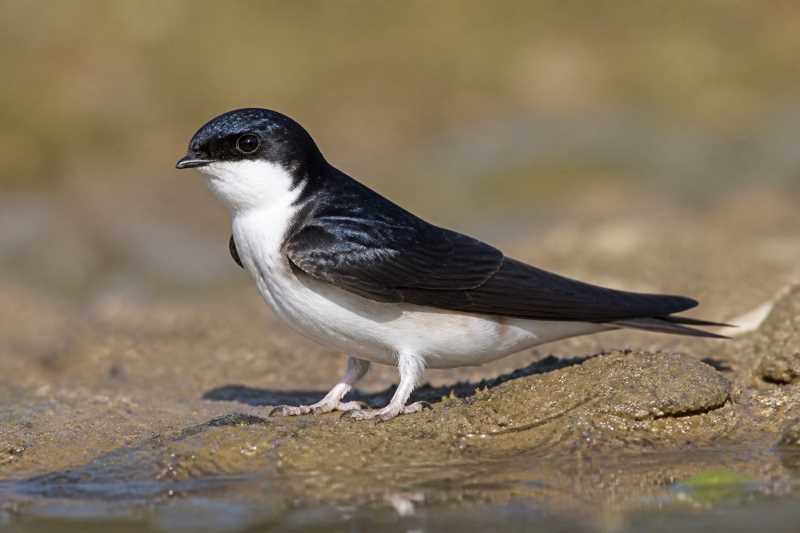
The Siberian House Martin, often confused with its close relatives, the Common House Martin (Delichon urbicum) and the Asian House Martin (Delichon dasypus), is a unique species distinguished by subtle morphological features. The bird measures approximately 12–13 cm in length, with a wingspan ranging from 27 to 30 cm. It boasts a glossy blue-black upper body, contrasting sharply with its white underparts, and a distinct white rump. Unlike some of its relatives, the Siberian House Martin has a slightly forked tail and a shorter, squarer profile.
Habitat and Distribution
The Siberian House Martin is predominantly found in the eastern parts of Siberia, extending its range into parts of Mongolia, China, and Japan. These birds favor open landscapes near water bodies such as rivers, streams, and lakes, often nesting in cliffs, gorges, and, occasionally, human-made structures. Their choice of habitat is influenced by the availability of mud for nest building and abundant insect prey.
During the breeding season, which spans from May to August, Siberian House Martins exhibit strong site fidelity, often returning to the same nesting sites year after year. They are colonial nesters, with colonies ranging from a few pairs to several hundred birds, depending on the availability of suitable nesting sites.
Behavioral Patterns and Diet
The Siberian House Martin is insectivorous, feeding primarily on flying insects such as flies, mosquitoes, and midges, which they skillfully catch in flight. Their foraging behavior is characterized by agile aerial maneuvers, making them a vital component of the ecosystem by controlling insect populations.
Social and vocal, these birds communicate through a series of chirps and trills, particularly during the breeding season. Courtship involves aerial displays and mutual preening, strengthening pair bonds. Once a pair has formed, both mates participate in nest building, using mud pellets to construct their characteristic cup-shaped nests lined with feathers and grass.
Migration Patterns
Siberian House Martins are long-distance migrants. After the breeding season, they undertake extensive migrations to their wintering grounds in Southeast Asia, including countries like Thailand, Malaysia, and the Philippines. This migration is a perilous journey, fraught with threats such as habitat loss, climate change, and human interference.
Their migratory behavior is influenced by environmental cues such as daylight length and temperature changes. During migration, Siberian House Martins travel in flocks, often joining other swallow species, to enhance protection against predators and improve foraging efficiency.
Conservation Status
The Siberian House Martin is currently classified as Least Concern by the International Union for Conservation of Nature (IUCN). However, like many migratory birds, they face numerous threats that could impact their populations in the future. Habitat destruction, particularly the loss of nesting sites due to urbanization and agricultural expansion, poses significant challenges.
Climate change also presents a looming threat, potentially altering insect populations and the availability of suitable habitats along their migratory routes. Conservation efforts are crucial, focusing on habitat protection, public education, and international collaboration to ensure the preservation of this species.
Conclusion
The Siberian House Martin is a testament to the intricate balance of nature, showcasing remarkable adaptations and behaviors that enable its survival across vast geographical distances. Understanding and protecting this species requires concerted efforts from scientists, conservationists, and the general public. By fostering appreciation and awareness, we can contribute to preserving the natural heritage that the Siberian House Martin represents.
In conclusion, the Siberian House Martin is more than just a bird; it is a symbol of resilience and adaptation. As we continue to study and learn from this fascinating species, we gain insights into the broader ecological processes that sustain our planet. Let us cherish and protect the Siberian House Martin for generations to come.
Related posts