Understanding Gray’s Lark: The Desert Specialist
Gray’s Lark (Ammomanopsis grayi) is a remarkable bird species that thrives in some of the most challenging environments on Earth. Known for its adaptability and resilience, this avian creature is an emblem of survival in the arid landscapes of southwestern Africa. With its distinctive features and behaviors, Gray’s Lark serves as an intriguing subject for ornithologists and bird enthusiasts alike.
Habitat and Distribution
Gray’s Lark is predominantly found in the Namib Desert, a coastal desert in southern Africa known for its extreme aridity and unique ecosystem. The bird’s range extends across Namibia and into parts of western South Africa. The habitat preference of Gray’s Lark is largely dictated by its need for open spaces and sparse vegetation, which are characteristic of desert and semi-desert regions.
The Namib Desert, regarded as one of the oldest deserts in the world, offers a harsh but stable environment that supports various endemic species. Gray’s Lark has adapted remarkably well to this environment, exhibiting behaviors and physical adaptations that allow it to conserve water and withstand high temperatures.
Physical Characteristics
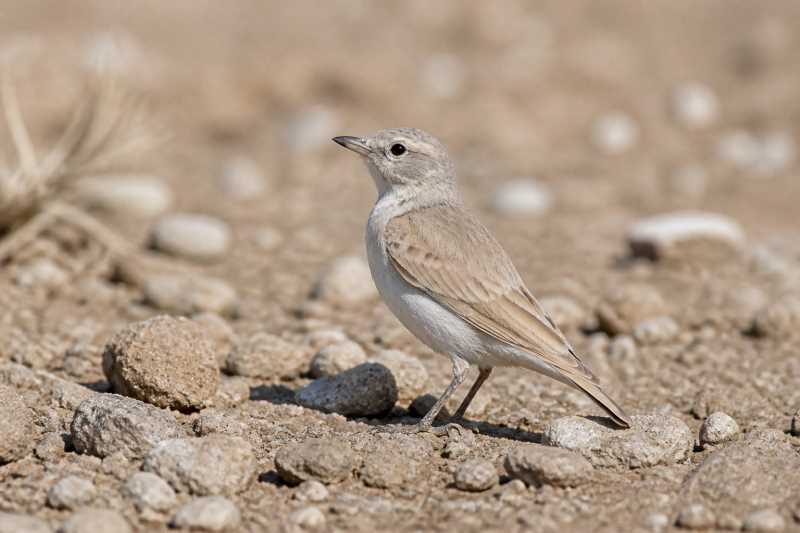
Gray’s Lark is a medium-sized bird, typically measuring around 14 to 16 centimeters in length. Its plumage is predominantly gray, which serves as an effective camouflage against the sandy desert backdrop. The bird has a relatively short tail and long legs, adaptations that enhance its mobility across the desert terrain.
One of the most striking features of Gray’s Lark is its bill, which is slightly decurved and adapted for foraging on the ground. This morphological trait is significant for its survival, as it primarily feeds on seeds and insects that it finds by probing the sandy soil.
Behavioral Adaptations
The behavior of Gray’s Lark is intricately linked to its environment. Being a ground-dwelling bird, it spends much of its time foraging on the desert floor. Its diet consists mainly of seeds and small invertebrates, which are abundant in the Namib Desert despite the harsh conditions.
Gray’s Lark is known for its nomadic behavior, often moving in response to rainfall and the subsequent availability of food resources. This mobility is crucial for its survival, as it allows the bird to exploit temporary food-rich areas and avoid prolonged periods of scarcity.
Another fascinating aspect of Gray’s Lark’s behavior is its breeding strategy. The breeding season is closely tied to the sporadic rainfall patterns of its habitat. Nesting typically occurs on the ground, with the female laying a clutch of two to three eggs. The nests are simple scrapes in the sand, often lined with small stones or plant material to provide some insulation from the intense heat.
Conservation Status and Threats
Currently, Gray’s Lark is classified as a species of Least Concern by the International Union for Conservation of Nature (IUCN). However, like many desert-dwelling species, it faces potential threats from habitat degradation and climate change.
Human activities such as mining and off-road vehicle use can disrupt the delicate desert ecosystem, leading to habitat loss for Gray’s Lark. Additionally, climate change poses a significant threat by altering rainfall patterns and increasing temperatures, which could impact the availability of food and suitable nesting sites.
Conservation efforts are essential to ensure the long-term survival of Gray’s Lark. Protecting its natural habitat and mitigating the impacts of climate change are critical steps in safeguarding this unique species.
The Role of Citizen Science and Research
Research and monitoring are vital for understanding the population dynamics and ecological requirements of Gray’s Lark. Citizen science initiatives can play a significant role in gathering data on this elusive bird, with birdwatchers and nature enthusiasts contributing valuable sightings and observations.
Collaborative efforts between scientists, conservation organizations, and local communities can enhance our understanding of Gray’s Lark and inform effective conservation strategies. By raising awareness of the species and its ecological importance, we can foster a greater appreciation for the biodiversity of desert ecosystems.
Conclusion
Gray’s Lark is a testament to the remarkable adaptability of life in extreme environments. Its survival in the harsh conditions of the Namib Desert highlights the intricate relationships between species and their habitats. As we continue to study and protect Gray’s Lark, we gain insights into the complexities of desert ecosystems and the broader challenges of conservation in a changing world.
By prioritizing the conservation of Gray’s Lark and its habitat, we not only preserve a unique species but also contribute to the resilience and diversity of our planet’s ecosystems.
References
- Maclean, G.L. (1993). "Roberts’ Birds of Southern Africa"
- Simmons, R.E., Brown, C.J., & Kemper, J. (2015). "Birds to Watch in Namibia: Red, Rare and Endemic Species"
- International Union for Conservation of Nature (IUCN)
Related posts