Introduction
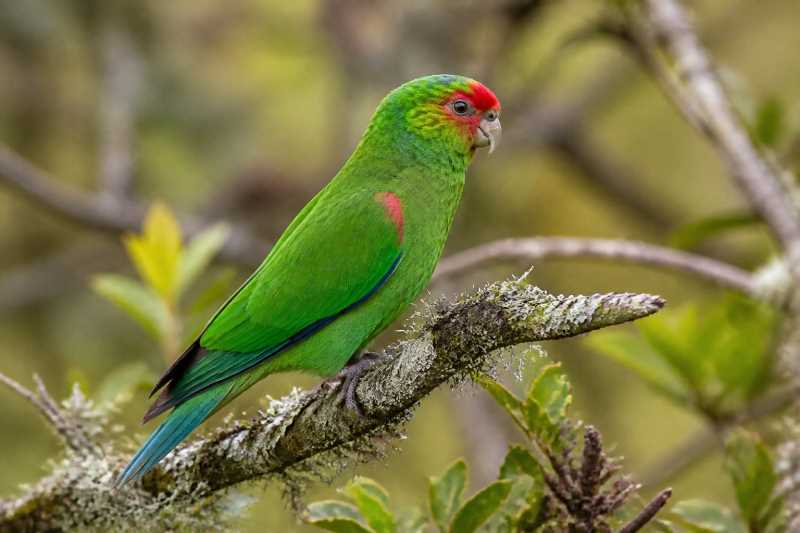
The Red-faced Parrot, scientifically known as Hapalopsittaca pyrrhops, is a captivating bird species that belongs to the family Psittacidae. Known for its vibrant plumage and distinct red facial markings, this parrot inhabits the montane forests of the Andes in South America. Despite its striking appearance, the Red-faced Parrot remains one of the lesser-studied members of its family. This article delves into the various aspects of the Red-faced Parrot, including its taxonomy, habitat, behavior, conservation status, and the challenges it faces in the wild.
Taxonomy and Identification
The Red-faced Parrot is classified under the genus Hapalopsittaca, which includes several other Andean parrot species. The genus name ‘Hapalopsittaca’ is derived from Greek, with ‘hapalos’ meaning gentle and ‘psittakos’ meaning parrot. The species name ‘pyrrhops’ is derived from Greek as well, with ‘pyrrhos’ meaning flame-colored and ‘ops’ meaning face, aptly describing its distinctive red facial coloration.
This medium-sized parrot measures approximately 25-28 cm in length, displaying a predominantly green plumage. Its most distinguishing features are the bright red patches around its eyes, which extend towards the beak, and the blue-tipped wings and tail. Juvenile parrots exhibit duller colors compared to adults, with less pronounced red facial markings.
Habitat and Distribution
The Red-faced Parrot is endemic to the high-altitude cloud forests of the Andes, primarily found in Ecuador and southern Colombia. It inhabits elevations ranging from 2,000 to 3,500 meters above sea level, thriving in humid montane forests and elfin woodlands. These regions are characterized by high rainfall, dense vegetation, and a rich diversity of flora and fauna, providing an ideal environment for the Red-faced Parrot.
The parrots are usually observed in small flocks, often comprising family groups. They are known to be nomadic within their range, moving in search of food and suitable nesting sites. Seasonal migrations have also been documented, likely in response to changes in food availability and climatic conditions.
Behavior and Diet
Red-faced Parrots are social creatures, often seen foraging in groups. Their diet primarily consists of seeds, fruits, berries, and nuts. They have a particular preference for the seeds of the Podocarpus tree, a common conifer in their habitat. The parrots play a crucial role in the ecosystem as seed dispersers, contributing to the regeneration of their forest environment.
These parrots are known for their vocalizations, which include a variety of calls and squawks used for communication within flocks. Their calls are often described as harsh and loud, serving as a means of maintaining group cohesion and expressing alarm when threatened.
Breeding and Lifespan
The breeding season of the Red-faced Parrot typically occurs from October to March, coinciding with the availability of food resources. They are cavity nesters, often utilizing natural tree hollows or abandoned woodpecker nests for laying eggs. The female usually lays between 2 to 4 eggs, with an incubation period of approximately 24 to 26 days.
Both parents participate in feeding and caring for the chicks after they hatch. The fledglings leave the nest around 7 to 8 weeks after hatching, although they may remain dependent on their parents for several months. In the wild, Red-faced Parrots can live up to 20-30 years, although precise longevity data is scarce.
Conservation Status and Threats
The Red-faced Parrot is currently classified as Near Threatened on the IUCN Red List. The primary threat to their population is habitat loss due to deforestation, agriculture, and human encroachment. The cloud forests they inhabit are increasingly being cleared for pasture and plantations, leading to fragmentation and degradation of their natural habitat.
Additionally, illegal trapping for the pet trade poses a significant threat to their numbers in the wild. Although international trade of this species is restricted under CITES Appendix II, illegal activities continue to impact their populations.
Conservation efforts are underway to protect the Red-faced Parrot and its habitat. These include establishing protected areas, promoting sustainable land-use practices, and raising awareness about the ecological importance of the Andean cloud forests.
Conclusion
The Red-faced Parrot is a remarkable example of the biodiversity found in the Andean cloud forests. Its striking appearance and ecological role as a seed disperser highlight the importance of conserving this species and its habitat. While challenges remain, continued research, conservation initiatives, and community involvement are essential to ensure the survival of the Red-faced Parrot for future generations.
References
- BirdLife International. (2021). Hapalopsittaca pyrrhops. The IUCN Red List of Threatened Species 2021.
- Juniper, T., & Parr, M. (1998). "Parrots: A Guide to Parrots of the World." Yale University Press.
- Ridgely, R. S., & Greenfield, P. J. (2001). "The Birds of Ecuador."
Meta Information
Related posts