Introduction
The Bini Winged-mouse Bat, scientifically known as Myopterus whitleyi, is a lesser-known species among the diverse Chiroptera order, which comprises all bats. This intriguing mammal is part of the Molossidae family, commonly referred to as free-tailed bats due to the distinctive tail structure extending beyond the uropatagium (the membrane between the legs and tail). Despite its elusive nature, the Bini Winged-mouse Bat plays a crucial role in its ecosystem, primarily through insect population control. This article delves into the physical characteristics, habitat, behavior, and conservation status of this fascinating species, thereby expanding our understanding of its ecological importance.
Physical Description
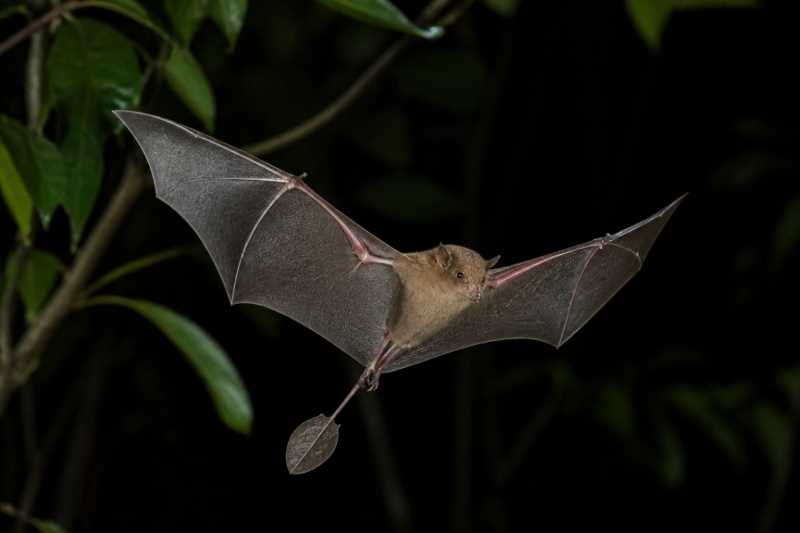
The Bini Winged-mouse Bat is a small, agile bat characterized by its streamlined body and long, narrow wings, which facilitate rapid and maneuverable flight. Typically, these bats exhibit a forearm length ranging from 40 to 50 millimeters, while their total body length, including the tail, measures approximately 80 to 100 millimeters. The most distinguishing feature of the Bini Winged-mouse Bat is its elongated tail, which protrudes beyond the tail membrane, a hallmark of the Molossidae family.
Their fur is generally short and glossy, varying in color from dark brown to grayish-brown, providing effective camouflage against the tree bark and rocky surfaces they commonly inhabit. The ears are moderately large and rounded, with a tragus (the small, pointed cartilage at the ear’s entrance) that is well-developed, aiding in echolocation. Their facial features are relatively simple, with a broad nose and large eyes adapted for low-light vision, essential for their nocturnal lifestyle.
Range and Habitat
Myopterus whitleyi is primarily found in West and Central Africa, with confirmed sightings in countries such as Nigeria, Ghana, and Cameroon. These bats are typically associated with tropical and subtropical environments, thriving in primary and secondary forests where their roosting and foraging needs are met.
They prefer habitats that offer a mixture of dense canopy cover and open spaces. During the day, they roost in tree cavities, crevices, or sometimes even in man-made structures that mimic natural shelters. The choice of habitat is critical for their survival, as it provides protection from predators and harsh weather conditions, as well as proximity to abundant food sources.
Behavior and Diet
The Bini Winged-mouse Bat is primarily insectivorous, feeding on a wide variety of insects, including moths, beetles, and mosquitoes. Their diet plays a significant ecological role, as it helps control insect populations, indirectly benefiting agriculture by reducing pest numbers.
These bats are nocturnal, emerging from their roosts at dusk to forage. They are known for their agile flight, which is facilitated by their long wings and tail. Echolocation is their primary tool for hunting, allowing them to detect and capture prey in complete darkness. Their calls, which are typically inaudible to the human ear, help in navigating and locating food through the reflection of sound waves.
Socially, the Bini Winged-mouse Bat may be found in small colonies, although their social structure is not as complex as some other bat species. They communicate with each other through a series of vocalizations and physical interactions, especially during the breeding season.
Identification Tips (Field Recognition Cues)
Identifying the Bini Winged-mouse Bat in the field can be challenging due to its small size and nocturnal habits. However, certain features and behaviors can aid in recognition:
- Tail and Wing Structure: The elongated tail extending beyond the uropatagium is a distinctive feature. Their long, narrow wings are designed for swift, agile flight.
- Echolocation Calls: While their echolocation calls are beyond human hearing, observing bat detectors can help identify their presence. These devices convert ultrasonic calls into audible sounds.
- Roosting Sites: During the day, check for roosts in tree cavities or under loose bark in forests, as these are common resting places for the species.
- Foraging Behavior: Observing their flight patterns at dusk can be indicative. They exhibit erratic, fast-paced flying as they hunt for insects.
- Physical Appearance: Look for their dark brown to grayish-brown fur and moderately large, rounded ears when spotted at close range.
Conservation Status (With Threats and Protections)
The conservation status of the Bini Winged-mouse Bat is currently listed as Data Deficient by the International Union for Conservation of Nature (IUCN). This classification highlights the lack of comprehensive data on the species’ population trends and distribution, impeding precise conservation assessments.
Threats
Key threats to the Bini Winged-mouse Bat include habitat destruction due to deforestation, agricultural expansion, and urbanization. These activities not only reduce available roosting and foraging areas but also fragment their natural habitat, isolating populations and making them more vulnerable to extinction.
Additionally, pesticide use in agriculture can reduce their food supply and potentially lead to secondary poisoning, further threatening their survival.
Protections
Conservation efforts for the Bini Winged-mouse Bat focus on habitat preservation and restoration. Protecting large tracts of forest environments is critical, as these areas provide essential resources for roosting and foraging.
Efforts to raise awareness about the ecological importance of bats, along with policies to reduce pesticide usage, are also crucial. Research initiatives aimed at gathering more data on their population dynamics and habitat requirements could lead to more targeted conservation strategies.
Frequently Asked Questions
What is the primary diet of the Bini Winged-mouse Bat?
The Bini Winged-mouse Bat feeds mainly on insects, including moths, beetles, and mosquitoes, playing a key role in controlling insect populations.
Where can I find the Bini Winged-mouse Bat?
This species is found in West and Central Africa, particularly in Nigeria, Ghana, and Cameroon, inhabiting tropical and subtropical forests.
How does the Bini Winged-mouse Bat navigate in the dark?
The bat uses echolocation, emitting high-frequency sound waves that bounce off objects, allowing it to detect and capture prey in complete darkness.
What threats does the Bini Winged-mouse Bat face?
Habitat destruction due to deforestation, agricultural expansion, and pesticide use are significant threats, reducing available roosting and foraging areas.
How can we protect the Bini Winged-mouse Bat?
Conservation efforts focus on habitat preservation, raising awareness of their ecological role, and reducing pesticide usage to protect their populations.
Related posts