Introduction
Eisentraut’s Mouse Shrew, scientifically known as Myosorex eisentrauti, is a small mammal endemic to the precarious environments of western Cameroon. This elusive creature, belonging to the family Soricidae, has intrigued researchers and naturalists due to its restricted range and unique adaptations. Despite its relatively small size, Eisentraut’s Mouse Shrew plays a crucial role in the forest ecosystems it inhabits. This article delves into the various aspects of this species, providing a comprehensive overview of its physical characteristics, habitat, behavior, and conservation status.
Physical Description
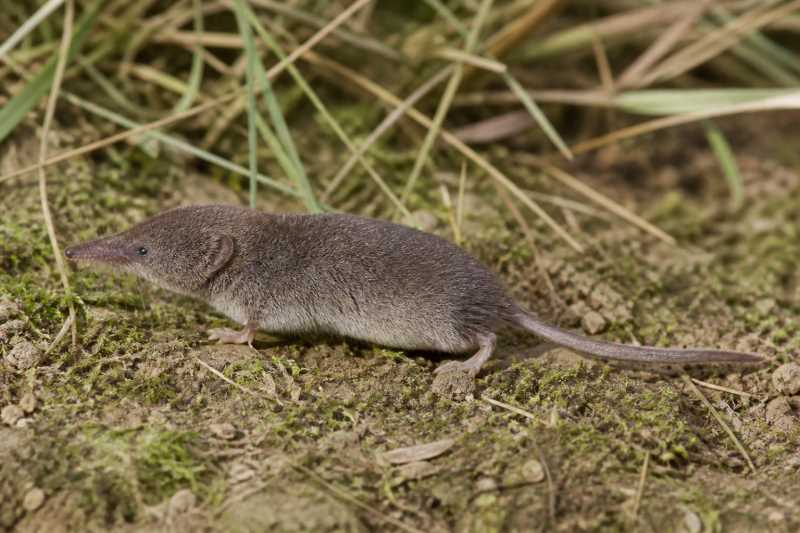
Eisentraut’s Mouse Shrew is characterized by its diminutive size and distinct morphological features. The species typically measures between 80 to 100 millimeters in body length, with a tail length ranging from 30 to 40 millimeters. The shrew’s fur is a dense, soft texture, colored a dark brown to grayish hue, providing excellent camouflage against the forest floor. The underparts are slightly lighter, often exhibiting a pale gray shade.
Its head is small with a pointed snout, a typical trait of shrews, aiding in its foraging activities. The eyes are relatively small, adapted to its low-light habitat, while the ears are almost hidden under the fur, which helps minimize heat loss. The limbs are short, with the forelimbs slightly more robust than the hind limbs, equipped with sharp claws that are essential for digging and maneuvering through dense underbrush.
Range and Habitat
Eisentraut’s Mouse Shrew is endemic to Cameroon, specifically restricted to the Mount Oku region. This limited range makes the species particularly vulnerable to environmental changes. The shrew thrives in montane forests, which provide the moist and cool conditions it favors. These forests, located at elevations of approximately 2,000 to 3,000 meters, are characterized by dense foliage, rich leaf litter, and a diverse array of flora and fauna.
The habitat of the Eisentraut’s Mouse Shrew is under constant threat from human activities such as logging, agricultural expansion, and settlement development. These factors contribute to habitat fragmentation and degradation, posing significant challenges to the survival of this species.
Behavior and Diet
Eisentraut’s Mouse Shrew is primarily nocturnal, spending its nights actively foraging for food. Its diet consists predominantly of insects and other small invertebrates, which it expertly locates using its acute sense of smell and hearing. The shrew’s high metabolic rate necessitates constant feeding, requiring it to consume approximately twice its body weight in food daily.
Despite its solitary nature, Eisentraut’s Mouse Shrew exhibits territorial behavior, marking its domain with scent glands located on its body. The species is known for its high-pitched vocalizations, used to communicate with potential mates and to ward off intruders.
Identification Tips (field recognition cues)
Identifying Eisentraut’s Mouse Shrew in the wild can be challenging due to its small size and elusive nature. However, there are several key characteristics to look for:
- Size and Shape: Look for a small mammal with a body length ranging from 80 to 100 millimeters and a relatively short tail.
- Coloration: Note the dark brown to grayish fur, with lighter underparts.
- Habitat: This species is found exclusively in the montane forests of Mount Oku, Cameroon.
- Behavior: Primarily nocturnal, it is often active at night and may be spotted foraging for insects.
- Vocalizations: Listen for high-pitched sounds, which may indicate the presence of this shrew.
Conservation Status (with threats and protections)
Eisentraut’s Mouse Shrew is currently classified as Vulnerable by the International Union for Conservation of Nature (IUCN). The primary threats to its survival include habitat destruction due to agricultural expansion, logging, and human settlement. These activities have led to significant habitat fragmentation, making it difficult for the shrew to find adequate food and shelter.
Conservation efforts are focused on preserving the montane forest habitats of the Mount Oku region. Initiatives include the establishment of protected areas, reforestation projects, and community engagement programs aimed at sustainable land use. Conservationists are also conducting research to better understand the species’ ecology and to develop effective management strategies.
Frequently Asked Questions
1. What is the diet of Eisentraut’s Mouse Shrew?
Eisentraut’s Mouse Shrew primarily feeds on insects and small invertebrates. Its diet is crucial for its high metabolic needs, requiring it to eat approximately twice its body weight daily.
2. Where is Eisentraut’s Mouse Shrew found?
This species is endemic to the Mount Oku region of Cameroon, specifically inhabiting montane forests at elevations between 2,000 to 3,000 meters.
3. How can I identify Eisentraut’s Mouse Shrew in the wild?
Look for a small mammal with dark brown to grayish fur, lighter underparts, and a body length of 80 to 100 millimeters. It is typically found in the montane forests of Mount Oku.
4. Why is Eisentraut’s Mouse Shrew considered vulnerable?
The shrew is classified as Vulnerable due to habitat destruction from human activities such as logging and agriculture, leading to habitat fragmentation and population decline.
5. What conservation efforts are in place for Eisentraut’s Mouse Shrew?
Conservation efforts focus on habitat preservation through protected areas, reforestation, and community engagement to promote sustainable land use practices.
Related posts