The Enigmatic Chocolate Boobook: An Insight into Ninox randi
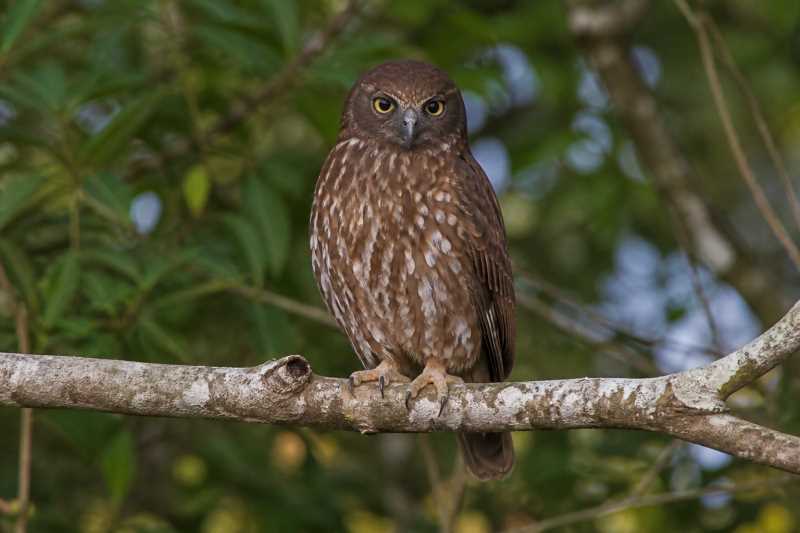
The Chocolate Boobook (Ninox randi), a captivating avian species, is an enchanting member of the Strigidae family, known for its rich brown plumage and intriguing behavior. Native to the forested regions of the Philippines, this owl is a testament to the wonders of biodiversity within the archipelago. Named for its chocolate-colored feathers, the Chocolate Boobook is a subject of fascination for ornithologists and bird enthusiasts around the world.
Habitat and Distribution
The Chocolate Boobook is predominantly found in the forests of the Philippines, inhabiting a variety of wooded environments from lowland rainforests to montane forests. Its range includes several islands within the archipelago, where it thrives in dense forest canopies. The species’ preference for undisturbed, mature forests makes it an important indicator of forest health and a critical component of its ecosystem.
Physical Characteristics
Measuring approximately 27 to 33 centimeters in length, the Chocolate Boobook is a medium-sized owl distinguished by its striking plumage. Its feathers are predominantly dark brown, resembling the rich tones of chocolate, with lighter streaks and spots that provide effective camouflage among the tree canopies. The bird’s large, round eyes are a bright yellow or orange, adapted for its nocturnal lifestyle.
Behavior and Diet
Primarily nocturnal, the Chocolate Boobook is known for its haunting, melodic calls that resonate through the forest during the night. These calls play a crucial role in communication among individuals, particularly during the breeding season. The species is a solitary hunter, preying on a diverse diet that includes insects, small mammals, and occasionally birds. Its hunting prowess is aided by its acute sense of hearing and silent flight, typical of owls.
Reproduction and Lifespan
The breeding season for the Chocolate Boobook typically aligns with the dry season in the Philippines, when food is more abundant. Nesting occurs in the cavities of large trees, where the female lays a clutch of two to three eggs. Both parents participate in rearing the young, with the male often assuming the role of hunter while the female incubates the eggs. The fledglings leave the nest after approximately four to five weeks but remain dependent on their parents for several months.
Conservation Status
The International Union for Conservation of Nature (IUCN) currently classifies the Chocolate Boobook as a species of Least Concern. However, this status does not imply the absence of threats. Deforestation and habitat degradation pose significant challenges to its survival, as these activities reduce the availability of suitable nesting sites and hunting grounds. Conservation efforts are crucial to ensure the preservation of this species and its habitat.
Ecological Importance
The Chocolate Boobook plays a vital role in the ecosystem as both predator and prey. By controlling the population of small mammals and insects, it helps maintain ecological balance. Furthermore, as a prey species for larger raptors, it contributes to the food web dynamics within its habitat.
Cultural Significance
In the Philippines, owls hold a unique place in folklore and tradition, often associated with mysticism and wisdom. The Chocolate Boobook, with its distinctive appearance and haunting calls, is a subject of numerous local legends and stories. These cultural connections highlight the importance of preserving the species not only for ecological reasons but also for cultural heritage.
Research and Observation
Ongoing research and observation are essential to understanding the ecology and behavior of the Chocolate Boobook. Ornithologists and conservationists are actively engaged in studies to monitor populations, assess habitat requirements, and develop effective conservation strategies. Birdwatchers visiting the Philippines often seek out this elusive owl, contributing to citizen science efforts and raising awareness about its conservation needs.
Conclusion
The Chocolate Boobook (Ninox randi) is a remarkable species that embodies the rich biodiversity of the Philippines. Its presence in the forested landscapes is a reminder of the delicate balance of ecosystems and the importance of conservation efforts. Protecting this enigmatic owl requires concerted efforts from local communities, conservation organizations, and governments. By safeguarding its habitat and ensuring sustainable forest management, we can help preserve the Chocolate Boobook for future generations to admire and study.
Related posts