Introduction
The Pink-backed Pelican (Pelecanus rufescens) is one of the most fascinating members of the pelican family, known for its unique adaptations and striking appearance. This medium-sized pelican is predominantly found in Africa, with its range extending into parts of the Arabian Peninsula. Despite being less well-known than some of its relatives, such as the Great White Pelican or the Dalmatian Pelican, the Pink-backed Pelican plays a crucial role in its ecosystem and offers valuable insights into avian ecology and behavior.
Taxonomy and Description
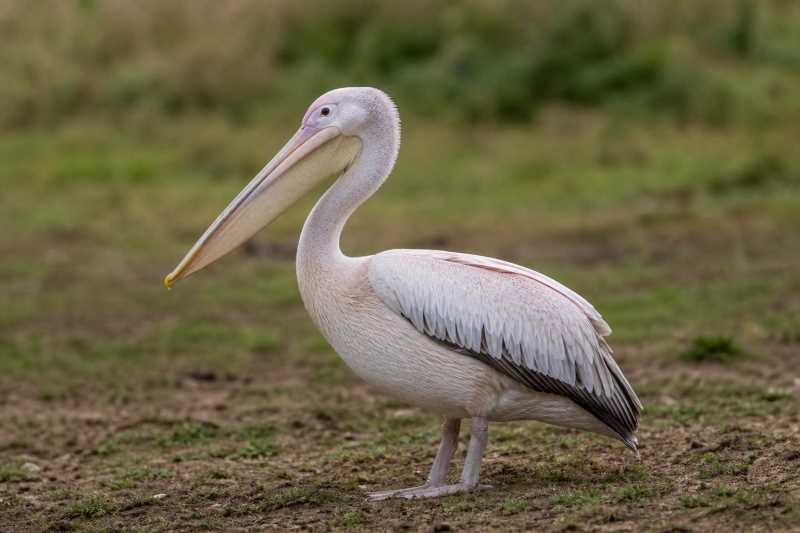
The Pink-backed Pelican belongs to the family Pelecanidae, which includes eight species of pelicans. Its scientific name, Pelecanus rufescens, reflects its distinctive coloration. Adult Pink-backed Pelicans are characterized by their pale grey plumage, with a pinkish hue on the back that is particularly noticeable during the breeding season. This coloration is complemented by a long, greyish bill with a yellowish tip and a large, expandable throat pouch.
Mature individuals typically weigh between 4 to 7 kilograms and have a wingspan ranging from 2.4 to 2.9 meters, making them impressive fliers despite their stocky build. Their legs and webbed feet are greyish-black, adapted for their aquatic lifestyle.
Habitat and Distribution
Pink-backed Pelicans inhabit a wide range of freshwater and saline environments, including lakes, rivers, swamps, and estuaries. Their preference for shallow waters allows them to exploit areas where fish, their primary diet component, are abundant. These pelicans are widely distributed across sub-Saharan Africa, from Senegal and Gambia in the west to Ethiopia and Somalia in the east, and down to South Africa. They are also found in parts of the Middle East, particularly in southwestern Iran and Saudi Arabia.
Behavior and Ecology
Pink-backed Pelicans are social birds, often seen in flocks that can range from small groups to hundreds of individuals. They are colonial breeders, nesting in large groups on islands or in trees near water bodies. Their nests are usually constructed from sticks and vegetation, providing a secure environment for raising their young.
These pelicans are primarily piscivorous, feeding on a diet of fish, though they may occasionally consume amphibians and small invertebrates. They employ a cooperative hunting strategy, where groups work together to herd fish into shallow waters, making them easier to catch.
Breeding and Lifespan
Breeding activities of Pink-backed Pelicans are closely linked to the availability of food and suitable nesting sites. The breeding season varies across their range, often coinciding with the rainy season when food is plentiful. During courtship, males perform displays to attract females, including head bobbing and wing flapping.
Once a pair is formed, they build a nest where the female lays one to three eggs. Both parents share the responsibility of incubating the eggs, which hatch after about 30 days. The chicks are born naked and helpless, requiring extensive parental care. They fledge after approximately 10 to 12 weeks, although they may remain dependent on their parents for feeding for some time afterward.
Pink-backed Pelicans can live for over 30 years in the wild, although they face numerous threats that can impact their longevity and reproductive success.
Conservation Status and Threats
The International Union for Conservation of Nature (IUCN) currently classifies the Pink-backed Pelican as Least Concern. However, like many wildlife species, they face several threats that could impact their populations. Habitat destruction due to human activities such as agriculture, urban development, and pollution are significant concerns. Additionally, climate change poses a potential threat by altering water levels and affecting fish availability.
Conservation efforts are essential to ensure the survival of these unique birds. Protecting their habitats, establishing conservation areas, and promoting sustainable fishing practices are crucial steps in preserving the Pink-backed Pelican populations.
Cultural Significance
Pelicans, including the Pink-backed Pelican, have long held cultural significance in various societies. They are often seen as symbols of resourcefulness due to their fishing abilities and are sometimes featured in local folklore and art.
Conclusion
The Pink-backed Pelican is a remarkable bird that offers a window into the complexities of avian life. Understanding their behavior, ecology, and the challenges they face is essential for their conservation and highlights the intricate connections within ecosystems. By appreciating and protecting these birds, we contribute to the broader effort of preserving biodiversity and maintaining healthy environments.
References
– BirdLife International (2021). Species factsheet: Pelecanus rufescens.
– del Hoyo, J., Elliott, A., & Sargatal, J. (eds.). (1992). Handbook of the Birds of the World, Vol. 1: Ostrich to Ducks. Lynx Edicions, Barcelona.
– Johnsgard, P. A. (1993). Cormorants, Darters, and Pelicans of the World. Smithsonian Institution Press.
Related posts