The Reed Cormorant: An In-depth Exploration of Microcarbo africanus
The Reed Cormorant, scientifically known as Microcarbo africanus, is a captivating waterbird species that thrives across various regions in Africa. This species, part of the Phalacrocoracidae family, is noted for its adaptability and distinctive behaviors, making it a subject of interest for ornithologists and bird enthusiasts alike. In this comprehensive article, we delve into the Reed Cormorant’s habitat, physical characteristics, feeding habits, reproductive behavior, conservation status, and its significance in the ecosystem.
**Habitat and Distribution**
Reed Cormorants are widely distributed throughout sub-Saharan Africa, inhabiting a range of aquatic environments. These include freshwater lakes, rivers, marshes, and occasionally, brackish waters near coasts. They are particularly prevalent in areas with abundant reeds and vegetation, which provide essential cover and breeding grounds. Unlike some other cormorant species, the Reed Cormorant is adaptable to both natural and artificial water bodies, allowing it to thrive even in human-modified landscapes.
The adaptability of Reed Cormorants to diverse habitats is a vital trait, enabling them to maintain stable populations across their range despite environmental changes. This adaptability also facilitates their role as indicators of environmental health, as shifts in their distribution can signal changes in water quality and habitat conditions.
**Physical Characteristics**
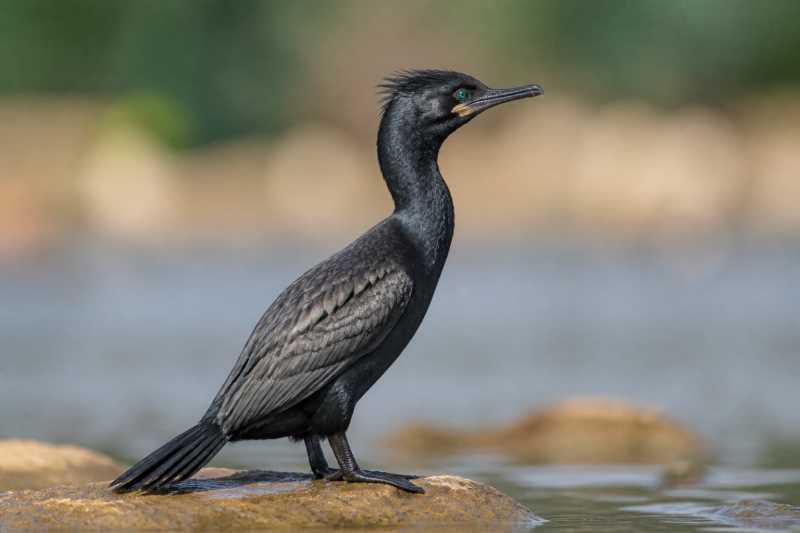
The Reed Cormorant is a relatively small cormorant, measuring approximately 50–60 cm in length with a wingspan of around 85–90 cm. Adults possess a sleek, dark plumage that appears almost black in certain lighting, with a subtle greenish sheen. Their bills are slender and hooked, adapted for grasping slippery prey such as fish. Notably, juveniles exhibit a brownish plumage, which gradually darkens as they mature.
A distinctive feature of the Reed Cormorant is its long, slender neck, which it uses adeptly while hunting. During the breeding season, adults develop white tufts on their heads, adding a striking contrast to their otherwise dark plumage. This seasonal change in appearance plays a role in courtship and mate selection.
**Feeding Habits**
Reed Cormorants are primarily piscivorous, relying on fish as their main dietary component. They are skilled hunters, employing a technique known as pursuit diving to catch their prey. This involves diving underwater and using their powerful webbed feet to propel themselves in pursuit of fish. Their streamlined bodies and excellent underwater vision make them adept at this form of hunting.
In addition to fish, Reed Cormorants may consume crustaceans, amphibians, and insects, depending on availability. Their diet can vary seasonally and geographically, showcasing their adaptability to different ecological conditions. This dietary flexibility is crucial for their survival, particularly in regions where water bodies experience significant fluctuations in prey abundance.
**Reproductive Behavior**
The breeding season for Reed Cormorants typically corresponds with the local wet season, when food resources are most abundant. They are colonial nesters, often forming large, noisy breeding colonies in trees or on reed beds near water. These colonies provide safety in numbers, reducing the risk of predation.
Nests are constructed from sticks and reeds, lined with softer materials such as leaves and grass. Both parents share responsibilities in building the nest, incubating eggs, and feeding the young. Clutch sizes generally range from 2 to 5 eggs, which are pale blue or greenish in color. Incubation lasts approximately 25 to 30 days, after which both parents continue to nourish the chicks until they fledge.
**Conservation Status and Threats**
Currently, the Reed Cormorant is listed as a species of Least Concern by the International Union for Conservation of Nature (IUCN). This status reflects its widespread distribution and relatively stable population numbers. However, like many waterbird species, it faces threats from habitat degradation, pollution, and human disturbance.
Wetland drainage and conversion for agriculture or urban development pose significant threats to their natural habitats. Pollution from agricultural runoff and industrial waste can also impact the quality of the water bodies they depend on for feeding and breeding. Conservation efforts aimed at preserving wetland ecosystems and implementing sustainable water management practices are crucial for ensuring the long-term survival of the Reed Cormorant.
**Ecological Significance**
Reed Cormorants play a vital role in their ecosystems as both predators and prey. By controlling fish populations, they help maintain a balance within aquatic communities. Their presence can also indicate the health of wetland environments, serving as bioindicators for researchers monitoring ecosystem changes.
Furthermore, their colonies provide opportunities for nutrient recycling. Droppings from cormorant colonies contribute to nutrient enrichment in surrounding areas, supporting plant growth and benefiting other wildlife.
**Conclusion**
The Reed Cormorant is a remarkable species that exemplifies adaptability and ecological importance. Its wide distribution and varied diet allow it to thrive in diverse environments across Africa, while its role in ecosystems underscores the interconnectedness of species within wetland habitats. As environmental stewards, it is imperative that we continue to monitor and protect the habitats that support the Reed Cormorant and countless other species that depend on healthy aquatic ecosystems.
By fostering a deeper understanding of the Reed Cormorant’s biology and ecological role, we can better appreciate the intricate dynamics of wetland ecosystems and the importance of conserving these vital habitats for future generations.
Related posts