Introduction
Edwards’s Long-tailed Giant Rat, scientifically known as Leopoldamys edwardsi, is a fascinating species of rodent that inhabits the lush forests of Southeast Asia. As a member of the Muridae family, this rat is distinguished by its considerable size and distinctively long tail. Named after the renowned British naturalist Alphonse Milne-Edwards, this species plays a significant ecological role in its habitat. This article aims to provide an in-depth look at the physical characteristics, habitat, behavior, and conservation status of Edwards’s Long-tailed Giant Rat, offering valuable insights for researchers, conservationists, and wildlife enthusiasts.
Physical Description
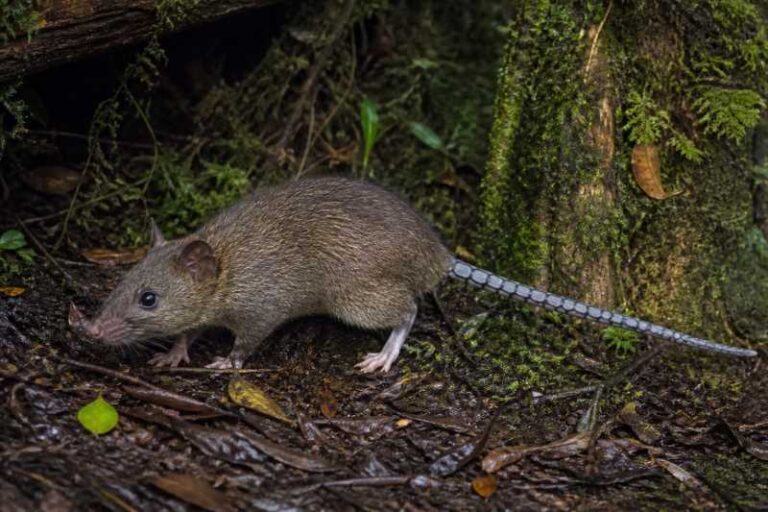
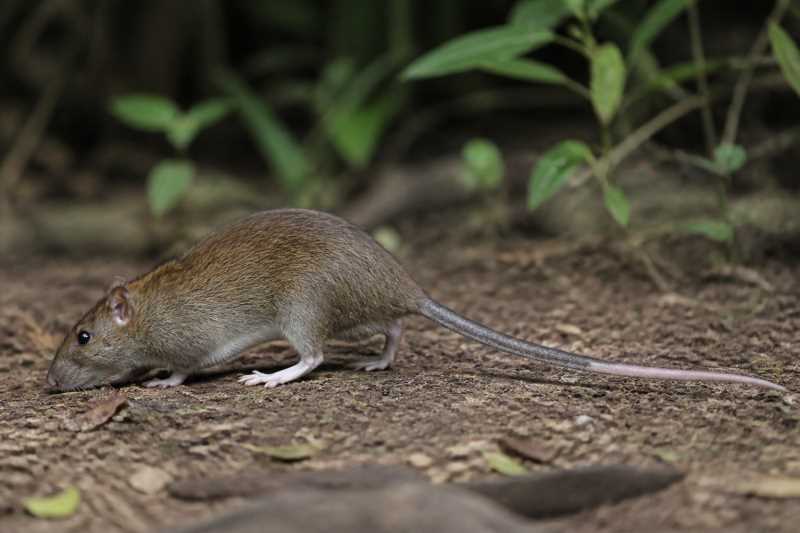
The Edwards’s Long-tailed Giant Rat is notable for its large size compared to other rodent species. Adult individuals typically weigh between 500 to 750 grams and measure approximately 25 to 30 centimeters in body length, with an exceptionally long tail that can exceed the length of the body itself, often reaching up to 40 centimeters. This tail is not only long but also prehensile, aiding the rat in balancing and navigating through the dense forest canopy.
The fur of Leopoldamys edwardsi is dense and soft, with a coloration that ranges from grayish-brown to reddish-brown on the dorsal side, while the ventral side is usually a lighter shade of gray or white. This coloration provides effective camouflage against predators in its natural habitat. The species possesses large, rounded ears and a pointed snout, which enhance its sensory perception, crucial for foraging and avoiding danger.
Range and Habitat
Edwards’s Long-tailed Giant Rat is native to the forests of Southeast Asia, with its range extending across several countries including China, Vietnam, Laos, Cambodia, Thailand, and Malaysia. It predominantly inhabits tropical and subtropical forests, thriving in both lowland and montane environments up to 2,000 meters above sea level.
The species is highly adaptable and can be found in a variety of forest types, from primary and secondary forests to disturbed areas and plantations. Its preference, however, is for dense forested areas with abundant tree cover and a well-developed understory, which provide ample food resources and protective cover from predators.
Behavior and Diet
Leopoldamys edwardsi is primarily nocturnal, with most of its foraging and other activities occurring during the night. This nocturnal nature helps it avoid daytime predators and the heat of the day. The species is also arboreal, spending much of its time in the trees, which offers it a strategic advantage in avoiding ground-dwelling predators.
The diet of Edwards’s Long-tailed Giant Rat is omnivorous, consisting of fruits, seeds, leaves, and small invertebrates. This diverse diet allows it to exploit a wide range of food resources, which is particularly advantageous in habitats where food availability can vary seasonally. The species is also known to play a critical role in seed dispersal, contributing to the health and sustainability of its forest ecosystem.
Identification Tips (Field Recognition Cues)
Identifying Edwards’s Long-tailed Giant Rat in the wild requires careful observation of several key features:
- Size and Tail Length: Its large body size, combined with a tail that is longer than its body, is one of the most distinctive features.
- Fur Coloration: Look for the characteristic grayish-brown to reddish-brown fur on the back and a lighter underbelly.
- Ears and Snout: The species has notably large, rounded ears and a pointed snout.
- Nocturnal Activity: Observations are best conducted at night when the species is most active.
- Arboreal Habits: Look up into the tree canopy, as this is where the rat spends most of its time.
Conservation Status (with Threats and Protections)
The International Union for Conservation of Nature (IUCN) currently lists Edwards’s Long-tailed Giant Rat as Least Concern. However, like many forest-dwelling species, it faces several threats that could impact its population in the future.
Threats
- Habitat Loss: Deforestation due to logging, agricultural expansion, and urban development poses a significant threat to its natural habitat.
- Hunting and Trapping: In some areas, the species is hunted for food, and it may also be captured inadvertently in traps set for other animals.
- Climate Change: Alterations in temperature and rainfall patterns can affect the availability of food resources and suitable habitat.
Protections
Conservation efforts for Edwards’s Long-tailed Giant Rat focus primarily on habitat preservation. Protected areas and national parks in its range provide some refuge from habitat destruction. Additionally, environmental regulations aimed at sustainable forestry practices help mitigate deforestation impacts.
Frequently Asked Questions
What is the lifespan of Edwards’s Long-tailed Giant Rat?
In the wild, the lifespan of Leopoldamys edwardsi is not well-documented, but it is believed to be around 3 to 4 years. In captivity, under optimal conditions, they may live slightly longer.
How does Edwards’s Long-tailed Giant Rat contribute to its ecosystem?
This species plays a vital role in seed dispersal, which helps maintain forest regeneration and biodiversity. Its omnivorous diet also aids in controlling insect populations.
Are Edwards’s Long-tailed Giant Rats dangerous to humans?
These rats are not considered dangerous to humans. They are shy and tend to avoid human contact. However, like all wild animals, they should be observed from a distance to minimize stress to the animal and risk of disease transmission.
What are the primary predators of Edwards’s Long-tailed Giant Rat?
Predators include birds of prey, snakes, and larger mammalian carnivores. Their arboreal lifestyle helps them evade many ground-based predators.
How can we help protect the habitat of Edwards’s Long-tailed Giant Rat?
Supporting conservation organizations, advocating for sustainable forestry practices, and promoting awareness about the importance of forest ecosystems are crucial steps in protecting the habitat of this species.
Related posts