Introduction
The Foothill Arboreal Rice Rat (Oecomys superans) is a fascinating rodent species that inhabits the lush forests of South America. Known for its arboreal lifestyle, this species is an integral part of the ecosystem, contributing to seed dispersal and serving as prey for various predators. Despite its ecological importance, the Foothill Arboreal Rice Rat remains relatively understudied, and its conservation status is of growing concern due to habitat loss and other environmental pressures.
Physical Description
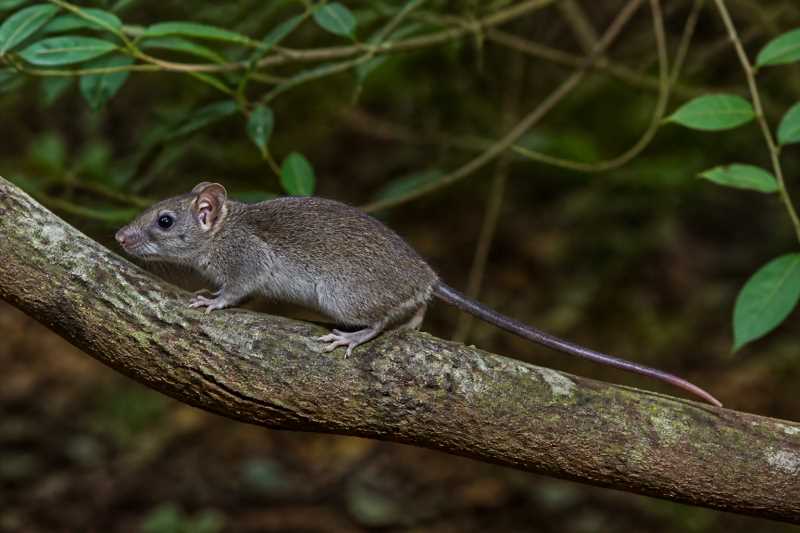
The Foothill Arboreal Rice Rat is a small to medium-sized rodent, with adults typically weighing between 30 and 50 grams. It has a distinctive appearance characterized by a soft, dense fur coat that ranges from a grayish-brown to reddish-brown color on its dorsal side, while the ventral side is lighter, often white or cream-colored. The species exhibits a long, prehensile tail, which is slightly longer than its body, aiding in its arboreal navigation. Its ears are relatively large and rounded, providing acute hearing, and its eyes are prominent, suggesting a nocturnal lifestyle.
Range and Habitat
Oecomys superans is primarily found in the foothills of the Andes, with its range extending across several South American countries, including Colombia, Ecuador, Peru, and Venezuela. This species thrives in tropical and subtropical forests where it favors dense, humid environments with abundant tree cover. Its arboreal nature allows it to occupy ecological niches in both primary and secondary forests, often at elevations ranging from 500 to 1500 meters above sea level. The presence of a well-developed canopy is crucial for its habitat, offering shelter and a rich supply of food resources.
Behavior and Diet
The Foothill Arboreal Rice Rat is primarily nocturnal, spending much of its active time at night foraging for food. Its diet is diverse, consisting mainly of seeds, fruits, and insects, which it finds in the forest canopy. This omnivorous diet plays a significant role in seed dispersal, contributing to the health and regeneration of its forest habitat. Socially, Oecomys superans tends to be solitary or found in small family groups. Its arboreal lifestyle involves excellent climbing abilities, supported by its prehensile tail and sharp claws, which allow it to navigate the branches with ease.
Identification Tips (field recognition cues)
Identifying the Foothill Arboreal Rice Rat in the field requires attention to several key characteristics. Observers should look for its long, prehensile tail, which is a distinctive feature, allowing it to maintain balance while climbing. Its fur coloration, predominantly grayish-brown to reddish-brown with a lighter underside, is another distinguishing trait. The species’ large, rounded ears and prominent eyes are indicative of its nocturnal habits. Additionally, sightings are more likely in dense, humid forests within its known geographical range.
Conservation Status (with threats and protections)
The conservation status of the Foothill Arboreal Rice Rat is currently classified as "Least Concern" by the International Union for Conservation of Nature (IUCN), but this does not mean the species is free from threats. Habitat destruction due to deforestation, agricultural expansion, and human encroachment pose significant risks to its natural habitat. Climate change also presents a looming challenge, potentially altering its forest environment. Conservation efforts focus on habitat preservation and sustainable land-use practices to mitigate these threats. Protected areas within its range offer some level of habitat safeguarding, but increased awareness and research are vital for its continued survival.
Frequently Asked Questions
What is the diet of the Foothill Arboreal Rice Rat?
The Foothill Arboreal Rice Rat primarily feeds on seeds, fruits, and insects. Its omnivorous diet is crucial for seed dispersal, aiding in forest regeneration.
How can I identify a Foothill Arboreal Rice Rat in the wild?
Look for its long, prehensile tail, grayish-brown to reddish-brown fur, large ears, and prominent eyes. It’s usually found in dense, humid forests.
Where is the Foothill Arboreal Rice Rat found?
This species inhabits the foothills of the Andes, spanning Colombia, Ecuador, Peru, and Venezuela, favoring tropical and subtropical forests.
What threats does the Foothill Arboreal Rice Rat face?
Major threats include habitat destruction due to deforestation and agriculture, as well as climate change impacts on its forest environment.
Are there conservation efforts for the Foothill Arboreal Rice Rat?
Yes, efforts focus on habitat preservation and sustainable land use. Protected areas within its range also provide some level of habitat conservation.
Related posts