Introduction
The Red-legged Sun Squirrel, known scientifically as Heliosciurus rufobrachium, is a captivating member of the Sciuridae family. This species, native to the lush tropical forests of Africa, is known for its distinctive red limbs and agile movements. Often found in the canopy layers of forests, the Red-legged Sun Squirrel is a diurnal creature, contributing significantly to the biodiversity of its habitat.
This article delves into the physical characteristics, habitat preferences, behavior, diet, and conservation status of this intriguing mammal. Whether you’re a wildlife enthusiast, researcher, or simply curious about the natural world, this comprehensive guide will provide you with valuable insights into the life of the Red-legged Sun Squirrel.
Physical Description
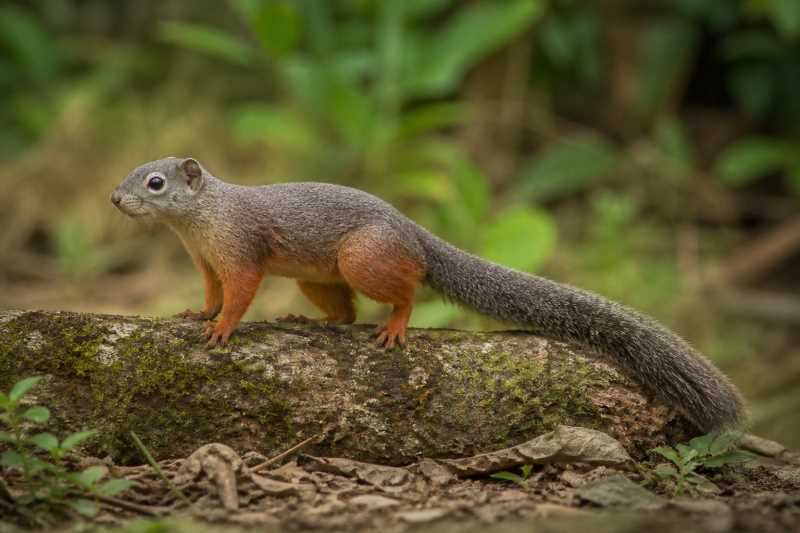
The Red-legged Sun Squirrel is a medium-sized rodent characterized by its striking appearance. Adults typically measure between 20 to 25 centimeters in body length, with an additional 18 to 22 centimeters for their bushy tails. These squirrels weigh around 300 to 400 grams, making them agile and swift.
One of the most distinctive features of this species is its bright reddish-orange limbs, which contrast sharply with its otherwise grayish-brown body. The fur on their backs is dense and coarse, providing protection against the elements. Their underparts, however, are lighter, often appearing creamy or white.
Their large, expressive eyes and elongated ears add to their visual appeal, while their sharp claws and robust limbs make them excellent climbers. These physical attributes not only aid in their survival but also make them a fascinating subject for wildlife observation.
Range and Habitat
The Red-legged Sun Squirrel is predominantly found in the tropical and subtropical regions of West and Central Africa. Their range extends from Guinea and Sierra Leone across to Uganda and northwestern Tanzania, inhabiting countries like Ghana, Nigeria, Cameroon, and the Central African Republic.
These squirrels prefer dense forest environments, thriving in both primary and secondary tropical forests. They are most commonly observed in the canopy layer, where they navigate the treetops with ease. Occasionally, they can also be found in wooded savannas and forest edges, showcasing their adaptability to different forested landscapes.
Their habitat selection is primarily driven by the availability of food resources and the presence of suitable nesting sites, often found in the form of tree hollows or dense foliage.
Behavior and Diet
Red-legged Sun Squirrels are diurnal, meaning they are active during the day and rest at night. Their daily activities include foraging, grooming, and social interactions. They are solitary creatures but are sometimes observed in pairs or small family groups.
Their diet is primarily herbivorous, consisting of fruits, seeds, nuts, and occasionally insects. They play a crucial role in their ecosystem as seed dispersers, aiding in forest regeneration. During the dry season, they may resort to eating bark and other available plant materials to survive.
These squirrels are known for their agility and speed, often seen darting through the trees with remarkable precision. Their vocalizations, which range from chattering to high-pitched calls, are used to communicate with other squirrels and to alert them of potential dangers.
Identification Tips (Field Recognition Cues)
Identifying the Red-legged Sun Squirrel in the wild can be an exhilarating experience for wildlife enthusiasts. Here are some key identification tips:
- Coloration: Look for the distinctive reddish-orange limbs which are a hallmark of the species.
- Size: Note their medium size, with a body length of 20 to 25 centimeters.
- Movement: Observe their swift and agile movements through the tree canopy.
- Habitat: Focus on dense forest areas, particularly the upper canopy.
- Vocalizations: Listen for their characteristic chatter and calls, especially during the day.
By paying attention to these cues, observers can successfully identify these squirrels in their natural habitat.
Conservation Status (With Threats and Protections)
The conservation status of the Red-legged Sun Squirrel is currently classified as Least Concern by the International Union for Conservation of Nature (IUCN). However, like many forest-dwelling species, they face several threats that could impact their future populations.
Threats:
- Habitat Loss: Deforestation for agriculture, logging, and urban expansion poses a significant threat to their habitats.
- Hunting: In some regions, these squirrels are hunted for their meat.
- Climate Change: Alterations in climate patterns can affect the availability of food resources and suitable habitats.
Protections:
- Protected Areas: Many populations are found within national parks and protected forest reserves.
- Conservation Initiatives: Efforts to preserve tropical forests and promote sustainable land use indirectly benefit these squirrels.
Conservationists stress the importance of maintaining healthy forest ecosystems to ensure the survival of the Red-legged Sun Squirrel and other forest-dependent species.
Frequently Asked Questions
1. Where can I find Red-legged Sun Squirrels in the wild?
Red-legged Sun Squirrels are found in the tropical forests of West and Central Africa. For the best chances of spotting them, visit forested areas in countries such as Cameroon, Ghana, and Nigeria, focusing on the upper canopy layers.
2. What do Red-legged Sun Squirrels eat?
These squirrels primarily consume fruits, seeds, and nuts. Occasionally, they may eat insects and bark, especially during the dry season when other food sources are scarce.
3. Are Red-legged Sun Squirrels endangered?
Currently, the Red-legged Sun Squirrel is classified as Least Concern by the IUCN. However, habitat destruction and hunting remain potential threats to their populations.
4. How do Red-legged Sun Squirrels contribute to their ecosystem?
As seed dispersers, these squirrels play a vital role in forest regeneration and the maintenance of biodiversity in their habitats.
5. How do I identify a Red-legged Sun Squirrel?
Look for their characteristic reddish-orange limbs, medium size, and agile movements in the tree canopy. Their vocalizations and preference for dense forest habitats are also key identification cues.
Related posts