Western Hoolock Gibbon (Hoolock hoolock)
Introduction
The Western Hoolock Gibbon, scientifically known as Hoolock hoolock, is a species of primate native to the dense forests of South and Southeast Asia. These arboreal apes are recognized for their distinctive vocalizations and remarkable agility in the treetops. As a member of the gibbon family, they are part of the lesser apes, distinct from the great apes such as orangutans, gorillas, and chimpanzees. This article delves into various aspects of the Western Hoolock Gibbon, including its physical characteristics, natural habitat, behavior, and the conservation challenges it faces.
Physical Description
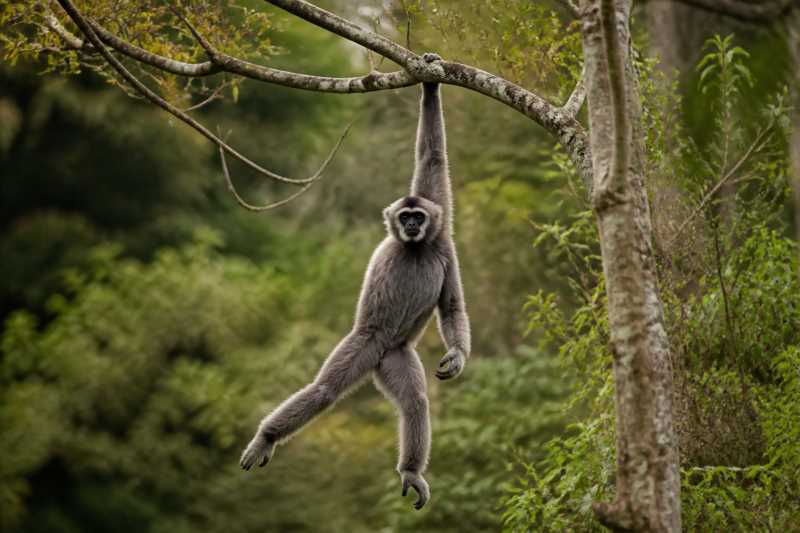
The Western Hoolock Gibbon is a medium-sized primate, distinguished by its long arms and agile movements. Adult gibbons typically weigh between 6 to 9 kilograms (13 to 20 pounds) and have a body length ranging from 45 to 60 centimeters (18 to 24 inches). One of the most striking features of the Western Hoolock Gibbon is its sexual dimorphism in coloration. Males generally have a black coat with white eyebrows, while females are lighter, often exhibiting shades of brown or grey. Both sexes have dense, woolly fur that provides insulation against the cool temperatures of their forest habitats.
The face of the Western Hoolock Gibbon is framed by a ring of lighter fur, making their expressive eyes more prominent. Their limbs are exceptionally long relative to their body size, a feature that aids in their brachiation – the gibbon’s unique mode of locomotion characterized by swinging from branch to branch using only their arms.
Range and Habitat
The natural range of the Western Hoolock Gibbon extends across northeastern India, Bangladesh, and parts of Myanmar. These primates primarily inhabit subtropical and tropical moist broadleaf forests. They are highly arboreal, rarely descending to the ground, and prefer the upper canopy of forests where they can move with ease and avoid ground-dwelling predators.
The habitat of the Western Hoolock Gibbon is characterized by dense foliage and a variety of fruiting trees, which are crucial for their diet. The forested regions they inhabit are often remote and rugged, making them somewhat difficult to study in the wild. However, deforestation and habitat fragmentation are significant threats to their survival, often forcing these gibbons into smaller and more isolated patches of forest.
Behavior and Diet
Western Hoolock Gibbons are diurnal, meaning they are active during the day. They live in small family groups typically consisting of a mated pair and their offspring. Gibbons are known for their strong pair bonds, often remaining with a single mate for life. Their social structure revolves around these family units, with each group occupying a distinct territory that they defend through vocalizations and displays.
The diet of the Western Hoolock Gibbon primarily consists of fruits, which provide the necessary sugars and carbohydrates for their active lifestyle. They also consume leaves, flowers, and insects to supplement their diet, providing essential proteins and other nutrients. The availability of food resources directly influences their range and movement patterns within the forest.
Identification Tips
Field recognition of the Western Hoolock Gibbon is facilitated by several distinct features:
- Vocalizations: These gibbons are renowned for their loud and melodious calls, which can carry over long distances. Listening for their morning duets is an effective way to locate them in the forest.
- Coloration: Look for the stark color contrast between the sexes – black males with white eyebrows and lighter-colored females.
- Movement: Observe their dynamic brachiation, swinging with agility and speed through the forest canopy, which is a hallmark of gibbon locomotion.
- Habitat: They are most frequently found in the upper canopy of dense forests, rarely venturing to the ground.
Conservation Status
The Western Hoolock Gibbon is currently classified as Endangered on the IUCN Red List of Threatened Species. This status is primarily due to habitat loss, hunting, and the illegal pet trade. Large-scale deforestation for timber, agriculture, and infrastructure development has significantly reduced their natural habitat, leading to population declines.
Conservation efforts for the Western Hoolock Gibbon include habitat protection and restoration, as well as legal protections at the national and international levels. In India, for instance, the species is protected under the Wildlife Protection Act of 1972. Additionally, several conservation organizations are working to raise awareness and implement community-based conservation initiatives to safeguard the remaining populations.
Frequently Asked Questions
What adaptations help Western Hoolock Gibbons survive in their environment?
Western Hoolock Gibbons possess several adaptations that aid their survival, including elongated arms for brachiation, a frugivorous diet that allows them to exploit fruit resources, and loud vocalizations for territory defense and mate attraction.
Why are Western Hoolock Gibbons endangered?
The primary threats to Western Hoolock Gibbons include habitat destruction due to logging and agricultural expansion, hunting for bushmeat, and capture for the illegal pet trade. These activities have led to significant declines in their population.
How do Western Hoolock Gibbons communicate?
Communication in Western Hoolock Gibbons is primarily through vocalizations. Their calls are complex and can serve various purposes, including territory defense, social bonding, and mate attraction. Morning duets between mated pairs are particularly notable.
What is the diet of the Western Hoolock Gibbon?
The diet of the Western Hoolock Gibbon mainly comprises fruits, which form the bulk of their nutritional intake. They also eat leaves, flowers, and occasionally insects, providing a balanced diet essential for their energy-intensive lifestyle.
How can people help in the conservation of Western Hoolock Gibbons?
Individuals can contribute to the conservation of Western Hoolock Gibbons by supporting organizations dedicated to habitat protection and restoration, advocating for stronger enforcement of wildlife protection laws, and raising awareness about the threats faced by these primates.
Related posts