Introduction
The Western Gorilla, scientifically known as Gorilla gorilla, is one of the great apes and a pivotal species in the study of primate behavior and ecology. These fascinating creatures are not only crucial to their ecosystems but are also essential for understanding human evolution due to our shared ancestry. Western Gorillas are divided into two subspecies: the Western Lowland Gorilla (Gorilla gorilla gorilla) and the Cross River Gorilla (Gorilla gorilla diehli). Each subspecies occupies distinct habitats across Africa, making them unique in their adaptations and behaviors.
Western Gorillas play a significant role in the biodiversity of their habitats, acting as seed dispersers and influencing the dynamics of the forests they inhabit. This article delves into the various aspects of the Western Gorilla, including their physical characteristics, habitat preferences, behavior, and ongoing conservation efforts to protect this endangered species.
Physical Description
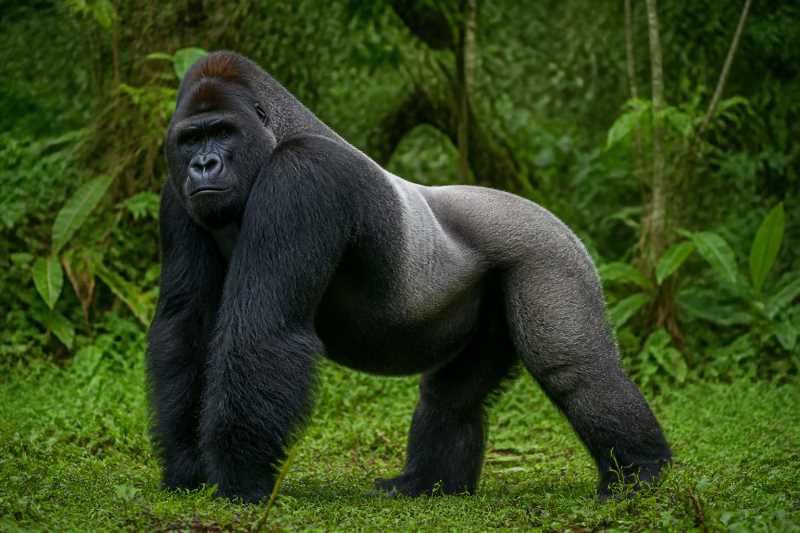
Western Gorillas are the smallest of the two gorilla species, yet they are still massive primates. Adult males, known as silverbacks due to the distinctive silvery hair on their backs, can weigh between 300 to 400 pounds (136 to 181 kilograms) and stand about 5.5 feet (1.7 meters) tall when upright. Females are generally smaller, weighing around 150 to 250 pounds (68 to 113 kilograms) and standing approximately 4.5 feet (1.4 meters) tall.
Their broad chest, muscular arms, and robust build are adapted for a life spent mostly on the ground, though they are also adept climbers. Western Gorillas have a prominent brow ridge, large nostrils, and a pronounced sagittal crest on their skulls, which supports their powerful jaw muscles. Their dense, dark fur helps protect them from the elements in their forested habitats.
Range and Habitat
Western Gorillas are native to the forests of central and western Africa. The Western Lowland Gorilla inhabits the dense and swampy rainforests of countries such as the Republic of the Congo, Gabon, and Cameroon. In contrast, the Cross River Gorilla is found in a limited range along the Nigeria-Cameroon border, primarily in mountainous forests.
These gorillas thrive in lowland tropical rainforests, montane forests, and swamp forests. They are highly adaptable, which allows them to exploit a variety of forested environments. However, their dependence on large tracts of contiguous forest makes them vulnerable to habitat fragmentation.
Behavior and Diet
Western Gorillas are primarily herbivorous, with a diet consisting of leaves, fruits, stems, and bark. They are known to consume over 100 different plant species, which varies seasonally depending on availability. Fruits are particularly favored when in abundance, but during the dry season, they rely more on fibrous vegetation.
These gorillas live in family groups led by a dominant silverback male, who makes decisions regarding movement, feeding, and resting sites. A typical troop consists of one silverback, several adult females, and their offspring. Social bonds within the group are strong, with grooming and play being common activities.
Communication among Western Gorillas is rich and varied, including vocalizations, body postures, and facial expressions. These communication methods help maintain group cohesion and resolve conflicts.
Identification Tips (Field Recognition Cues)
Identifying Western Gorillas in the wild requires careful observation of their distinctive physical and behavioral traits. Here are some tips to help recognize them:
- Size and Build: Look for their massive size and muscular build, especially the silverback males.
- Fur Color: The dark, dense fur and silver streak on the back of mature males are key identifiers.
- Facial Features: Prominent brow ridge, large nostrils, and a flat nose are characteristic facial features.
- Group Dynamics: Observe the social structure; a dominant male leading a group is typical of gorilla troops.
- Vocalizations: Listen for their deep, rumbling vocalizations, which are unique to gorillas.
Conservation Status (With Threats and Protections)
The Western Gorilla is currently classified as Critically Endangered by the International Union for Conservation of Nature (IUCN). The primary threats to their survival include habitat destruction, poaching, and diseases such as the Ebola virus.
Habitat destruction occurs due to logging, agriculture, and infrastructure development, leading to fragmentation and loss of forest areas. Poaching, although illegal, continues to be a significant threat, driven by the bushmeat trade and illegal wildlife trade.
Conservation efforts are underway to protect Western Gorillas, including habitat preservation, anti-poaching patrols, and community-based conservation initiatives. International agreements and protected areas are crucial for their survival, as is the work of various NGOs dedicated to their conservation.
Frequently Asked Questions
What are the main threats to Western Gorillas?
The main threats to Western Gorillas include habitat destruction due to logging and agriculture, poaching for bushmeat, and diseases such as Ebola.
How can Western Gorillas be protected?
Protection efforts focus on habitat preservation, anti-poaching measures, community education, and international cooperation to enforce wildlife protection laws.
What is the social structure of a Western Gorilla troop?
A typical Western Gorilla troop is led by a dominant silverback male and includes several adult females and their offspring, maintaining strong social bonds through grooming and play.
How do Western Gorillas communicate?
Western Gorillas communicate through a combination of vocalizations, body postures, and facial expressions to maintain group cohesion and resolve conflicts.
Where can Western Gorillas be found in the wild?
Western Gorillas are found in the forests of central and western Africa, primarily in countries like the Republic of the Congo, Gabon, Cameroon, and on the Nigeria-Cameroon border.
Related posts