The Red-ruffed Fruitcrow: A Jewel of the Canopy
The Red-ruffed Fruitcrow (*Pyroderus scutatus*) is one of the most captivating yet enigmatic birds found in the neotropical regions of South America. Known for its vibrant plumage and elusive nature, this bird has intrigued ornithologists and bird enthusiasts alike. In this article, we delve into the fascinating world of the Red-ruffed Fruitcrow, exploring its habitat, behavior, and the conservation challenges it faces.
A Glimpse into its Habitat and Distribution
The Red-ruffed Fruitcrow inhabits the dense, humid forests of the Andes and the Atlantic Forest, ranging from Venezuela and Colombia down to Argentina and Brazil. These birds prefer the mid to upper canopy levels where fruiting trees are abundant, which provides them with both food and cover. Their range includes various elevations, from lowland tropical forests to montane cloud forests, highlighting their adaptability to diverse forest environments.
Striking Appearance and Plumage
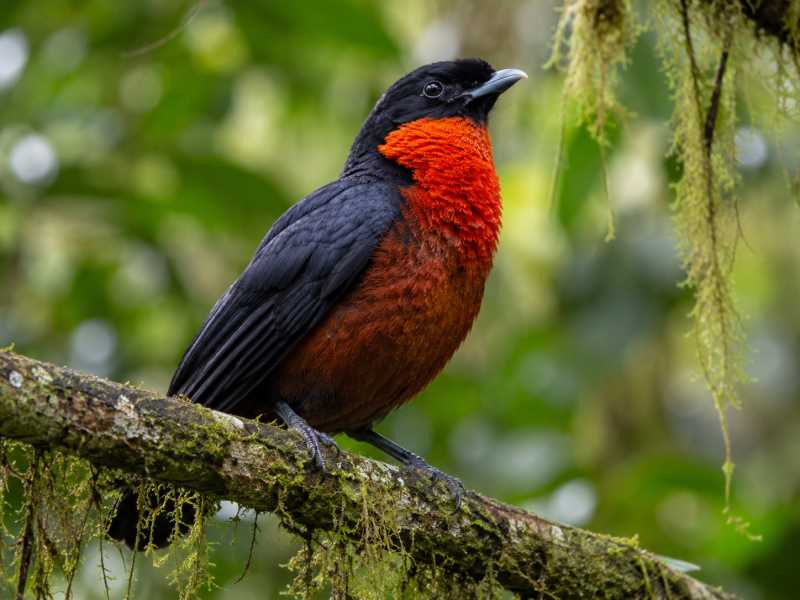
The Red-ruffed Fruitcrow is a visually striking bird, known for its large size, which can reach up to 50 cm in length. Its plumage is predominantly black with a velvety texture, contrasted by a brilliant red or orange ruff around the neck and chest, which is more pronounced in males. This vibrant coloration plays a crucial role during the breeding season, as males display their ruffs to attract females.
Diet and Foraging Behavior
As its name suggests, the Red-ruffed Fruitcrow primarily feeds on fruits, making it an important seed disperser in its ecosystem. It has a particular preference for large, fleshy fruits that are abundant in the canopy. Their frugivorous diet is complemented by occasional consumption of insects and small vertebrates, providing a balanced intake of nutrients.
Fruitcrows are known for their quiet and deliberate foraging behavior. They often forage alone or in small groups, moving slowly and methodically through the forest canopy. This unobtrusive behavior allows them to avoid potential predators and reduces competition with other frugivorous birds.
Breeding and Nesting
The breeding behavior of the Red-ruffed Fruitcrow is as captivating as its appearance. During the mating season, males engage in elaborate courtship displays, showcasing their vibrant ruffs and performing a series of calls to attract females. These calls, a mix of deep hoots and whistles, resonate through the forest.
Once a pair is formed, the female takes on the responsibility of building the nest and incubating the eggs. Nests are typically constructed in the fork of a tree, high above the ground, providing safety from ground-dwelling predators. The clutch size usually consists of two eggs, which are incubated for about three weeks before hatching.
Conservation Status and Threats
Despite its relatively wide distribution, the Red-ruffed Fruitcrow is listed as Near Threatened by the IUCN. The primary threat to its survival is habitat destruction due to deforestation, driven by agricultural expansion, logging, and infrastructure development. Fragmentation of forests not only reduces available habitat but also isolates populations, making them more vulnerable to genetic bottlenecks.
Conservation efforts are crucial to ensure the survival of this species. Protecting large tracts of forest and establishing ecological corridors can help maintain viable populations. Additionally, raising awareness about the importance of preserving neotropical forests can garner support for conservation initiatives.
The Role of Citizen Science and Eco-tourism
In recent years, citizen science and eco-tourism have emerged as valuable tools in the conservation of the Red-ruffed Fruitcrow. Birdwatchers and nature enthusiasts contribute to data collection through sightings and recordings, which help researchers track population trends and distribution changes. Eco-tourism, when managed sustainably, provides economic incentives for local communities to conserve natural habitats.
Conclusion
The Red-ruffed Fruitcrow is not only a symbol of the rich biodiversity found in South American forests but also a reminder of the delicate balance within these ecosystems. Preserving its habitat is not only crucial for the survival of the species but also for maintaining the ecological integrity of the forests they inhabit. Through concerted conservation efforts and sustainable practices, future generations may continue to marvel at the beauty of the Red-ruffed Fruitcrow and the vibrant ecosystems it calls home.
Related posts