The Enigmatic Barred Rail: Hypotaenidia torquata
The Barred Rail, scientifically known as Hypotaenidia torquata, is a captivating bird species that thrives in the lush, biodiverse environments of the Philippines. This medium-sized bird is a member of the Rallidae family, a group of birds commonly referred to as rails, which are known for their elusive nature and affinity for dense vegetation. Despite its relatively low profile compared to more flamboyant avian species, the Barred Rail plays a significant role in its ecosystem and offers fascinating insights into avian adaptability and evolution.
Physical Description
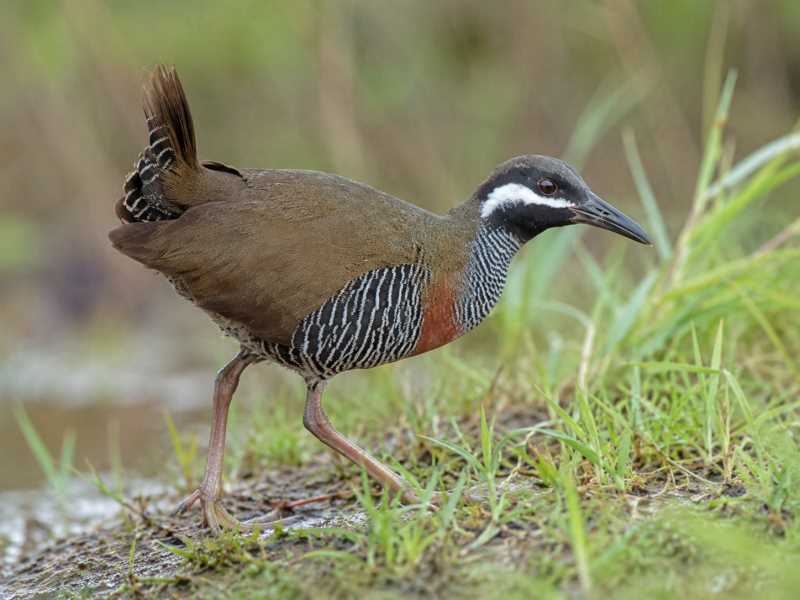
The Barred Rail is distinguished by its striking plumage and unique body structure. Adult Barred Rails typically measure between 30 to 36 centimeters in length, with a wingspan that extends to about 50 centimeters. Their bodies are characterized by a robust build, short tails, and strong, slightly decurved bills. The plumage of the Barred Rail is a spectacle to behold, with a predominant coloration of rich brown, intricately barred with white and black patterns across their wings and body. This barring provides an effective camouflage against the dense underbrush of their natural habitat.
The head of the Barred Rail is adorned with a distinctive white throat and a contrasting black band that runs from the bill, through the eye, and across the nape, giving rise to its scientific name ‘torquata,’ which means ‘collared’ or ‘necklaced.’ Their legs and feet are strong and well-adapted for navigating through the dense vegetation and muddy grounds that characterize their habitats.
Habitat and Distribution
The Barred Rail is endemic to the Philippines, where it inhabits a variety of wetland environments ranging from mangroves and marshes to rice paddies and forested streams. These birds are particularly fond of areas with abundant cover, such as dense grasslands or thickets, which provide both food and protection from predators. The species is distributed across several islands within the Philippine archipelago, including Luzon, Mindanao, and the Visayas, making it a vital component of the country’s avian biodiversity.
Behavior and Diet
Barred Rails are primarily ground-dwelling birds, although they are capable of flight when necessary. They are known for their secretive behavior, often remaining hidden within the dense vegetation of their habitats. This elusive nature makes them challenging to observe in the wild, contributing to the bird’s mystique among ornithologists and birdwatchers.
The diet of the Barred Rail is omnivorous, comprising a diverse range of foods including insects, small aquatic organisms, seeds, and plant matter. They forage on the ground, using their strong bills to probe the soil and leaf litter for food. During the breeding season, their diet may expand to include more protein-rich sources to support the nutritional demands of their offspring.
Reproduction and Lifespan
Barred Rails are known to breed during the wet season, which varies across their range but generally occurs from May to October. During this time, males engage in elaborate courtship displays that include calling, wing-flapping, and chasing to attract females. Once a pair bond is established, both male and female participate in nest building, which usually consists of a simple structure made from grasses and reeds, strategically concealed within dense vegetation.
The female typically lays a clutch of 4 to 7 eggs, with both parents sharing incubation duties. After about 19 to 21 days, the eggs hatch, and the chicks are precocial, meaning they are relatively mature and mobile from birth. Both parents continue to care for the chicks, guiding them to food sources and protecting them from potential threats. The lifespan of Barred Rails in the wild is not well-documented, but they are believed to live for several years, depending on environmental conditions and predation pressures.
Conservation Status
The International Union for Conservation of Nature (IUCN) currently lists the Barred Rail as a species of ‘Least Concern,’ indicating that it does not face any immediate threats of extinction. However, like many species, it is susceptible to habitat loss and degradation due to human activities such as agriculture, urbanization, and logging. Conservation efforts aimed at preserving wetland habitats and promoting sustainable land-use practices are crucial for ensuring the continued survival of the Barred Rail and other endemic species within the Philippines.
Conclusion
The Barred Rail is a remarkable bird that embodies the rich biodiversity of the Philippines. Its unique adaptations and behaviors offer valuable insights into the ecological dynamics of wetland environments. While it remains relatively secure in terms of conservation status, ongoing efforts to protect its natural habitats are essential to safeguard its future. For bird enthusiasts and conservationists alike, the Barred Rail serves as a reminder of the intricate web of life that thrives in the world’s wetlands and the importance of preserving these vital ecosystems.
Barred Rails may not be as widely recognized as other birds, but their presence is a testament to the resilience and adaptability of avian life. By promoting awareness and understanding of this species, we can contribute to a broader appreciation of the natural world and the need to conserve it for future generations.
Related posts