Introduction
The Papuan Highland Brush Mouse, scientifically known as Abeomelomys sevia, is a lesser-known yet fascinating species of rodent endemic to the high-altitude regions of Papua New Guinea. As a member of the Muridae family, this small mammal plays a crucial role in its ecosystem, contributing to seed dispersal and serving as prey for predators. Despite its ecological importance, Abeomelomys sevia remains under-researched, with much of its life history and ecology still shrouded in mystery. This article aims to provide an in-depth look at this elusive species, exploring its physical characteristics, habitat, behavior, and conservation status.
Physical Description
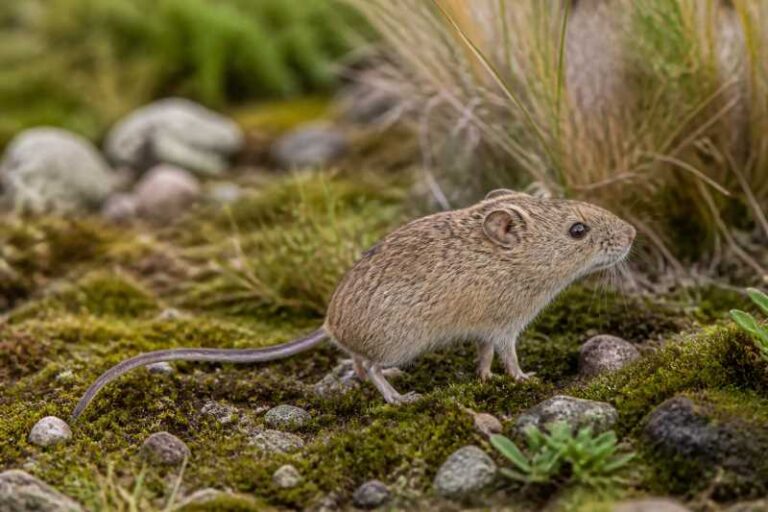
The Papuan Highland Brush Mouse is a small rodent, characterized by its soft, dense fur and bushy tail. Adults typically measure between 10 to 12 centimeters in body length, with a tail length of approximately 9 to 11 centimeters, which aids in balance and maneuverability through dense vegetation. The fur coloration is generally a mix of gray and brown, providing effective camouflage in its natural habitat. Notably, the underbelly is lighter, often exhibiting a creamy or whitish hue.
The head of Abeomelomys sevia is relatively broad with large, round ears that are well-suited for detecting predators. Its eyes are also large, indicating a reliance on sight as well as hearing. The incisors are sharp and robust, adapted for gnawing on a variety of plant materials. This morphological adaptation is essential for its survival, helping it access food and escape threats.
Range and Habitat
The Papuan Highland Brush Mouse is endemic to the montane forests of Papua New Guinea, particularly thriving at elevations above 1,500 meters. Its range is primarily confined to the central highlands, where the environment provides abundant resources and suitable shelter. These regions are characterized by a mosaic of thick forest undergrowth, interspersed with grasslands and occasional rocky outcrops.
The habitat of Abeomelomys sevia is typically cool and moist, with a high degree of canopy cover that moderates temperature fluctuations. The forest floor is rich in leaf litter and fallen logs, offering ample foraging opportunities and hiding spots from predators. This species is well-adapted to the complex vertical structure of montane forests, where it can exploit both ground-level and arboreal niches.
Behavior and Diet
Abemelomys sevia is primarily nocturnal, with peak activity occurring during the cooler hours of dusk and dawn. This behavior not only helps it avoid diurnal predators but also aligns with the availability of its food sources. The diet of the Papuan Highland Brush Mouse is largely herbivorous, consisting of seeds, fruits, and tender leaves. It plays a significant role in seed dispersal, contributing to the health and regeneration of its forest ecosystem.
Socially, this species is believed to be solitary or found in small, loosely connected groups. Little is known about its breeding habits, but it is assumed that reproduction is seasonal, coinciding with periods of food abundance. Given the harsh and competitive environment of the highlands, Abeomelomys sevia likely exhibits territorial behavior, defending valuable foraging areas from intruders.
Identification Tips (field recognition cues)
Field identification of the Papuan Highland Brush Mouse can be challenging due to its elusive nature and similarity to other rodent species in the region. However, several distinctive traits can aid in recognition:
- Fur and Coloration: Look for the characteristic gray-brown fur with a lighter underbelly.
- Tail: Note the bushy tail, which is nearly as long as its body and helps in balance.
- Size: Adult mice are typically 10-12 cm in body length, with a tail length of 9-11 cm.
- Ears and Eyes: The large, round ears and prominent eyes are key features.
- Habitat: Found at elevations above 1,500 meters in montane forests, often near dense undergrowth.
Conservation Status (with threats and protections)
The conservation status of the Papuan Highland Brush Mouse is currently listed as "Data Deficient" by the International Union for Conservation of Nature (IUCN). This designation highlights the lack of comprehensive data on population trends and threats. However, it is recognized that habitat loss due to logging and agricultural expansion poses a significant risk to its survival.
Conservation efforts for Abeomelomys sevia are limited due to its obscure status. Protecting its montane forest habitat is crucial, as these areas are also home to a variety of other endemic species. Efforts to establish protected areas and promote sustainable land-use practices could benefit the Papuan Highland Brush Mouse and its ecosystem. Further research is needed to assess its population dynamics and inform conservation strategies effectively.
Frequently Asked Questions
What is the habitat of the Papuan Highland Brush Mouse?
The Papuan Highland Brush Mouse inhabits montane forests above 1,500 meters in Papua New Guinea. These areas are characterized by dense undergrowth and high canopy cover, providing ample food and shelter.
How can you identify the Papuan Highland Brush Mouse in the wild?
Identifying this mouse involves noting its gray-brown coloration, bushy tail, large ears, and prominent eyes. It is typically found in high-altitude montane forests.
What does the Papuan Highland Brush Mouse eat?
This species primarily consumes seeds, fruits, and leaves, contributing to seed dispersal within its habitat. Its diet reflects the availability of food sources in montane forests.
Why is the conservation status of the Papuan Highland Brush Mouse "Data Deficient"?
The "Data Deficient" status indicates a lack of sufficient information on population trends and threats. More research is needed to understand its ecology and inform conservation strategies.
Are there any conservation efforts for the Papuan Highland Brush Mouse?
Current conservation efforts are minimal, but protecting its montane forest habitat and promoting sustainable land use are crucial steps. Further research is needed to develop targeted conservation actions.
Related posts