Salvin’s Big-eyed Bat (Chiroderma salvini): A Comprehensive Guide
Introduction
Salvin’s Big-eyed Bat, scientifically known as Chiroderma salvini, is a fascinating species of bat that belongs to the family Phyllostomidae. This species is notable for its distinctively large eyes, which are an adaptation to its nocturnal lifestyle. As an integral part of the ecosystem, these bats play a crucial role in pollination and seed dispersal. Despite their ecological importance, many aspects of their biology and behavior remain understudied. This article aims to provide an in-depth look at Salvin’s Big-eyed Bat, covering everything from its physical characteristics to its conservation status.
Physical Description
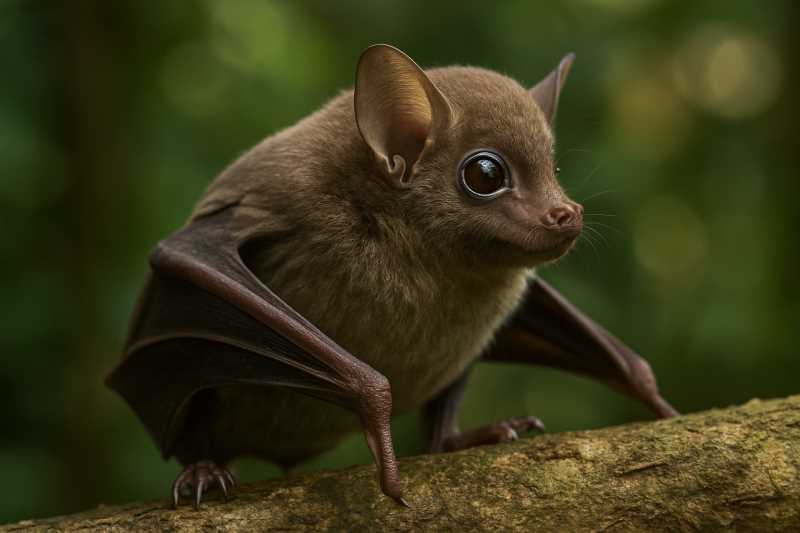
Salvin’s Big-eyed Bat is medium-sized compared to other members of the Phyllostomidae family. Adults typically weigh between 20 to 40 grams, with a wingspan that ranges from 35 to 45 centimeters. True to their name, these bats have large, prominent eyes that are adapted for enhanced night vision, allowing them to navigate and forage efficiently in low-light conditions.
The fur of Chiroderma salvini is predominantly gray to brown, providing effective camouflage in their natural habitat. Their wings are long and narrow, which aids in agile flight through dense vegetation. A distinguishing feature of this species is the presence of a leaf-like structure, known as a nose-leaf, which is believed to play a role in echolocation.
Range and Habitat
Salvin’s Big-eyed Bat is primarily found in Central and South America. Its range extends from southern Mexico through Central America, reaching as far south as northern Brazil and Bolivia. These bats thrive in a variety of habitats, including tropical rainforests, deciduous forests, and even some agricultural areas where they can find fruiting trees.
They are typically found at elevations ranging from sea level to about 1,500 meters. These bats prefer habitats with abundant fruit resources, which are essential for their frugivorous diet. Their preference for forested areas makes them vulnerable to habitat loss due to deforestation and land conversion for agriculture.
Behavior and Diet
Salvin’s Big-eyed Bat is predominantly frugivorous, feeding on a wide variety of fruits. Their diet mainly consists of figs, guavas, and other soft fruits. They are also known to consume nectar and occasionally insects, which provide a source of protein. These bats are nocturnal feeders, relying heavily on their keen eyesight and echolocation abilities to locate food in the dark.
Socially, Chiroderma salvini tends to form small colonies, often roosting in tree hollows, caves, or abandoned buildings during the day. These communal roosting habits provide protection against predators and harsh environmental conditions. During the breeding season, which varies depending on the geographical location, females give birth to a single pup after a gestation period of about four months.
Identification Tips (Field Recognition Cues)
Identifying Salvin’s Big-eyed Bat in the field involves noting several key features:
- Large Eyes: As the name suggests, look for their notably large eyes which are adapted for low-light vision.
- Nose-leaf: Observe the leaf-like structure on their noses, characteristic of the Phyllostomidae family.
- Fur Color: Note the gray to brown fur, which helps them blend into their surroundings.
- Wingspan: Their wingspan is relatively large for their body size, aiding in their agile flight.
- Roosting Behavior: Look for them in groups in tree hollows or caves during daylight hours.
Conservation Status (With Threats and Protections)
According to the International Union for Conservation of Nature (IUCN), Salvin’s Big-eyed Bat is currently listed as Least Concern. However, this status does not imply that the species is free from threats. The primary threat to their population is habitat loss due to deforestation, agricultural expansion, and urbanization.
Conservation efforts for Chiroderma salvini include habitat protection and restoration projects. As these bats are significant pollinators and seed dispersers, maintaining their habitat is crucial for ecosystem health. Some protected areas in Central and South America serve as vital refuges for these bats, helping to mitigate the impact of human activities.
Frequently Asked Questions
1. What do Salvin’s Big-eyed Bats eat?
Salvin’s Big-eyed Bats primarily feed on a variety of fruits, including figs and guavas. They supplement their diet with nectar and occasionally insects.
2. Where can Salvin’s Big-eyed Bats be found?
These bats are found in Central and South America, ranging from southern Mexico to northern Brazil and Bolivia, inhabiting tropical and deciduous forests.
3. How do Salvin’s Big-eyed Bats contribute to the ecosystem?
They play a vital role in pollination and seed dispersal, helping to maintain the health and diversity of tropical ecosystems.
4. Are Salvin’s Big-eyed Bats endangered?
Currently, they are listed as Least Concern by the IUCN, but they are threatened by habitat loss due to deforestation and agricultural development.
5. How can Salvin’s Big-eyed Bats be identified in the wild?
Look for their large eyes, characteristic nose-leaf, gray to brown fur, and their habit of roosting in small colonies in tree hollows or caves.
Related posts