Preble’s Shrew (Sorex preblei)
Introduction
Preble’s Shrew (Sorex preblei) is a small, elusive mammal that belongs to the Soricidae family. Known for its distinctive characteristics and behaviors, this species plays a vital role in its ecosystem. Despite its importance, Preble’s Shrew is not as widely recognized as other wildlife species, making it a subject of interest for biologists and conservationists alike. Understanding the shrew’s physical attributes, habitat preferences, and ecological role can provide insights into its conservation needs and the challenges it faces.
Physical Description
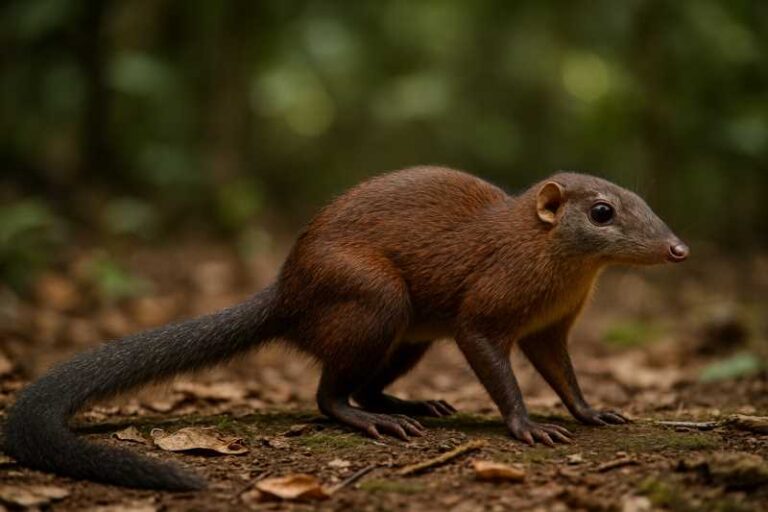
Preble’s Shrew is a diminutive mammal, typically measuring between 86 to 100 mm in total length, including its tail, which accounts for about 40% of its overall size. The shrew’s weight ranges from 3 to 5 grams, highlighting its petite stature. Its fur is dense and velvety, with a dorsal coloration that varies from gray to brownish, allowing it to blend seamlessly into its surroundings. The ventral side is usually lighter, providing a subtle contrast. Like other shrews, Preble’s Shrew possesses a long, pointed snout and small, beady eyes, adaptations that aid in its foraging activities. Its ears are small and often hidden by fur, reducing heat loss and enhancing its streamlined shape for efficient movement through dense vegetation.
Range and Habitat
Preble’s Shrew is primarily found in the western United States, with known populations in Wyoming, Montana, Idaho, Utah, and Colorado. Its habitat preferences include arid shrublands, grasslands, and open woodlands, where it can find ample cover and food resources. The shrew often inhabits areas with loose, well-drained soils that facilitate its burrowing activities. It is particularly fond of habitats with abundant leaf litter or thick ground vegetation, which provide both shelter and foraging opportunities. Seasonal changes can also influence its habitat selection, with individuals seeking microhabitats that offer optimal thermal conditions and protection from predators.
Behavior and Diet
Preble’s Shrew is primarily nocturnal, with peak activity occurring during the twilight hours of dawn and dusk. This behavior helps it avoid predators and extreme temperatures. The shrew is an insectivore, with a diet consisting mainly of insects, spiders, and other small invertebrates. Its high metabolism requires constant foraging, and it consumes up to three times its body weight in food each day. Preble’s Shrew uses its acute sense of smell and touch to locate prey, often probing the leaf litter and soil with its sensitive snout. Socially, the shrew is solitary, with individuals maintaining distinct territories. Breeding occurs in the spring and summer, with females producing multiple litters per year, each consisting of 3 to 7 young.
Identification Tips
Identifying Preble’s Shrew in the field requires attention to several key characteristics:
- Size and Shape: Look for a small, slender body with a pointed snout and short, dense fur.
- Coloration: Observe the gray to brownish dorsal fur and lighter ventral side.
- Behavior: Note its nocturnal activity patterns and rapid, darting movements.
- Habitat: Focus on areas with loose soil and abundant ground cover.
- Tracks and Signs: Look for tiny tracks and small burrow entrances in suitable habitats.
Conservation Status
Preble’s Shrew is currently listed as a species of Least Concern by the IUCN Red List. However, its populations are believed to be declining due to habitat loss and fragmentation. Urban development, agricultural expansion, and climate change pose significant threats to its natural habitats. Conservation efforts are essential to preserve these habitats and ensure the shrew’s survival. Protecting large, contiguous areas of suitable habitat is a primary strategy, along with research initiatives to better understand its ecology and population dynamics. Legal protections under state and federal wildlife laws also play a crucial role in mitigating threats and promoting conservation.
Frequently Asked Questions
What does Preble’s Shrew eat?
Preble’s Shrew primarily feeds on insects, spiders, and other small invertebrates. Its diet is driven by its high metabolic needs, requiring it to consume large quantities of food relative to its body weight.
Where can Preble’s Shrew be found?
Preble’s Shrew is found in the western United States, particularly in Wyoming, Montana, Idaho, Utah, and Colorado. It prefers arid shrublands, grasslands, and open woodlands.
How can you identify Preble’s Shrew in the wild?
Identifying Preble’s Shrew involves looking for a small, slender mammal with a pointed snout, gray to brownish fur, and nocturnal activity patterns. Its presence is often indicated by small tracks and burrow entrances in suitable habitats.
What are the threats to Preble’s Shrew?
The main threats to Preble’s Shrew include habitat loss and fragmentation due to urban development, agricultural expansion, and climate change. Conservation efforts focus on protecting and restoring suitable habitats.
Is Preble’s Shrew endangered?
Preble’s Shrew is not currently endangered but is listed as a species of Least Concern. However, its populations are believed to be declining, necessitating conservation attention to prevent future declines.
Related posts